ART CITIES: Paris-Valentin Rilliet
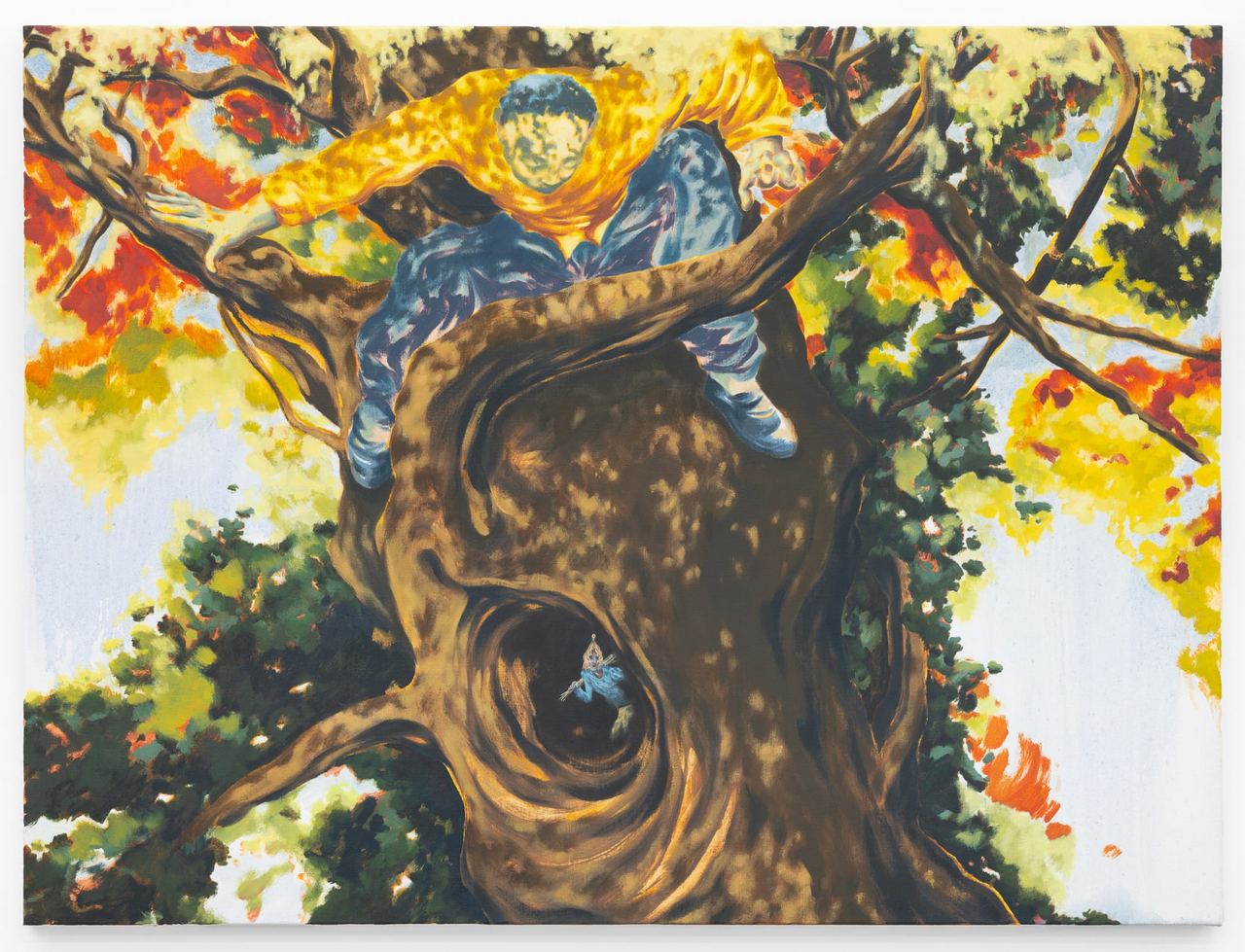
Raised in Geneva by a Chinese mother and a Swiss father, Valentin Rilliet’s work is deeply informed by a bicultural identity, which he neither simplifies nor resolves but rather uses as a creative and driving tension in his practice. Educated as a painter in Zurich and London, his visual style reflects influences from Russian-born American artist Sanya Kantarovsky, whose ironic figurations and psychological intensity resonate in Rilliet’s compositions. Additionally, R.B. Kitaj’s narrative approach, color-composition, and fragmented visual storytelling provide a deeper historical anchor for Rilliet’s explorations.
By Dimitris Lempesis
Photo: Galerie Peter Kilchmann Archive
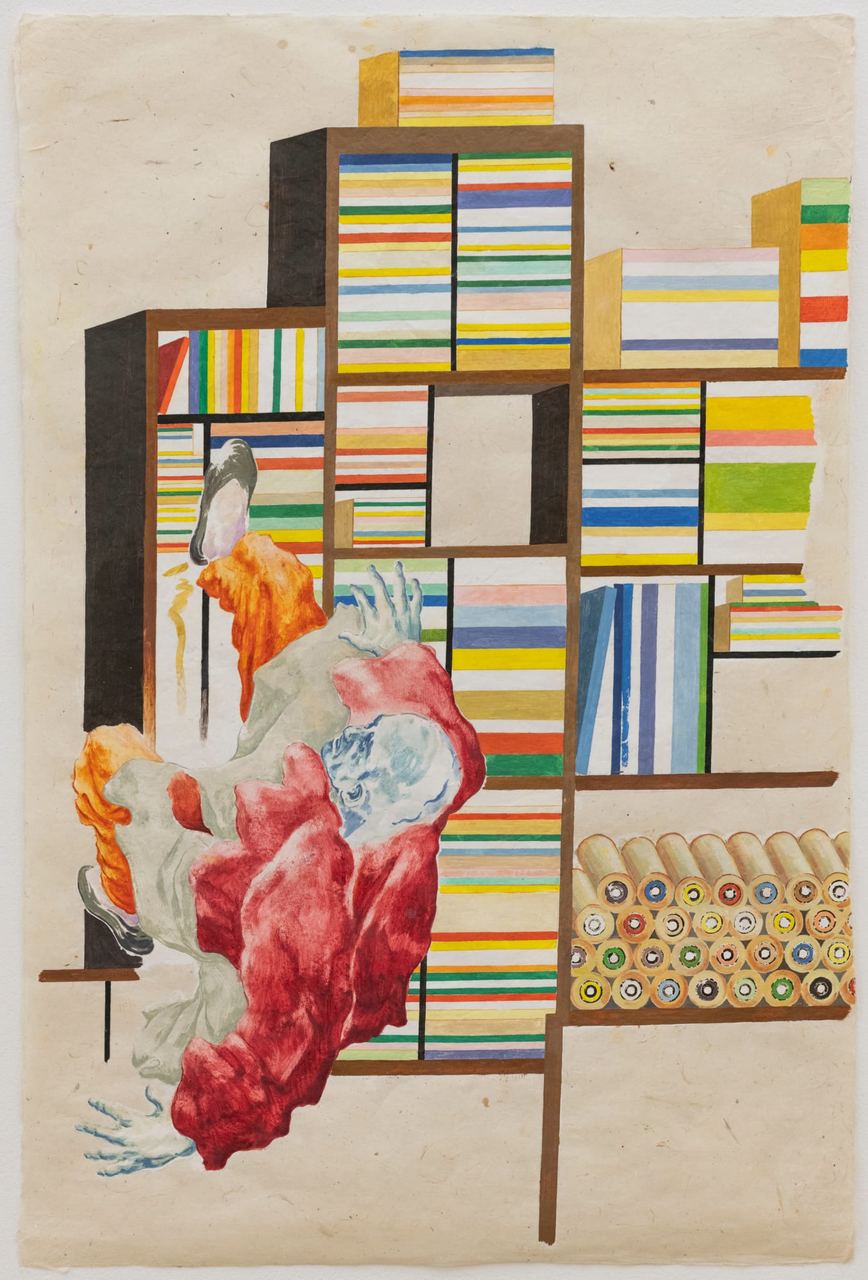
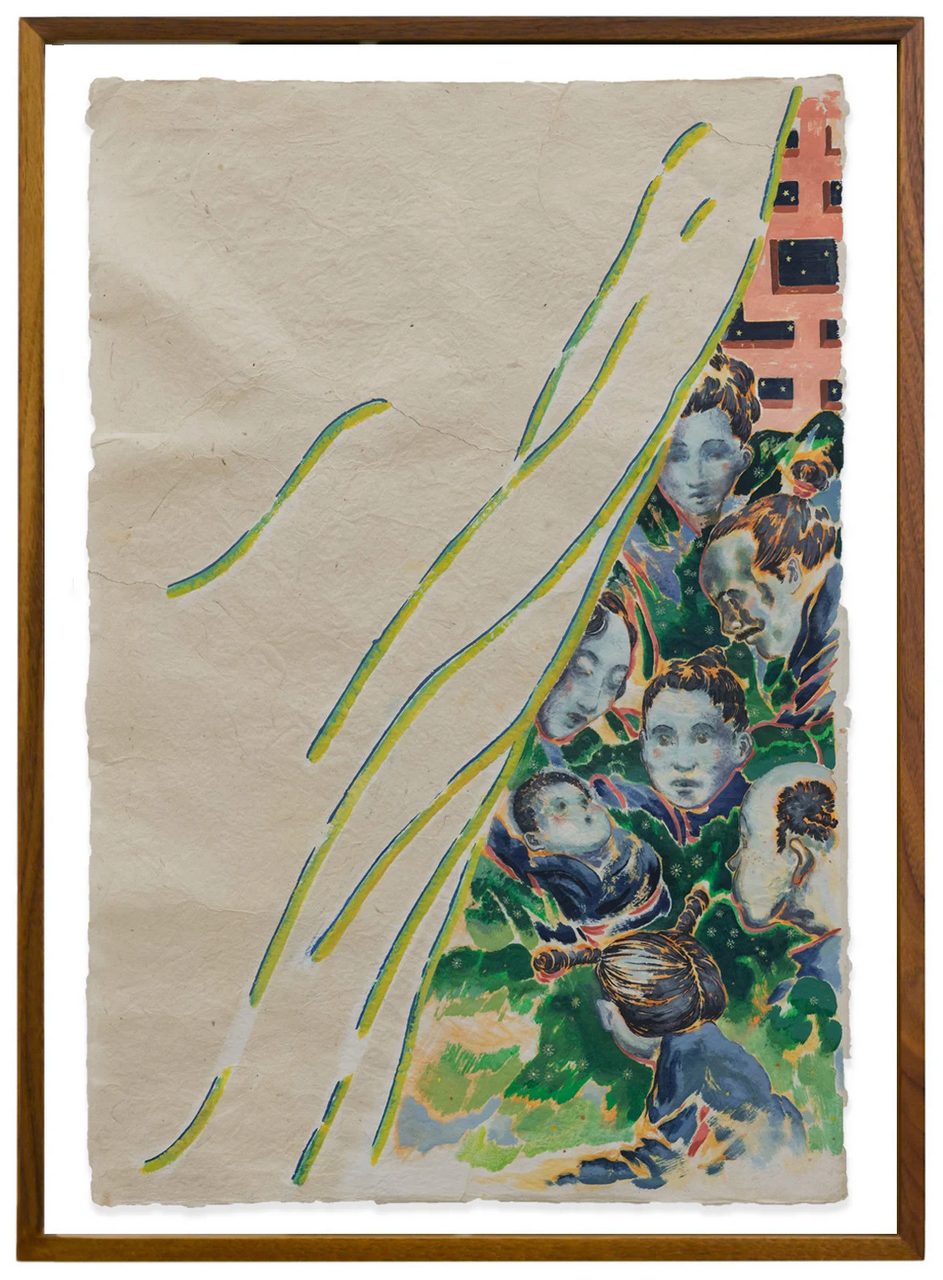
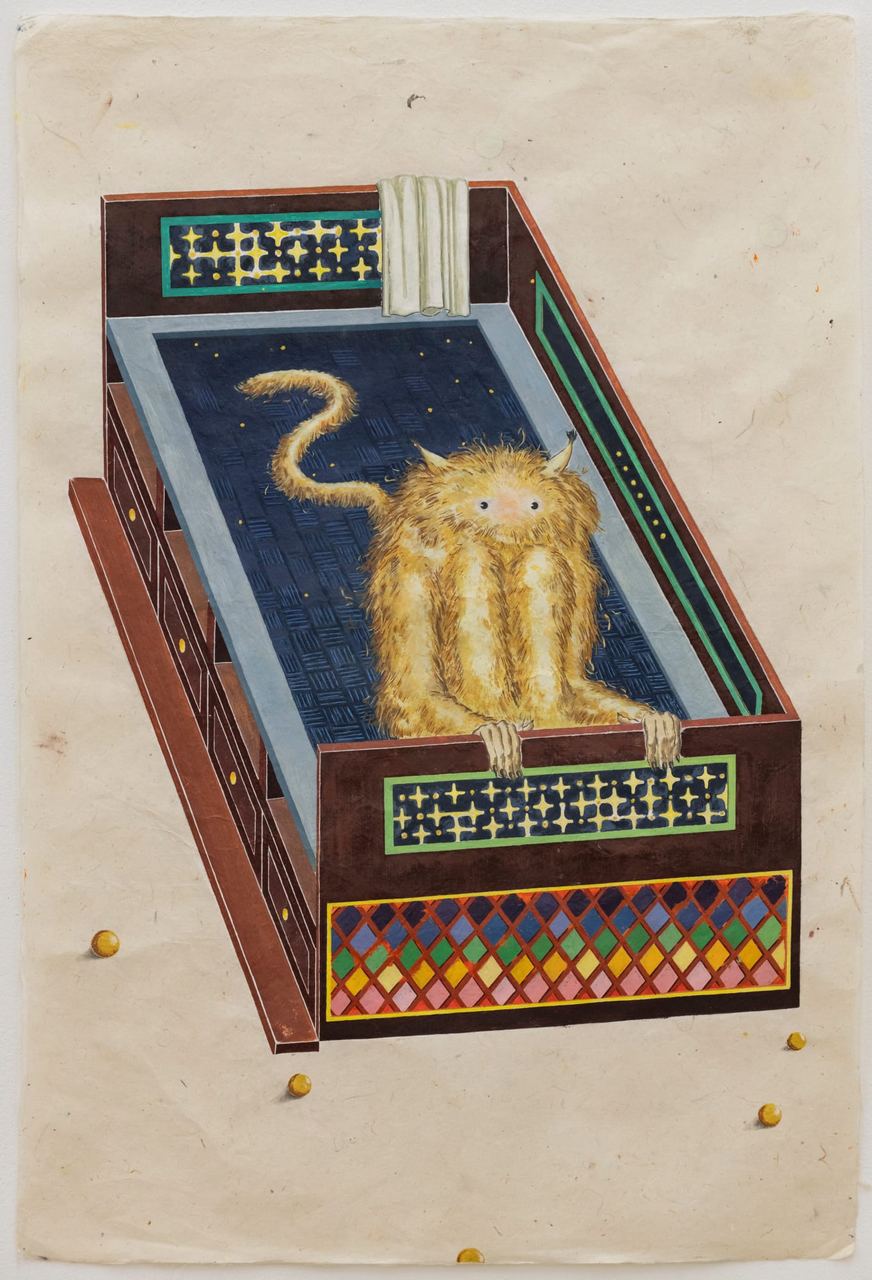
The exhibition’s title, “The Dream Synopsis”, refers to Valentin Rilliet’s approach to creating his recent works through a more open, associative, or dreamlike perspective, moving away from the site- and source-specific themes that characterized his previous series. In these new oil paintings and works on paper, the artist opens the narrative field of his practice, playfully creating a unique mythology through which he continues to develop his visual language. Certain elements from his earlier works remain in the new series. While Rilliet still explores the complex cultural exchange between his Chinese heritage and his upbringing within a Western artistic canon, this time he also indulged in experimenting with culture-specific materials to draw and paint on, incorporating them as narrative agents within the works themselves.There are ten paintings on canvas and nine works on paper presented in the exhibition. Each piece contains a magic realist vision, uniquely composed and skillfully balanced. Central to each painting is a figure, usually in motion, that animates a distinct scenario. These figures often serve as protagonists within mysterious or ambiguous scenes that obscure the line between memory and imagination. Rilliet draws from elements of previous works series, expanding on his earlier use of Chinese socialist propaganda pamphlets and the so-called ‘picture books’ (连环画, Lián Huán Huà) as source material. He re-contextualizes fragments from these influences and combines them with landscapes, architectural motifs, and figures observed during his travels in China and creates layered compositions rich in metaphor and textures. A particularly experimental aspect of his new series was his application of Tibetan paper, ordered from Lhasa. The paper, thick and durable like scrolls for sacred texts and archival literature, is traditionally made from Daphne bush bark that makes it poisonous to insects, preserving it from decay. Rilliet explored this material’s limits, often struggling with its unpredictability. His first attempts saw ink bleeding too quickly or spilling across the surface uncontrollably. Equally challenging was to find out the correct application of oil paint. Yet he welcomed these challenges. He came to appreciate how the material itself began to dictate aspects of the narrative. The unpredictability became part of the process and was an eye-opening experience for the young painter who had previously approached his compositions with greater control while working on widely used materials.This relinquishing of control and the material-induced improvisation aligns with the free-associated logic underpinning the entire series. It’s a method that invites surprise, allowing the physical properties of the medium to influence the narrative as much as the artist’s own intentions.Two of the central works in the exhibition, “Sightline” (overlooked) and “Lagoon”, signal a marked departure from Rilliet’s previously more theatrical, frontally composed tableaux. Painted from a bird’s-eye view, both works demonstrate the artist’s new interest in non-traditional perspectives and compositional dynamism. In “Sightline (overlooked)”, a pigeon occupies the immediate foreground, seemingly observing a charged social scenario unfolding below. A solitary figure lies in the doorway of a mansion, while across the yard, a group of men stands, facing them. The yard contains textured drag trails rendered with sand quartz, suggesting a physical or symbolic disturbance. Rilliet’s use of this material introduces an added layer of tactility and ambiguity. The scene’s narrative potential is suspended. It is unclear whether we see a confrontation or mourning. Thus, the artist allows multiple interpretative pathways to remain open. “Lagoon”, by contrast, stages a seemingly more benign act: a fisherman casting his net. Yet the bird’s-eye composition and the ripple-like structures of the water complicate the action, distancing the viewer from any definitive emotional register. As with many of Rilliet’s works, there is less of a fixed storyline than a constellation of gestures, symbols, and emotional cues. The artist uses the same perspective in the work Untitled (Reaper), which is in ink on Tibetan paper. Additionally, the exhibition is also notable for its experimentation with format. Works like “The Puppeteer”, “Motherhood”, and “Crystal Clear (Dusk)” with their tall vertical or horizontal framing, and Sister Lychee, in a narrow horizontal canvas, reflect Rilliet’s exploration of spatial construction as an expressive device. In “Sister Lychee”, a girl mischievously peeks over a wall, while across from her looms a red demonic hand — a stark juxtaposition that collapses innocence and threat into a single, compressed frame. This interplay of humor, unease, and visual wit echoes the comic book idioms that Rilliet often references, while also resonating with an almost gothic tension. “The Puppeteer” portrays a figure holding a puppet aloft yet the strings are invisible, rendering the object eerily autonomous, suspended in an uncanny mid-air state. The absence of visible control devices imbues the painting with a magic realist quality, suggesting metaphors of manipulation and individual autonomy. Motherhood depicts a furry, dragon-like creature with a slightly rounded belly. “Crystal Clear (Dusk)” refers back to an earlier painting titled Dawn. In both of them, a human figure’s state is re-appropriated from a previously precarious circumstance into a new magical but still dark reality. Among the largest works in the exhibition is “Momentum” (130 x 150 cm), which depicts the entrance to a Shanghai nightclub. A group of people dressed in urban clothing stands on a deck above the entry. The work vibrates with urban energy, offering a glimpse into the shifting textures of contemporary Chinese nightlife. It subtly evokes the voyeuristic nocturnes of 1930s and 40s American Realism, while embedding them in an entirely different cultural and aesthetic context. A cloud appears to crawl up from the darkness of the basement and seems to shape an auspicious figure. Material experimentation plays a key role in the new works on Tibetan paper. In some of them, Rilliet incorporates gansai, a traditional Japanese watercolor noted for its vivid pigmentation and opacity, as well as gold ink. Both of which are applied to Tibetan paper. The resulting surfaces are rich and luminous, but difficult to control, lending the works a sense of immediacy and material tension. These demanding media choices underscore Rilliet’s commitment to process and his willingness to relinquish full authorial control.
Photo: Valentin Rilliet, Moon Hunt, 2025, Oil on linen, 120 x 160 cm (47 ¼ x 63 in.), © Valentin Rilliet, Courtesy the artist and Galerie Peter Kilchmann
Info: Galerie Peter Kilchmann, 11-13 Rue des Arquebusiers, Paris, France, Paris, Duration: 24/5-19/7/2025, Days & Hours: Tue-Fri 11:00-19:00, Sat 11:00-17:00, www.peterkilchmann.com/