ART CITIES: Berlin-Reverse Alchemy
Anchored in Jean Dubuffet’s “anti-cultural” celebration of art brut, the exhibition “Reverse Alchemy: Dubuffet, Basquiat, Nava” brings focuses on the medium of paper to explore how these artists perform a reverse alchemy, transmuting the gilded surfaces of “high art” back into its base elements—the raw, crude, and unhewn matter of mark-making—dismantling and exploding the figure in the act of rendering it.
By Dimitris Lempesis
Photo: Pace Gallery Archive
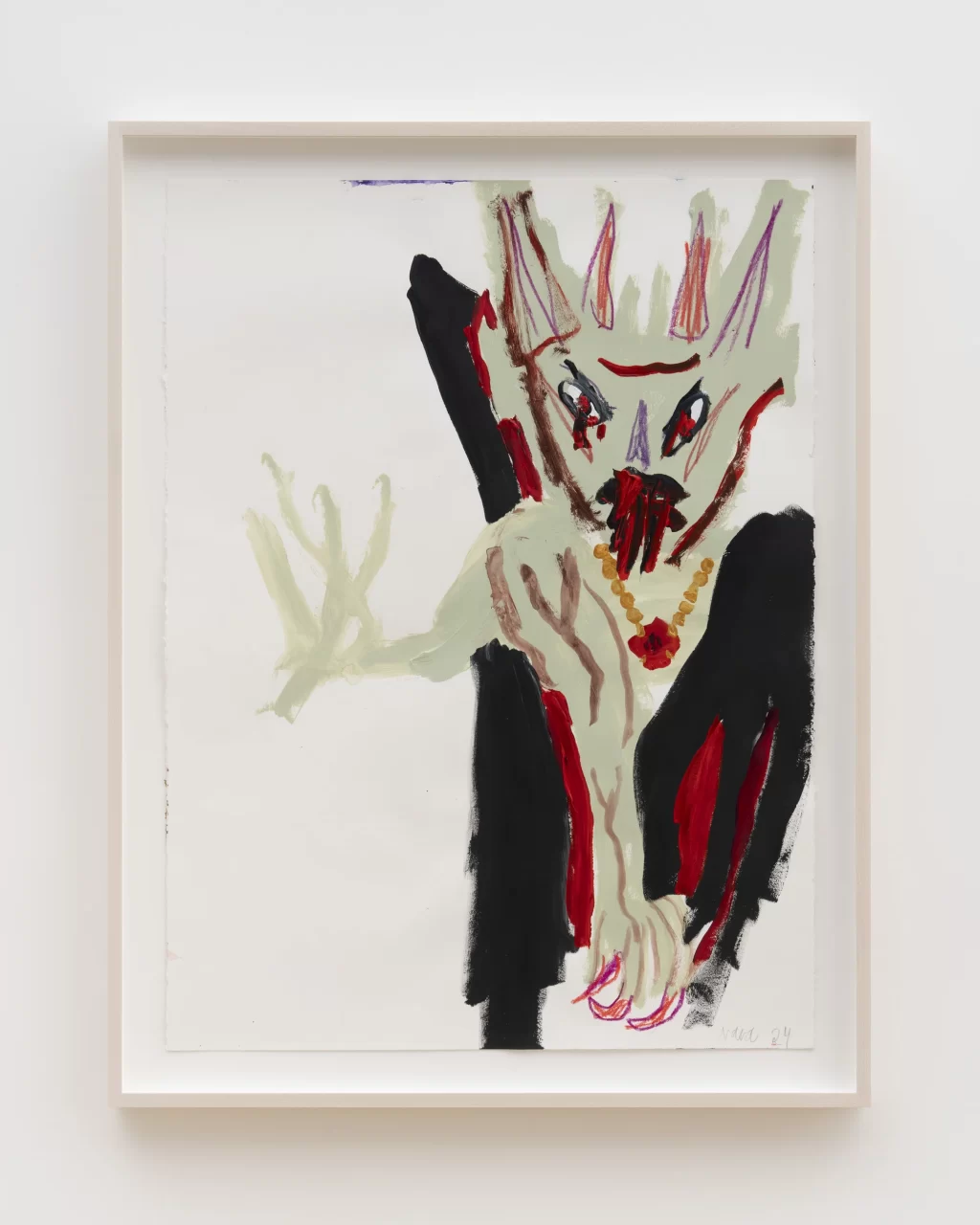
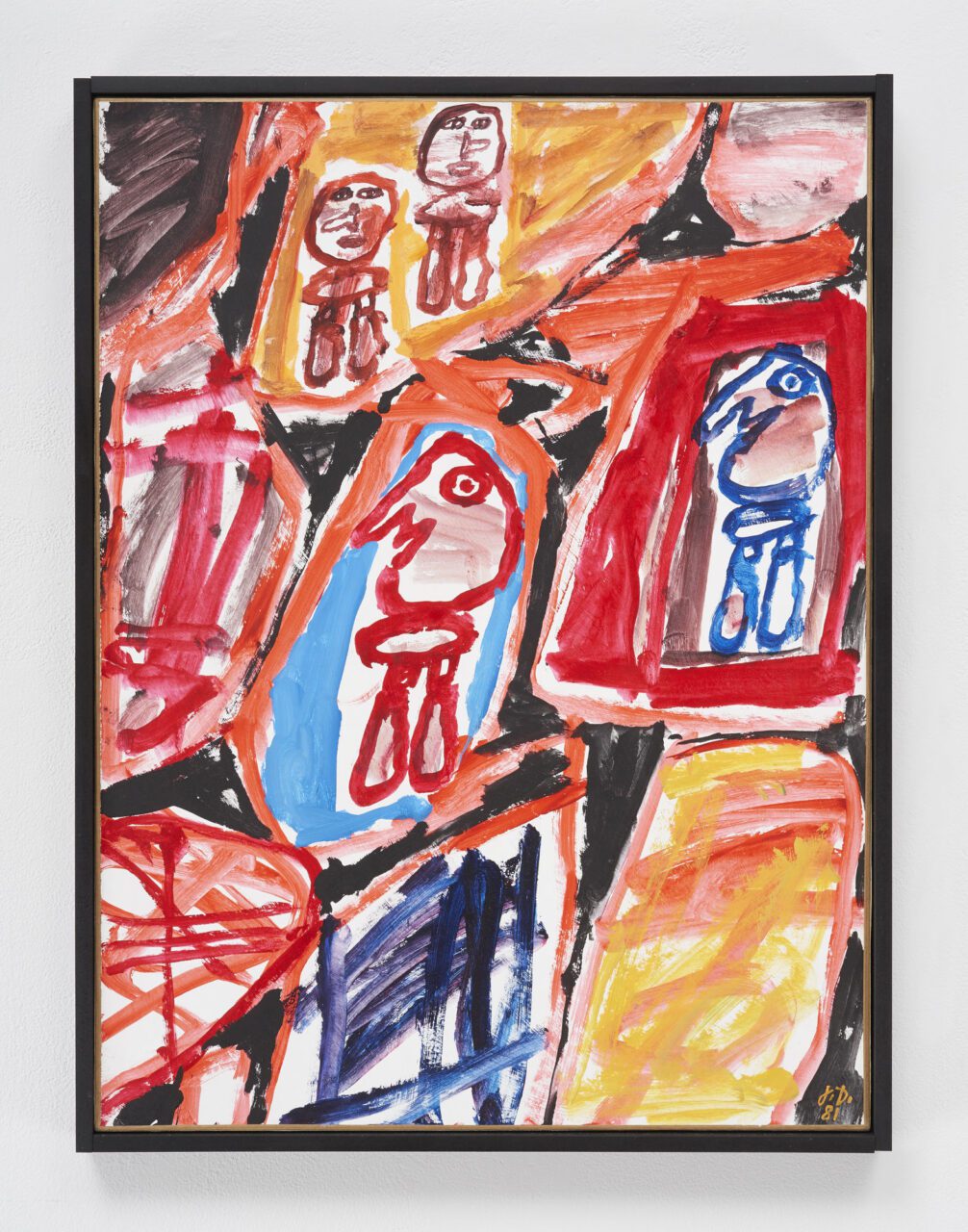
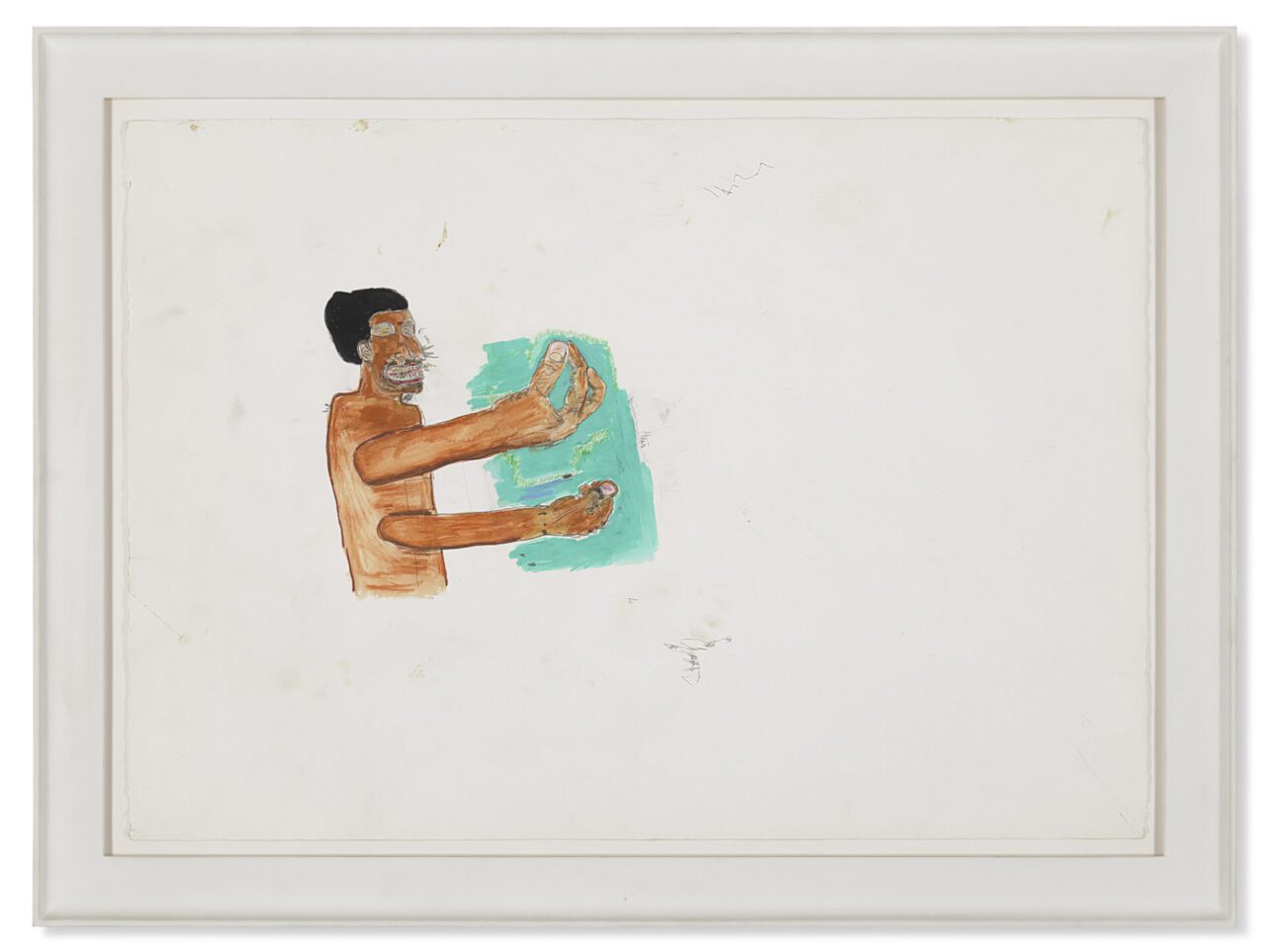
The exhibition “Reverse Alchemy: Dubuffet, Basquiat, Nava” brings together works on paper by three artists of different generations who have transgressed and disrupted the language of figuration: Jean Dubuffet, Jean-Michel Basquiat, and Robert Nava. Coinciding with Gallery Weekend Berlin, the exhibition is one of two inaugural exhibitions at Die Tankstelle, a new art space (with galleries, offices, and an adjacent cafe and bookshop) housed in a converted 1950s gas station and shared by Pace and Galerie Judin. The exhibition juxtaposes a suite of late works on paper by Dubuffet dating from the late 1970s and 1980s with drawings that the young Basquiat made during precisely the same time. Dubuffet’s and Basquiat’s works from the 1980s provide a context for recent works on paper by contemporary artist Robert Nava. Nava’s sensibility extends a legacy of expressive mark-making coupled with the rejection of traditional hierarchies in art, reflecting the continued influence of both Dubuffet and Basquiat on contemporary practice.The exhibition examines how Dubuffet, Basquiat, and Nava have each redefined mark-making, figuration, and beauty itself. Centered around Dubuffet’s concept of art brut, the works on view revel in an expressive immediacy that collapses divisions between abstraction and figuration. Dubuffet’s textural, graffiti-like gestures reject refinement in favor of spontaneity and irreverence, a sensibility echoed in Basquiat’s frenetic compositions and Nava’s mythic, gestural landscapes. An uninhibited exuberance cuts through the work of all three artists, suggesting a contemporary mode of anti-figuration that distorts, abstracts, and dissolves the image even as it summons it into being. Several of the Dubuffet works on view are drawn from the “Théâtres de mémoire” series (1975–78), in which the artist reconstructed fragments of his earlier paintings into layered, collage-like compositions that function as psychological landscapes. This recursive process, mining past visual vocabularies to generate new meaning, would later resonate with Basquiat. Although the two artists never met, Basquiat was profoundly influenced by Dubuffet’s work. By the mid-1980s, Basquiat had become an avid admirer, often asking Glimcher if he could sit in the gallery to observe installations of Dubuffet’s work. Nava, whose tempestuous, chimerical figurations constitute a world of their own, extends the conversation opened by Dubuffet and Basquiat. If Dubuffet’s work has often been described as alchemical, Nava’s disfigurations and re-figurations of mythical beasts, imaginary monsters, and strange hybrids suggest a similar sense of mysterious transformation. His rejection of tradition and convention in favor of a free and deeply imaginative mode of making aligns with what curator Marcia Tucker examined in her 1978 New Museum exhibition “Bad Painting”. Tucker described “bad painting” as figurative work that “defies, either deliberately or by virtue of disinterest, the classic canons of good taste.” This concept was first articulated by Dubuffet in his lecture “Anticultural Positions,” delivered at the Art Institute of Chicago in 1951. There, Dubuffet rejected the Western “notion of beauty as completely false… stifling and revolting.” Now, decades after Dubuffet and Basquiat transformed the medium of painting, Nava reignites the same disruptive energy with works that unsettle fixed ideas of beauty and taste, proposing a new kind of rebellion within the history of art.
Photo: Jean-Michel Basquiat, Untitled, 1986, colored pencil, graphite, and acrylic on paper, 29-1/2″ × 42″ (74.9 cm × 106.7 cm), © Jean-Michel Basquiat, Courtesy Pace Gallery
Info: Curator: Oliver Shultz, Pace Gallery, Die Tankstelle, Bülowstraße 18, Berlin, Germany, Duration: 2/5-14/6/2025, Days & Hours: Tue-Sat 11:00-19:00, www.pacegallery.com/