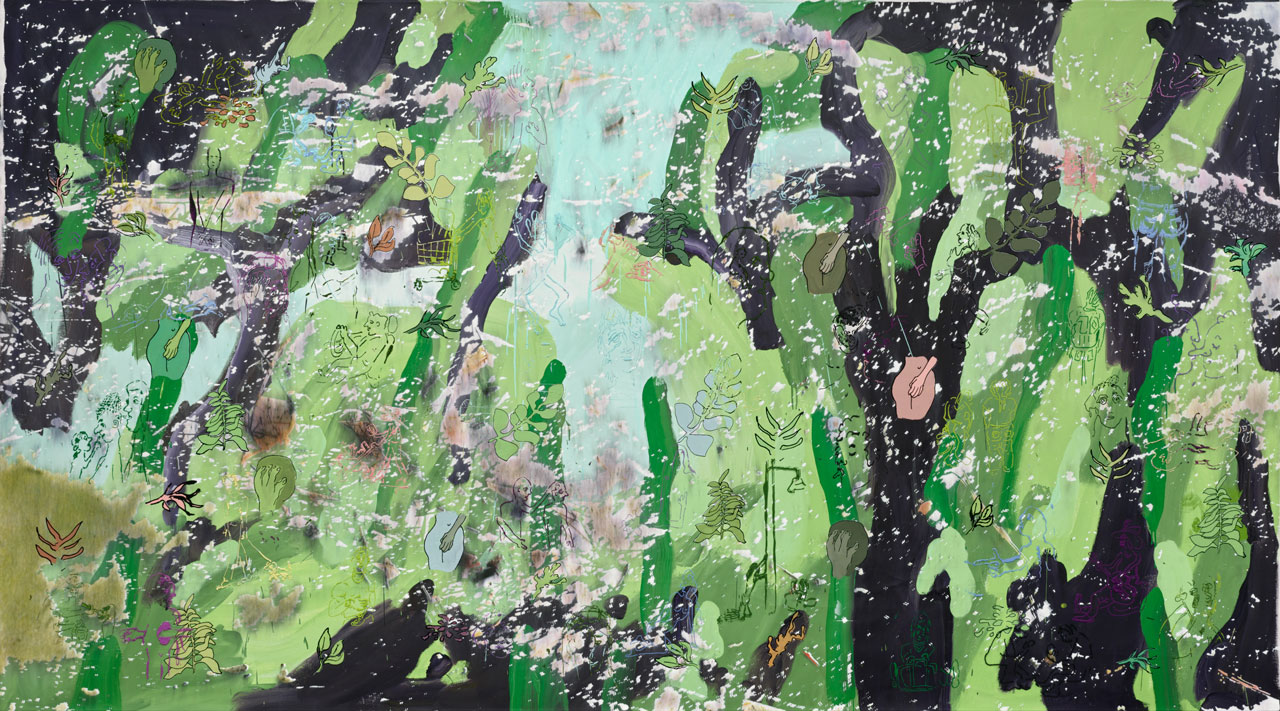
PRESENTATION:Urs Fischer-Eugène Atget
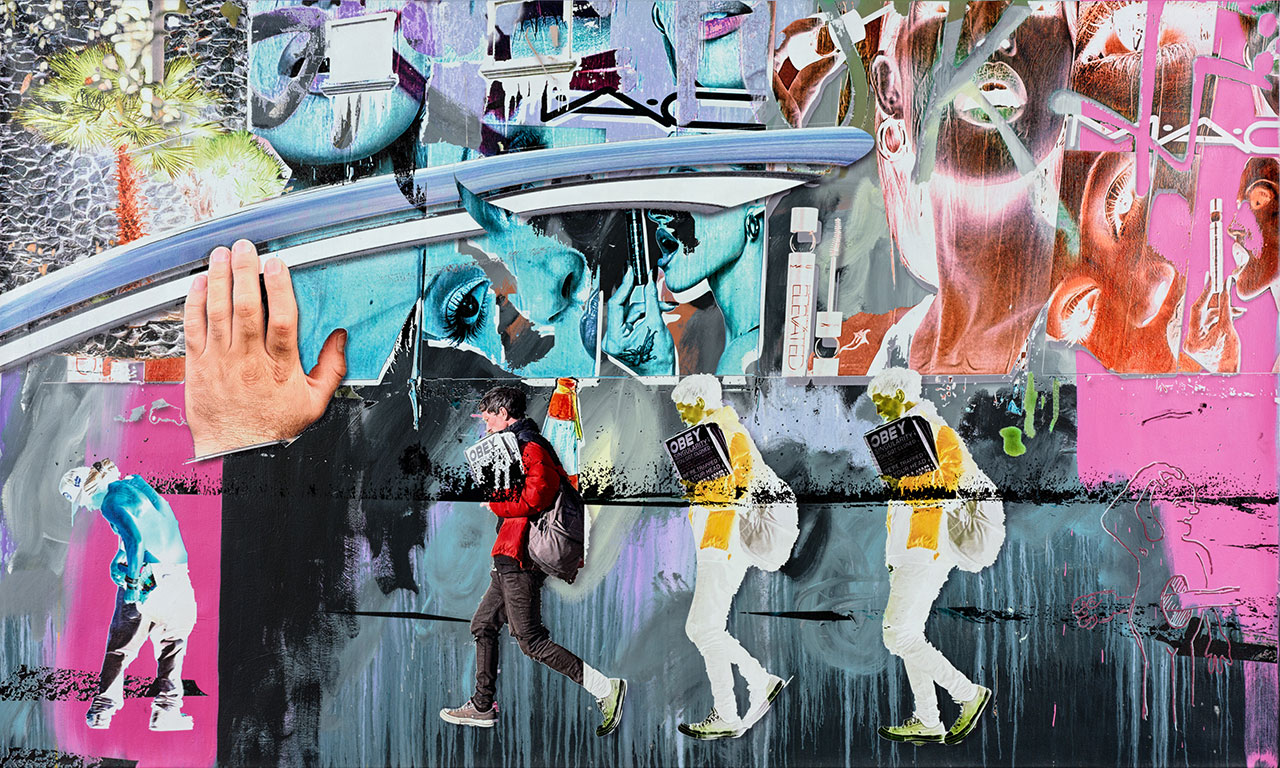
Urs Fischer explores themes of perception and representation by reimagining familiar images and everyday objects in unexpected ways. Through the use of various technologies and creative processes, he transforms and manipulates a wide range of source materials, including historical motifs and cultural references. By blending elements of reality with invention, he creates works that challenge viewers’ assumptions and blur the boundaries between the real and the imagined, encouraging new ways of seeing and interpreting visual experience.
By Efi Michalarou
Photo: Gagosian Archive
In “Eugène Atget”, his first solo exhibition at Gagosian Athens, Swiss-born artist Urs Fischer presents a new body of paintings that examines how contemporary urban life is experienced through movement, fragmentation, and visual overload. The exhibition takes its title from Eugène Atget, the pioneering French photographer whose extensive documentation of “Old Paris” transformed the possibilities of photographic representation. By invoking Atget’s legacy while focusing on present-day Los Angeles, Fischer creates a compelling dialogue between historical documentation and contemporary image culture.
Throughout his career, Fischer has explored themes of perception and representation by reimagining familiar images and objects through an extraordinary range of materials and techniques. His practice frequently destabilizes the boundaries between reality and illusion, often combining historical references with contemporary technologies. In :Eugène Atget”, these concerns are translated into large-scale metropolitan landscapes that reflect the sensation of moving through a city saturated with signs, advertisements, faces, architecture, and digital imagery. Rather than depicting Los Angeles as a coherent urban environment, Fischer presents it as a constantly shifting collage of visual stimuli.
The paintings are constructed through a complex process that combines silkscreening, hand-painting, stenciling, photography, and digital manipulation. This layered methodology draws upon traditions established by artists such as Robert Rauschenberg and Cady Noland, whose works incorporated found imagery and mass-media references into dense visual assemblages. Fischer extends this lineage into the twenty-first century by integrating original smartphone photographs of highways, automobiles, pedestrians, and buildings with fragments borrowed from advertising and popular culture. The resulting works blur distinctions between figuration and abstraction, creating compositions that mirror the fragmented nature of contemporary perception.
The choice of Atget as the exhibition’s namesake is particularly significant. At the beginning of the twentieth century, the French photographer undertook a vast project to document the rapidly disappearing streets and architecture of pre-Revolutionary Paris. Unlike many photographers of his era, Atget did not seek picturesque compositions or romanticized scenes. Instead, he assembled an extensive archive that captured the city’s overlooked details and transitional spaces. His photographs functioned less as individual artworks than as components of a broader visual history.
The cultural theorist and philosopher Walter Benjamin recognized the importance of Atget’s achievement in his influential 1931 essay “A Short History of Photography”. Benjamin argued that Atget liberated photography from the traditional “aura” associated with nineteenth-century image-making by focusing on fragments, ordinary spaces, and seemingly insignificant urban details. Through this approach, Atget transformed the camera into a tool for investigating modernity itself. Fischer’s exhibition can be understood as a contemporary continuation of this project. Rather than documenting a disappearing historical city, he records the relentless visual flow of Los Angeles, a metropolis shaped by automobiles, media, entertainment, and digital technology.
Los Angeles has long occupied a unique position within the cultural imagination. For many artists, writers, and filmmakers, the city represents both the promise and contradictions of contemporary life. Its sprawling geography, dependence on automobiles, and deep connections to the entertainment industry create a landscape in which reality and representation constantly intersect. Fischer approaches the city not as a native resident but as an observer whose distance allows him to identify its peculiar visual rhythms. The artist often works from photographs taken while traveling through the city by car, transforming fleeting observations into expansive painterly compositions.
Many of the works in “Eugène Atget” employ panoramic formats that evoke cinematic vision and the experience of looking through a car window. Installed within the gallery so that they resonate with views of Athens visible beyond the building’s windows, the paintings establish a dialogue between two urban environments. The viewer encounters layers of images, textures, and signs that seem simultaneously familiar and disorienting. Streets, advertisements, human figures, and architectural fragments emerge and disappear within dense surfaces, reproducing the sensation of navigating a city where attention is constantly divided among competing visual demands.
This emphasis on sensory overload reflects broader concerns within Fischer’s artistic practice. Whether working with sculpture, installation, photography, or painting, he consistently examines how meaning is generated through perception. Earlier projects have employed artificial intelligence, interactive environments, and unconventional materials to challenge viewers’ expectations and encourage active participation. His work frequently asks how images acquire significance in a culture increasingly mediated by technology and mass communication.
“Eugène Atget” particularly compelling is its balance between historical reflection and contemporary urgency. Fischer does not merely reference Atget as an art-historical figure; he reinterprets the photographer’s investigative spirit for an era dominated by smartphones, digital advertising, and endless streams of visual information. If Atget sought to preserve a disappearing Paris, Fischer seeks to understand a city that appears almost impossible to preserve because it is constantly being reproduced, circulated, and transformed through images.
The exhibition offers a portrait of Los Angeles that is neither documentary nor purely imaginary. Instead, it occupies a space between observation and invention, where photography, painting, memory, and media converge. By transforming everyday urban fragments into complex visual palimpsests, Fischer captures the experience of contemporary life as a continuous flow of images. In doing so, he extends Atget’s legacy into the twenty-first century, demonstrating that the challenge of representing the modern city remains as relevant today as it was more than a century ago.
Photo: Urs Fischer, Quadruple Elvis, 2026, Gesso, latex, acrylic paint, alcohol ink, and modeling paste on canvas, 66 x 110 inches (167.6 x 279.4 cm), © Urs Fischer, Courtesy of the artist and Gagosian
Info: Gagosian, 22 Anapiron Polemou Street, Athens, Greece, Duration: 9/6-12/9/2026, Days & Hours: Tue-Wed & Fri-Sat 11:00-19:00, Thu 11;00-20:00, https://gagosian.com/
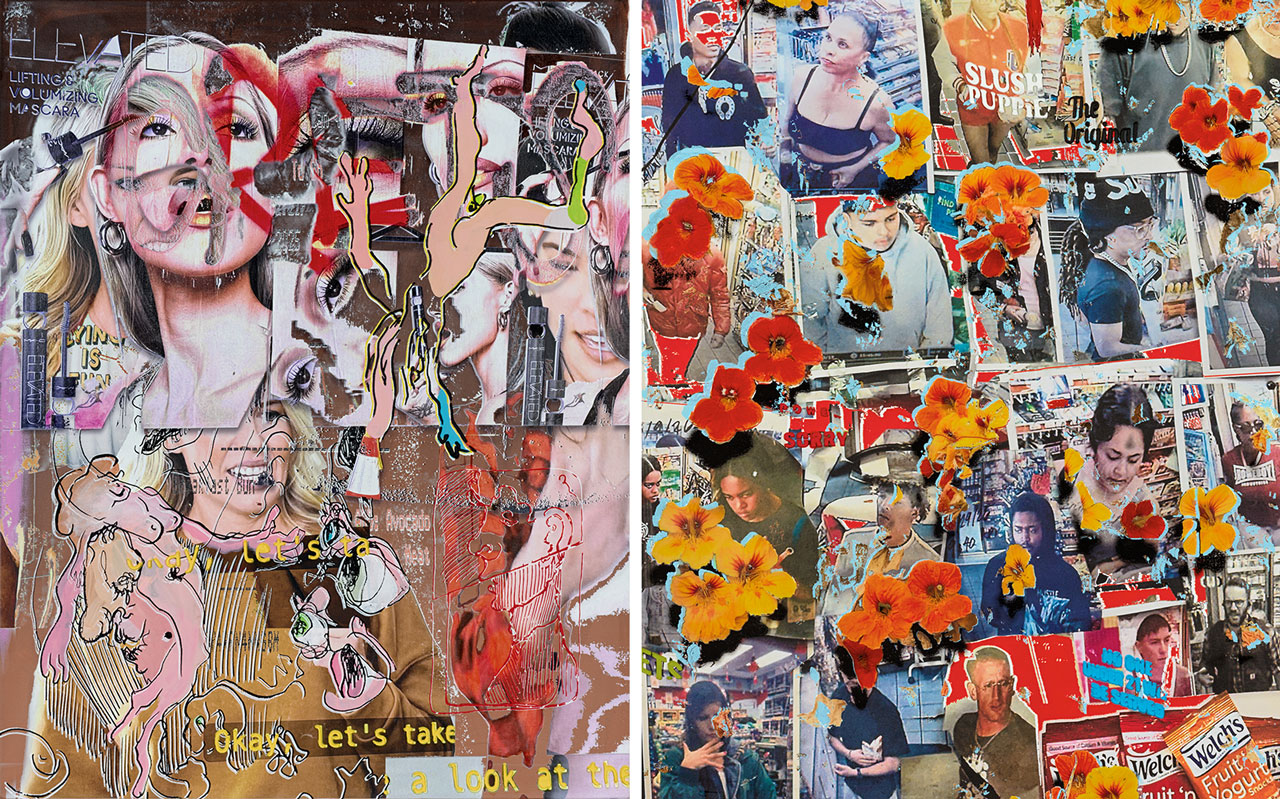
Right: Urs Fischer, Slush Puppie (detail), 2026, Gesso, latex, acrylic paint, alcohol ink, and modeling paste on canvas, 88 x 110 inches (223.5 x 279.4 cm), © Urs Fischer, Courtesy of the artist and Gagosian
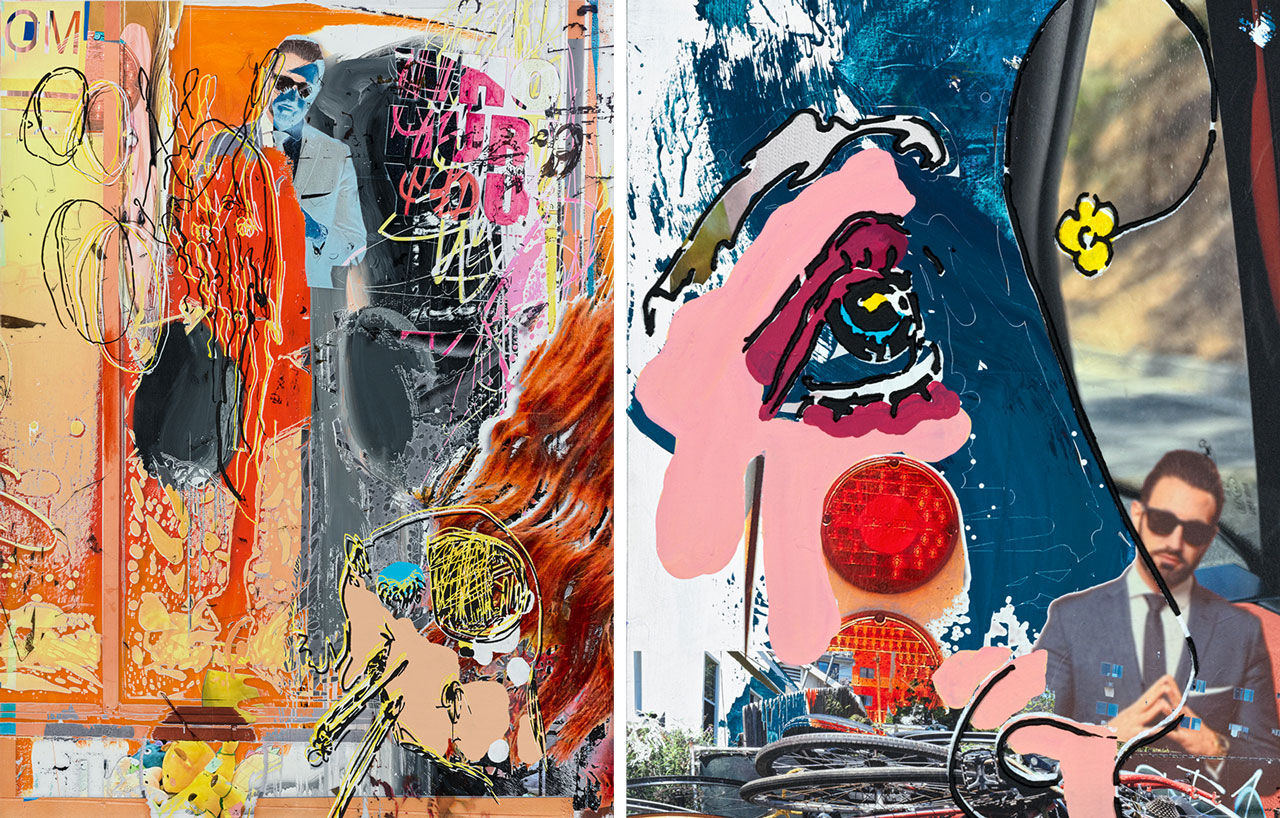
Right: Urs Fischer, Airbag (detail), 2026, Gesso, latex, acrylic paint, alcohol ink, and modeling paste on canvas, 52 x 42 inches (132.1 x 106.7 cm), © Urs Fischer, Courtesy of the artist and Gagosian