
PRESENTATION: Jacques Yves Bruel-Et maintenant il faut imaginer le grand nu remontant l’escalier
Jacques Yves Bruel (1948–2010) was a French artist and sculptor whose work stood at the intersection of contemporary art, conceptual practice, and cultural critique. He is best known for exploring the complex power dynamics, transactional systems, and cultural perceptions between the Western world and non-Western societies—most notably West Africa and Asia.
By Dimitris Lempesis
Photo: Galerie Laurent Godin Archive
The exhibition “Et maintenant il faut imaginer le grand nu remontant l’escalier “ (And now, we must imagine the large nude going back up the staircase) is dedicated to the work of Jacques Yves Bruel.
Jacques Yves Bruel was born in Nantes in 1948. Following the postings of his father—a prominent Resistance member who became a senior police commissioner—he spent his childhood and adolescence in Saint-Nazaire and then Rodez, before his family settled in Toulouse. It was there that he decided to study art history in 1968, forming friendships with Pierre Thon, Alain Mousseigne, and Ramon Tio Bellido, among others.
In 1972, he joined Tio Bellido in Paris, where they pursued plastic arts studies with rather relative enthusiasm. They quickly became passionate about the events stirring the art world, assiduously attending exhibitions at the CNAC on Rue Berryer and ARC, as well as participating in actions against bourgeois and capitalist censorship—notably taking part in demonstrations sparked by the “60-72” exhibition at the Grand Palais.
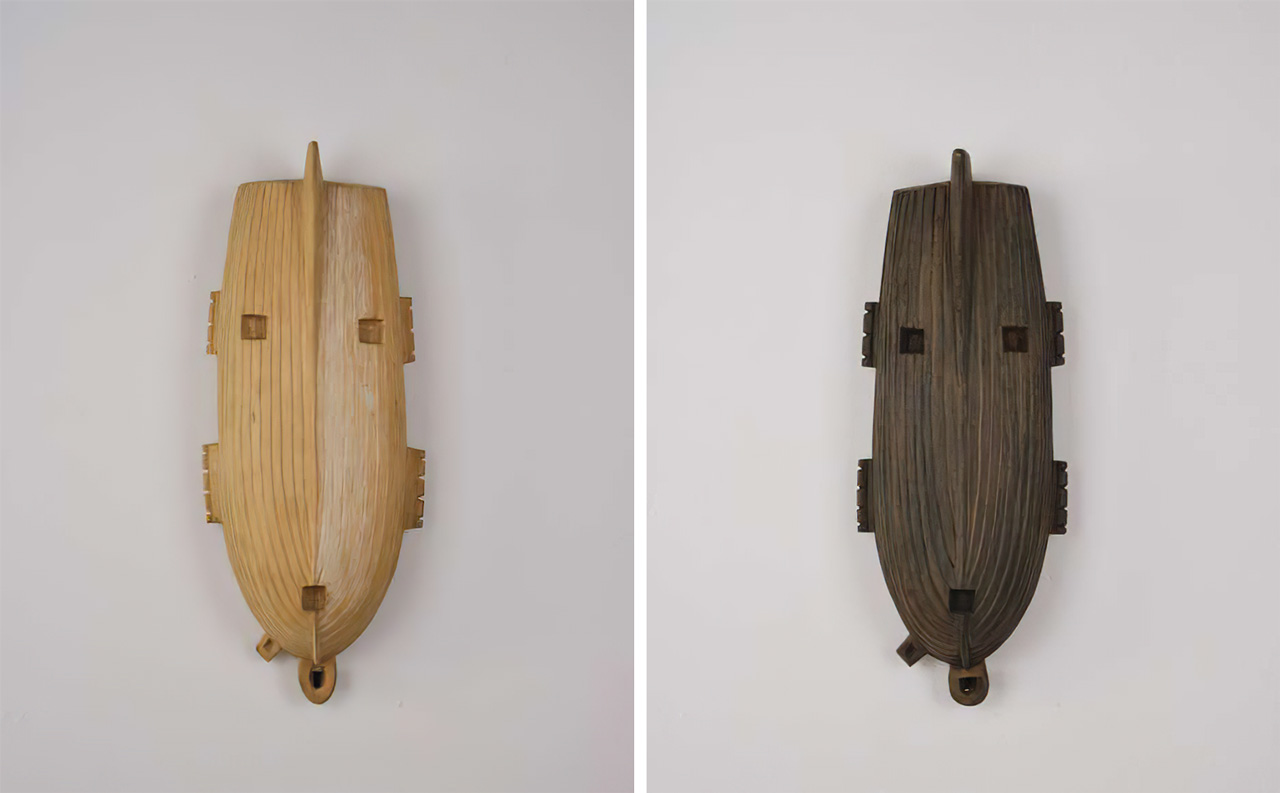
Shortly after, his initial travels to West Africa—particularly Benin—marked a decisive turning point in his life and work. Collecting discarded plastic containers, oil cans, and jerrycans, he presented or slightly modified these industrial objects to reveal their striking resemblance to traditional African ceremonial masks or ritual fetishes. Termed “Purs-purs”, these sculptures highlighted an economy of upcycling, recovery, and gift-giving, while raising critical questions about post-colonial consumption, cultural recognition between Africa and the West, and their supposed “fair trade.”
Parallel to his sculpture, Bruel produced a significant body of works on paper using gouache, felt-tip markers, collage, and altered magazine prints. These pieces engaged with art historical references, political imagery, and visual media, subverting commercial graphics with raw, expressive mark-making.
During the late 1970s, Jacques Yves met Jacques Pilhan while on holiday in Sérignan-Plage. In 1980, together with Alain Monvoisin and Ramon Tio Bellido, he created Espace Avant-première in the apartment he shared with Tio Bellido near the Bastille. In 1983, Pilhan invited him to join Agence Temps Public, which handled communications for the Élysée Palace and various political organizations. It was during this period that Bruel created the iconic “Touche pas à mon pote” (“Hands off my buddy”) logo for SOS Racisme.
He achieved undeniable artistic renown, exhibiting at Galerie Langer-Fain in Paris, Carré des Arts in Vincennes, and Musée Ziem in Martigues, among other venues. However, an attribution dispute instigated by his former Beninese assistant eventually turned in the latter’s favor—fueled by globalization and Western bad conscience.
Though deeply wounded by this injustice, Bruel continued his creative practice. Extending his inquiry into transactional systems between civilizations, he turned his attention to the relativities of naming and perception generated by Asian cultures. Around this time, he began facing complex health issues and a sharp physical decline. Supported by close friends who enabled him to keep working, he accepted an invitation from Hubert Duprat to host a seminar at the Beaux-Arts in Nîmes, where he exhibited in 2003. Tired and ill, he moved back to Toulouse in 1998 to be near his family, where he passed away surrounded by loved ones on August 8, 2010.
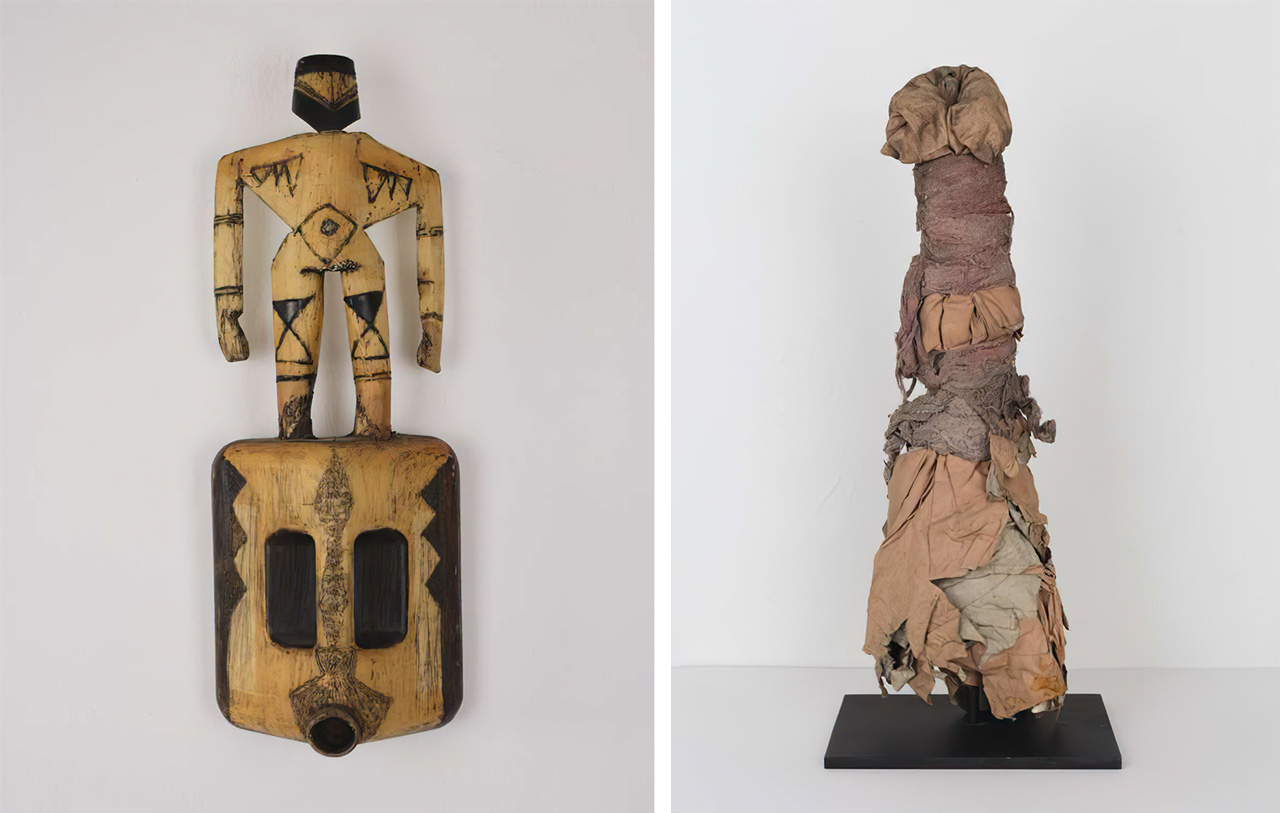
Photo left: Jacques Yves Bruel, Mask – Man, 1986, plastic and bitumen, unfolded 5-litre container, 57 × 20 × 14 cm, Courtesy Galerie Laurent Godin. Photo right: Jacques Yves Bruel, Anonymous Fishmongers, Paris, 18th Century, roll of carpeting used by Paris municipal road maintenance workers (cotton, twine and steel), 60 × 25 × 20 cm, Courtesy Galerie Laurent Godin
Info: Galerie Laurent Godin, 12 Rue Anatole France, Arles , France, Duration: 19/10/2026-7/1/2027, Days & Hours: Wed-Sat 11:00-13:00 & 15:00-18:30, www.laurentgodin.com/
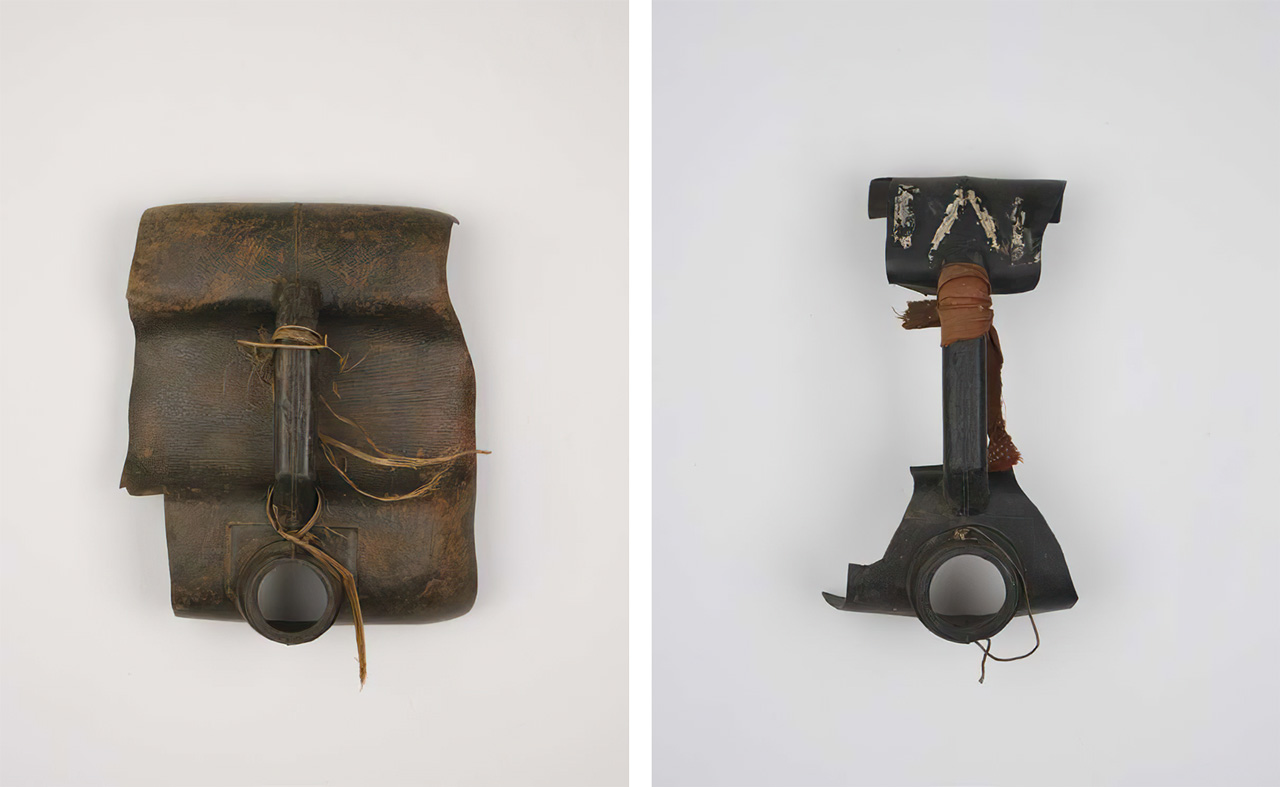
Right: Jacques Yves Bruel, Pur-pur, circa 1985–1995, collected plastic container, 30 × 15 × 14 cm, Courtesy Galerie Laurent Godin
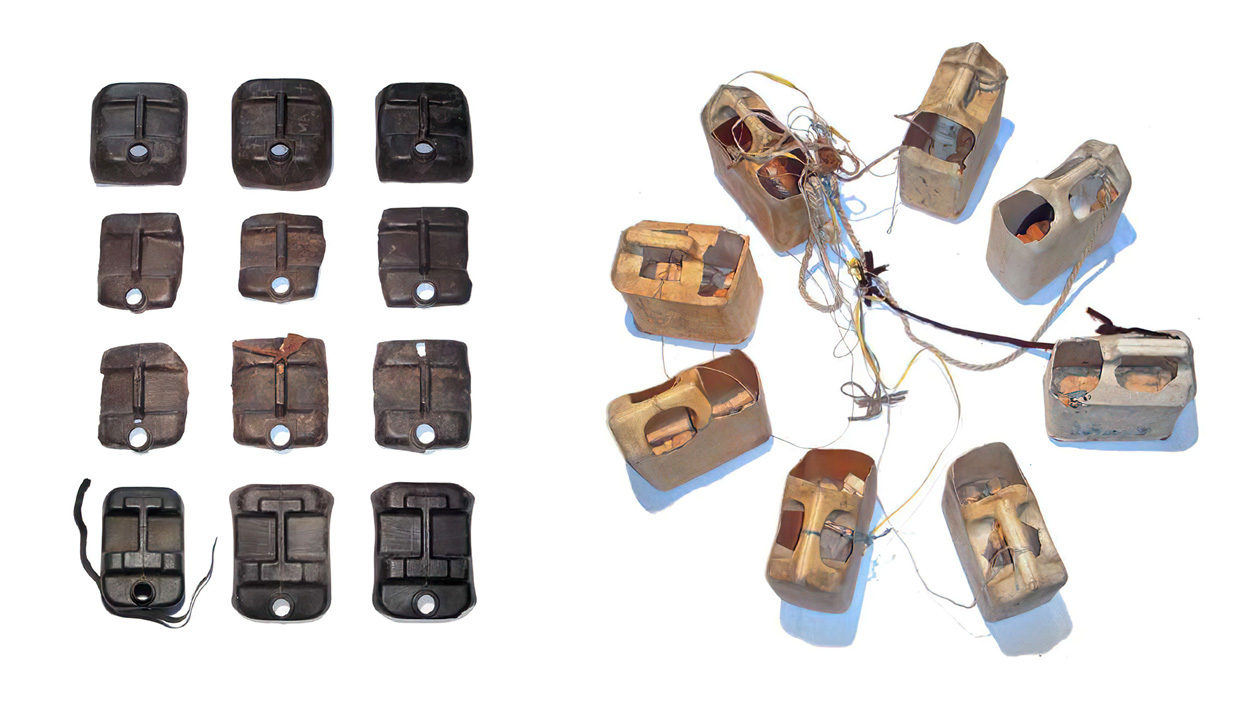
Right: Jacques Yves Bruel, Mami Wata, circa 1990–2000, 8 containers holding Vodun statuettes, dimensions variable, Courtesy Galerie Laurent Godin
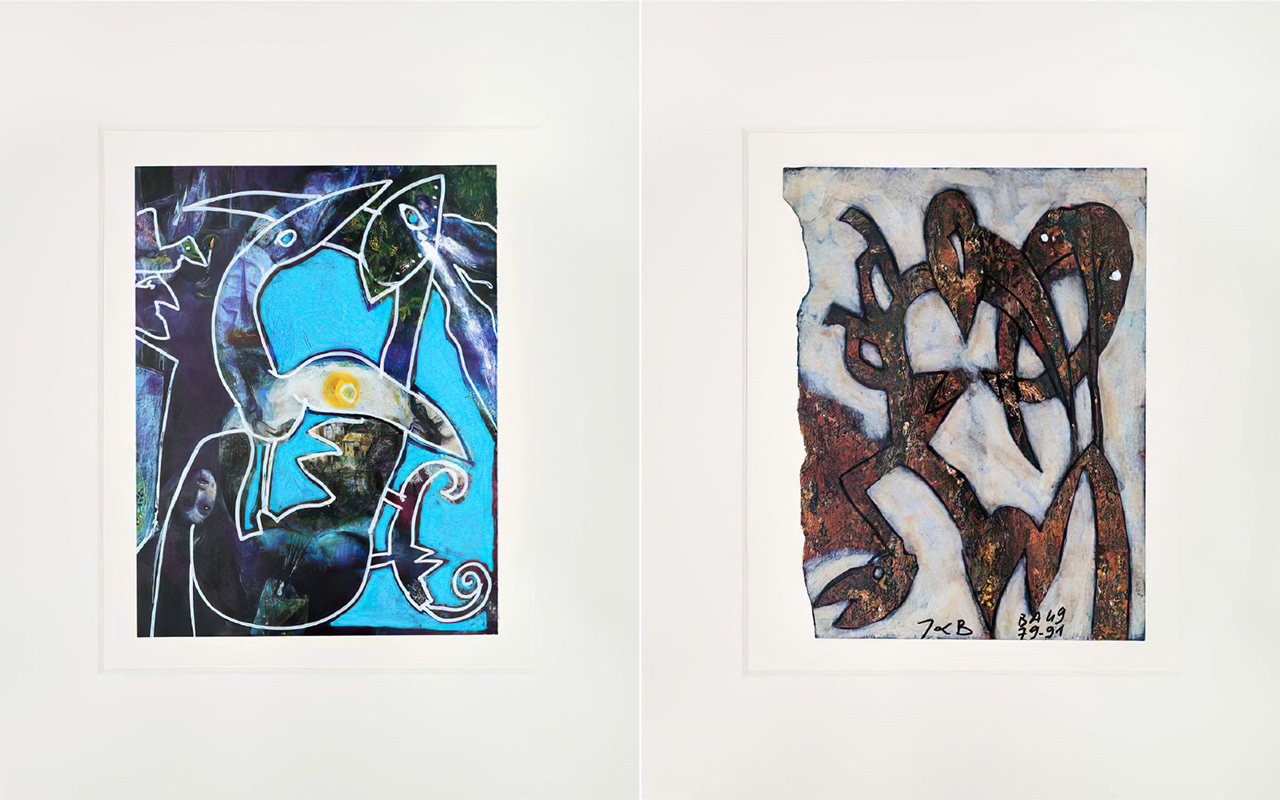
Right: Jacques Yves Bruel, Palimpsest on a Reproduction of Eugène Leroy, 1991, gouache and felt-tip pen on magazine paper, signed and dated, 28.5 × 22 cm, Courtesy Galerie Laurent Godin