ART CITIES Paris:Lee Krasner
Lee Krasner was a pioneering American Abstract Expressionist whose work explored gesture, rhythm, color, and dynamic composition. Moving between painting, collage, and drawing, she continually reinvented her visual language, transforming discarded canvases and painted fragments into energetic compositions. Drawing inspiration from nature, music, and her own artistic experimentation, Krasner established an independent and influential practice within the predominantly male art world of postwar America.
By Efi MIchalarou
Photo: Gagosian Archive
“Works from the 1960s”, is an exhibition of paintings and works on paper by Lee Krasner, the exhibition marks the first solo presentation of Krasner’s work in France. Krasner’s work has never before been the subject of a solo exhibition in France, despite her long-standing engagement with French modernism and nomination as Chevalier de l’Ordre des Arts et des Lettres in 1982. Nearly forty-five years after receiving that distinction, the exhibition brings a distilled selection of her work to Paris, situating this decisive period of her practice within the broader history of twentieth-century abstraction.
A central figure of the New York School, Krasner developed an independent and continually evolving practice over more than six decades. Born in Brooklyn in 1908, she studied with Hans Hofmann and absorbed influences ranging from European modernism, including Henri Matisse, Piet Mondrian, and Pablo Picasso, to the emerging language of American abstraction. Alongside artists including Willem de Kooning, Helen Frankenthaler, Franz Kline, and Mark Rothko, Krasner and Pollock, who married in 1945, maintained an ardent artistic dialogue, serving as each other’s most exacting critics and strongest supporters.
Krasner’s relationship with France was both artistically and personally significant. She traveled to Europe for the first time in the summer of 1956, visiting museums including the Musée du Louvre, and was in Paris when she learned of Pollock’s death that August. The encounter with European painting would remain an important point of reference throughout her career.
Throughout the 1960s, living between the hamlet of Springs in East Hampton and her apartment and studio in Manhattan, Krasner entered a period of intense experimentation and reinvention. Tackling canvases of unprecedented scale and increasingly lyrical compositions, she worked with newly restricted palettes and began to apply oil paint directly from the tube. These developments gave rise to the “Umber Paintings” (1959–62) and “Primary Series” (1960s), now among her most renowned painterly achievements. Her growing international recognition was affirmed by the 1965 retrospective “Lee Krasner: Paintings, Drawings and Collages” at London’s Whitechapel Gallery.
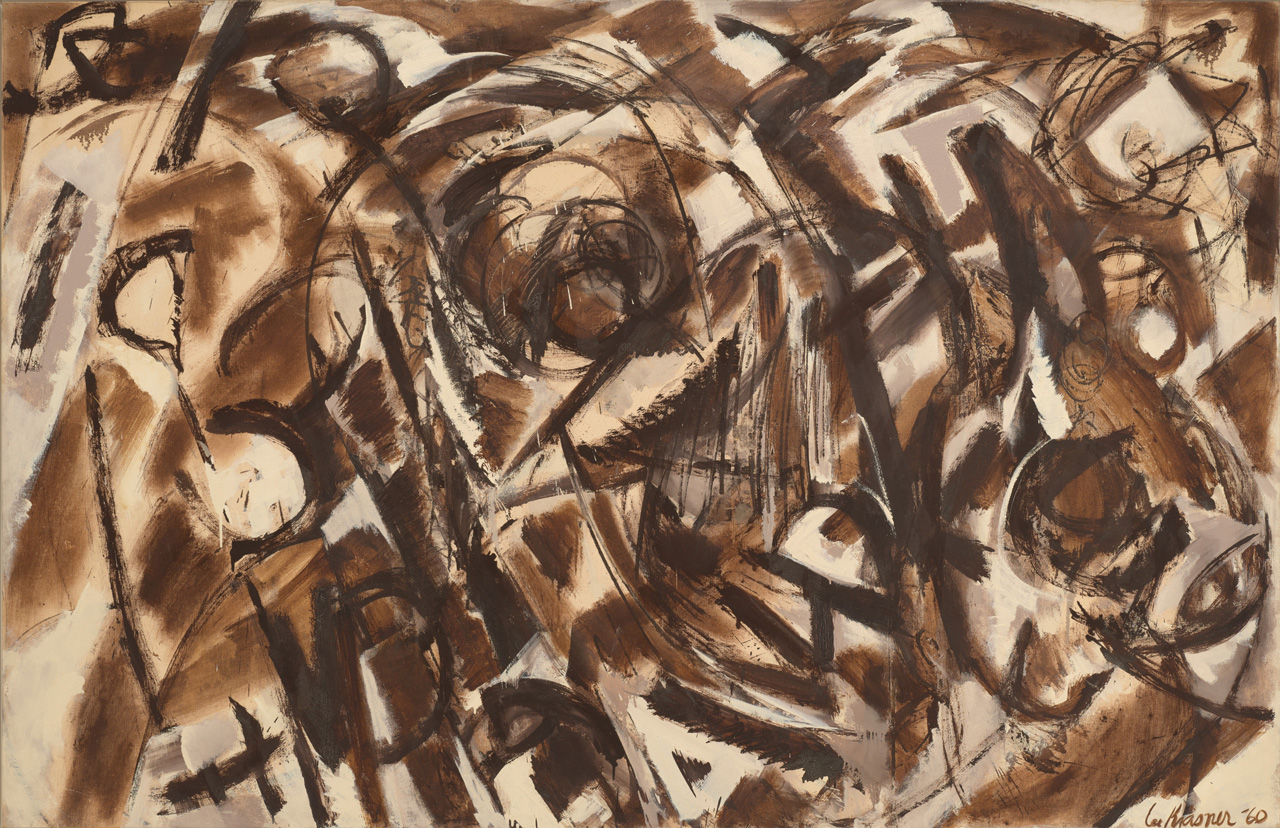
Extending almost 2.8 meters (109 1/8 inches) in length, “Seeded” (1960) encompasses the viewer’s field of vision with a dynamic composition in a palette limited to earth tones. One of her “Umber” works, a group of paintings created during a period of insomnia when Krasner frequently worked at night under artificial light, “Seeded” combines multidirectional brushstrokes that shift between broad, diffuse passages and taut, energetic marks. Krasner would later describe the Umber series as going “down deep into something which wasn’t easy or pleasant.”
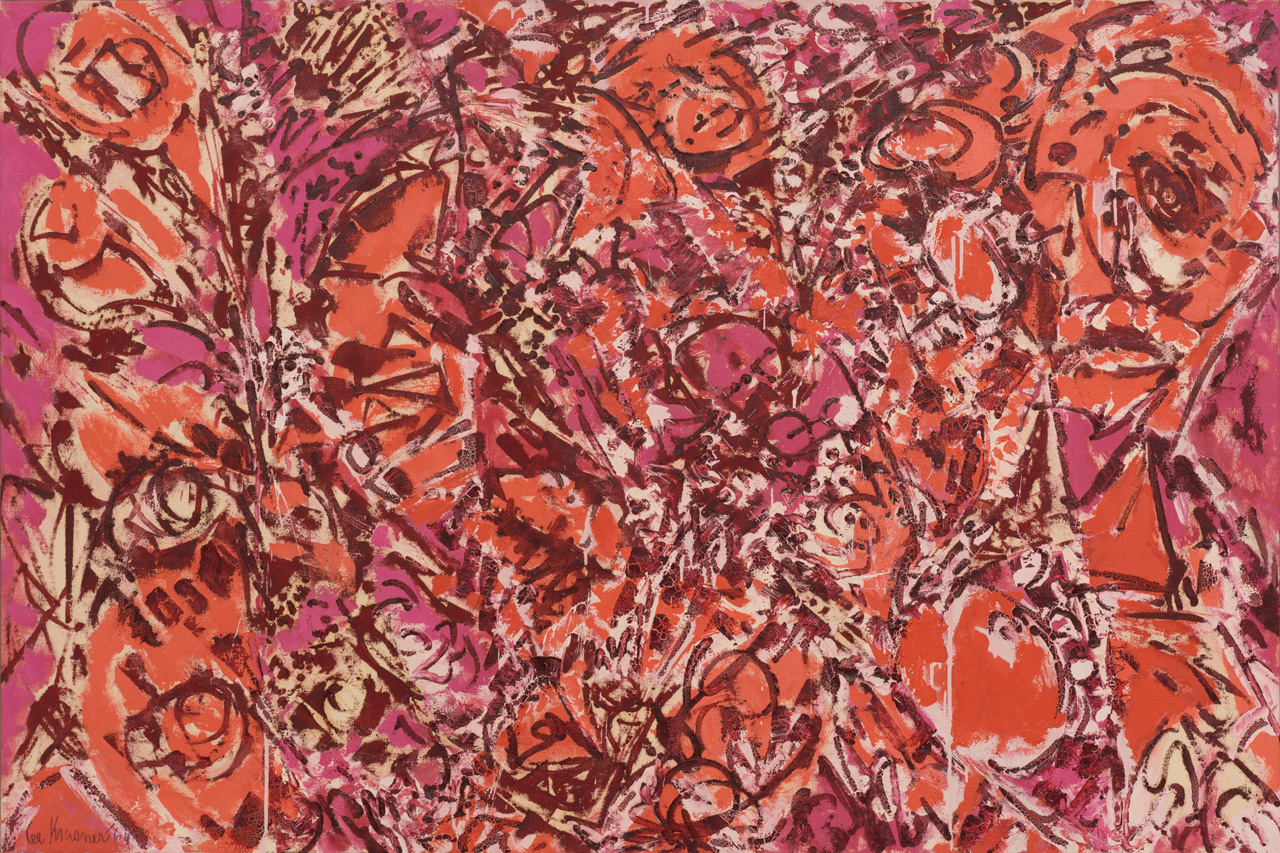
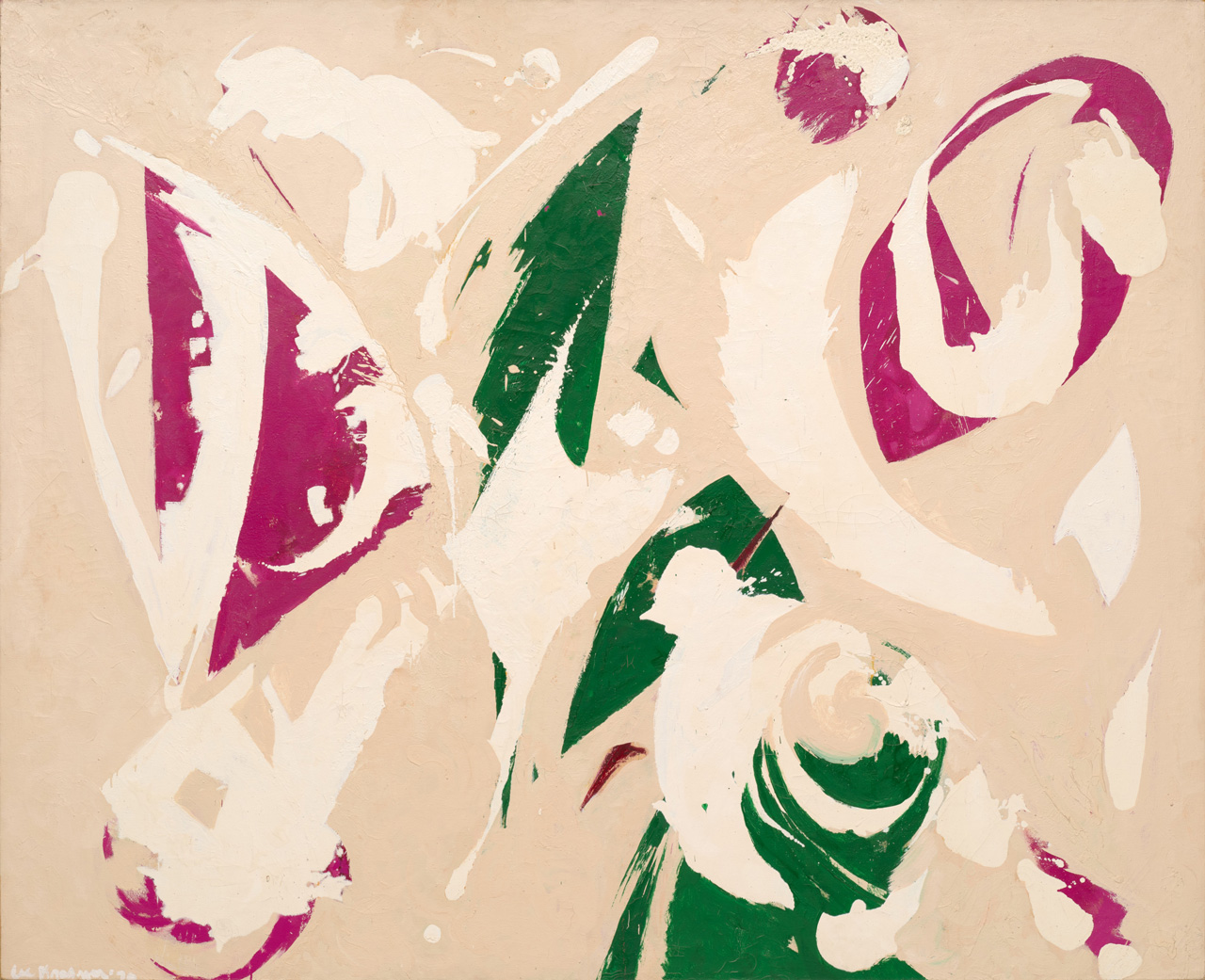
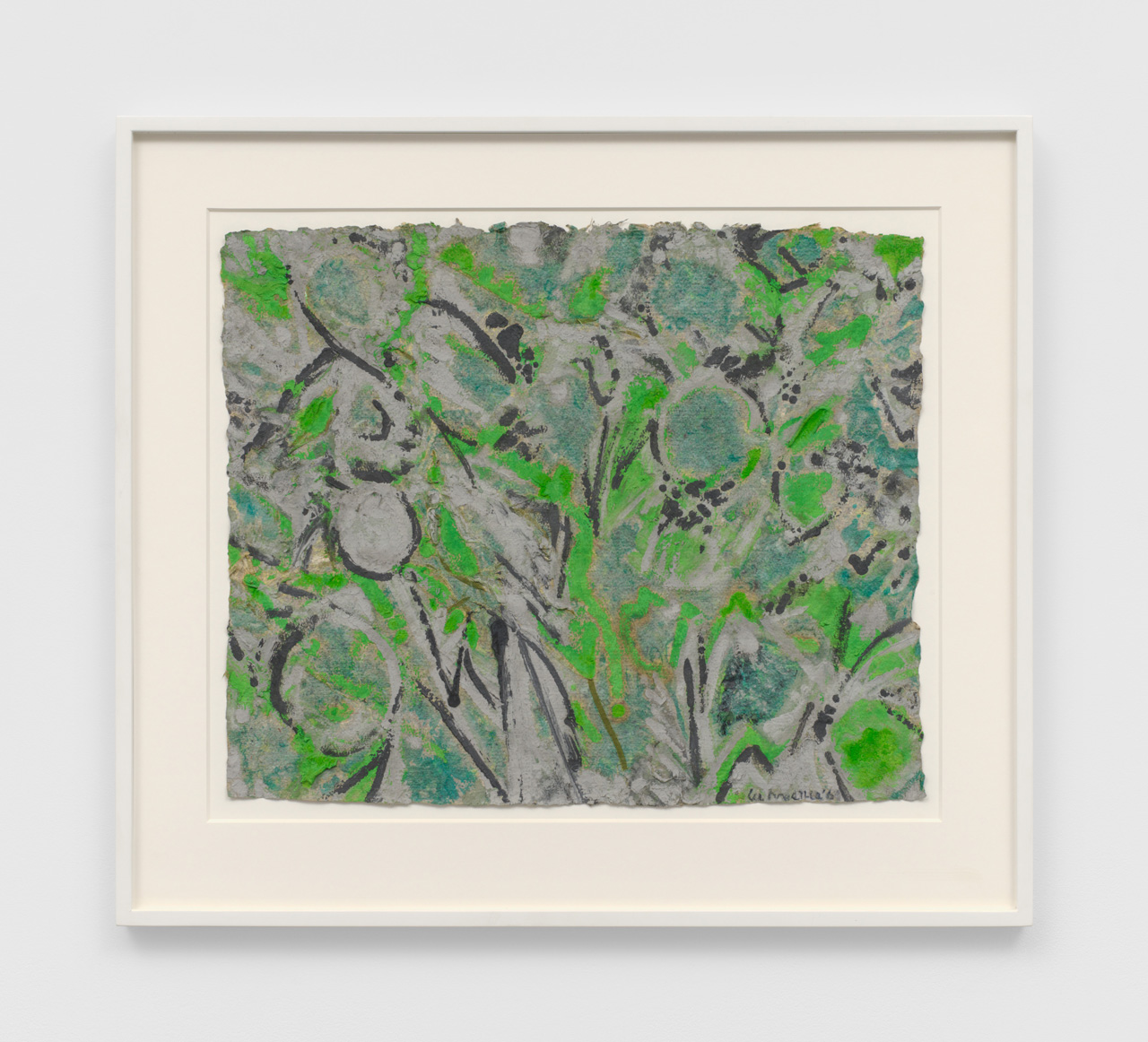
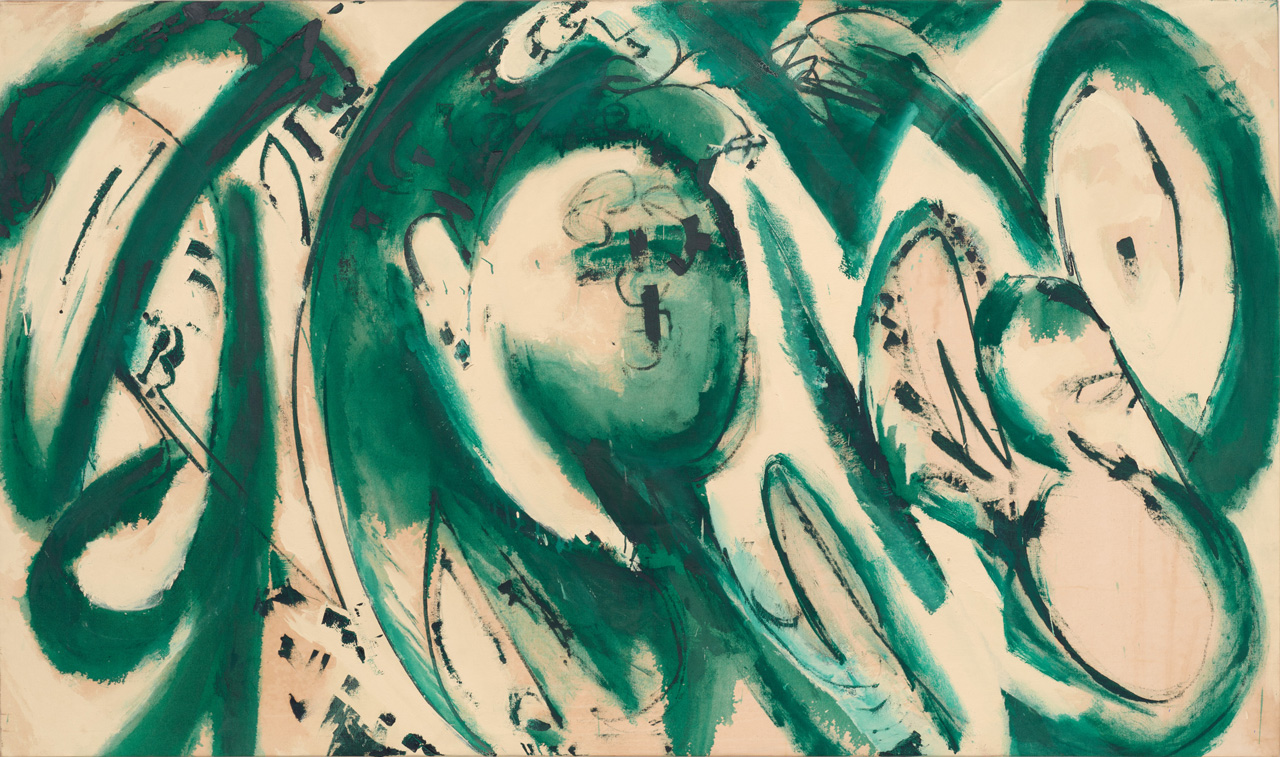
By the mid-1960s, Krasner had turned toward more saturated hues, exploring calligraphic color experiments and works in gouache on paper. An untitled gouache from 1964 juxtaposes purple and yellow, while the oil painting “Icarus” (1964) suggests the heat and intensity of its mythological namesake approaching the sun. “Portrait in Green” (1969), Krasner’s only painting on canvas made that year, is composed of sweeping rhythmic gestures in viridian oil paint, accentuated by passages of off-white and linear forest green brushstrokes. The exhibition culminates in the majestic oil on canvas “Comet” (1966–70), in which vigorous forms of magenta and emerald green are overlaid with cream and white, creating an expansive interplay between figure and ground with an energy in keeping with the celestial associations of its title.
Photo: Lee Krasner, Portrait in Green, 1969, Oil on canvas, 55 1/4 x 94 3/8 inches (140.3 x 239.7 cm), © 2026 Pollock-Krasner Foundation/Artists Rights Society (ARS), New York, Photo: Owen Conway, Courtesy Olney Gleason, New York
Info: Gagosian, 4 rue de Ponthieu, Paris, France, Duration: 19/10-18/12/2026, Days & Hours: Tue-Sat 10:30-18:30, https://gagosian.com/