TRIBUTE:Roy Lichtenstein-Like New (Part I)
Roy Lichtenstein changed the way we see images. Turning the visual language of mass-culture comics, advertising, consumer goods, and commercial printing into fine art, Lichtenstein produced works that looked cool, crisp, and machine-made but were meticulously handmade. Roy Lichtenstein: Like New looks beyond the artist’s iconic surfaces to trace how his early interest in perception and visual recognition shaped a career-long inquiry into the power and stability of images. Across painting, drawing, collage, prints, sculpture, and film, the exhibition presents Lichtenstein’s images as unstable forms that could be borrowed, translated, reframed, and transformed.
By Efi Michalarou
Photo: Whitney Museum Archive
The exhibition “Roy Lichtenstein: Like New” brings together over 130 works made from the early 1940s through the 1990s and offers a bold reconsideration of one of the defining artists of the Pop art movement and the twentieth century. Tracing Lichtenstein’s career-long investigation into duplication, perception, simulation, authorship, and image culture, “Like New” reveals an artist who understood that images are never fixed but instead continually copied, enlarged, circulated, and made new.
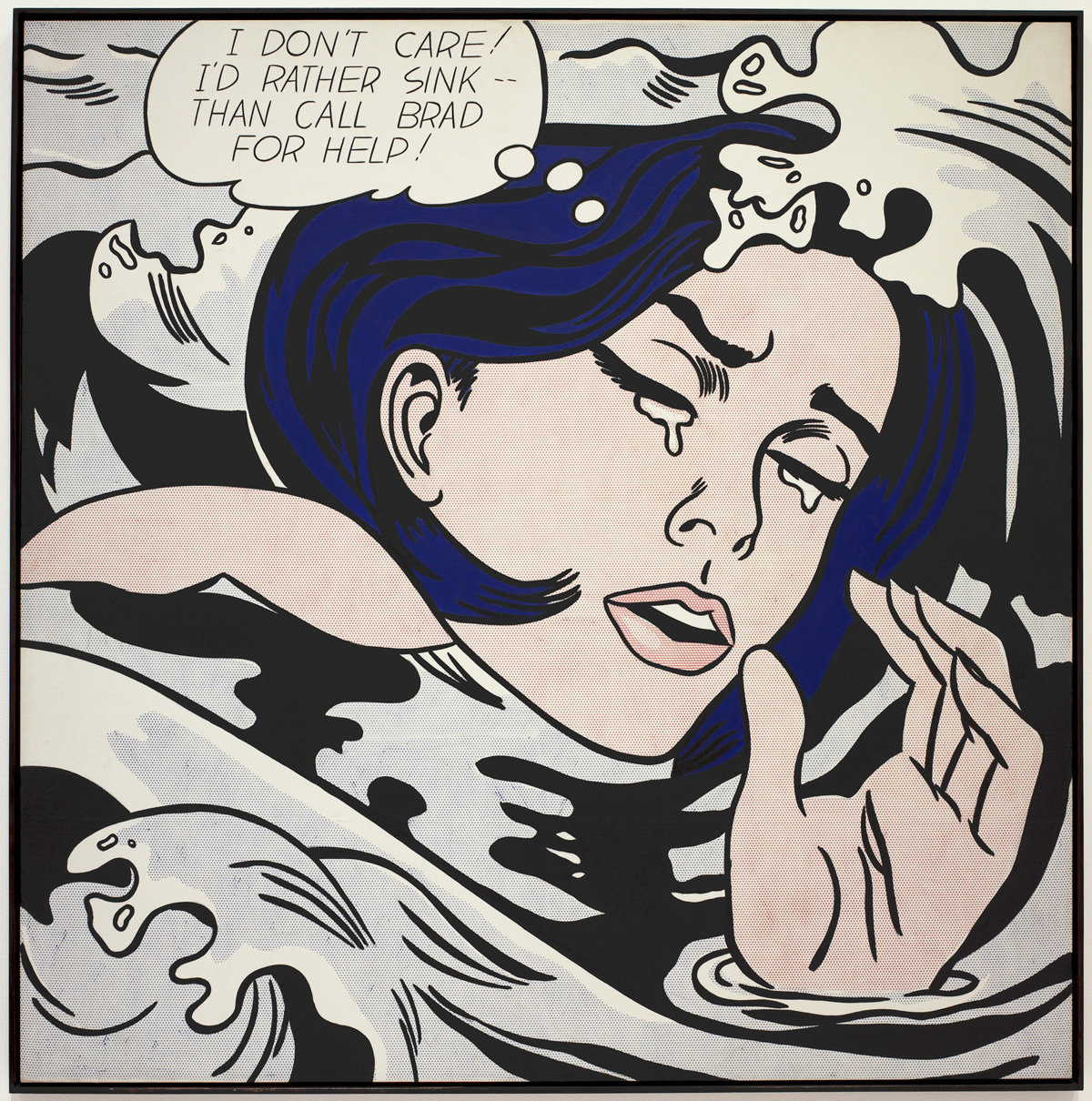
The exhibition features many of Lichtenstein’s most celebrated works, including “Look Mickey” (1961), “Girl with Ball” (1961), “Masterpiece” (1962), “Drowning Girl” (1963), “Happy Tears” (1964), “Little Big Painting” (1965), “Rouen Cathedral, Set III” (1968–69), and “Artist’s Studio (The Dance)” (1974). Among its highlights, the exhibition reunites for the first time all eight works from Lichtenstein’s landmark 1962 Pop debut at Leo Castelli Gallery. The exhibition reconstructs the intimate gallery setting, allowing visitors to experience the works together as audiences did at a pivotal moment in American art history. The exhibition also includes the recreation of three murals, including a nearly 96-foot-long iteration of “Greene Street Mural” (1983) and an outdoor presentation of “Girl in Window” (1964) realized by artist and co-curator Alex Da Corte. The impact of Lichtenstein’s work extended far beyond Pop, shaping generations of artists, including Louise Lawler, Richard Pettibone, and Sturtevant, whose work will also be on view to further illustrate Lichtenstein’s relationship to copying, influence, appropriation, and the afterlife of images.
Lichtenstein moved from his hometown of New York to Columbus, Ohio, in 1940 to attend Ohio State University (OSU). In 1943, he was drafted into the US Army during World War II, and he was sent to Europe with his infantry division in late 1944. The young artist painted and sketched throughout his military service. At one point, he even made drawings of enlarged military cartoons for his commanding officer. Following his discharge in early 1946, he returned to OSU to complete his studies.
According to Lichtenstein, it was through his extended engagement with the ideas and teachings of artist and OSU professor Hoyt L. Sherman that he began to understand “how to go about learning how to look.” Sherman’s experimental Flash Lab used brief illuminations of words, objects, and projected images in a darkened room, which students were then expected to draw from memory. Lichtenstein recalled that the exercise produced “a very strong afterimage, a total impression. Following stints in Cleveland and upstate New York, Lichtenstein returned to the New York metropolitan area in 1960, where he taught at Douglass College, part of Rutgers University, in New Jersey. It was there that Lichtenstein had an artistic breakthrough. He began making deadpan paintings and drawings of common items based on mass-media reproductions: an electrical cord, a tire, a hot dog, a notebook. Frontal, centered, and stripped of any narrative context, these images are a study in neutrality.
That emotional restraint was matched by a deliberately mechanical- looking style, one that evoked the graphic clarity of commercial design while being distinctly handmade. These works also draw on the perceptual skills Lichtenstein honed in the Flash Lab at Ohio State University, where, as Hoyt L. Sherman wrote: “Familiar objects, such as a chair, or wastebasket, or a gasoline can, when suspended in space, have the effect of abstract forms.” In Lichtenstein’s work, hard contours, simplified shapes, and sharp contrasts transform everyday objects into tightly unified compositions.
Based on romance and war comics, advertisements, and product packaging, the works in Lichtenstein’s first one-person exhibition at Leo Castelli’s uptown New York gallery in early 1962 challenged prevailing ideas about originality, authorship, and what counted as serious art. For some viewers, the paintings—executed to look like copies of printed matter—felt startlingly novel and fresh; for others, vulgar or imitative. Castelli, the influential dealer who had launched the careers of Jasper Johns and Robert Rauschenberg, immediately recognized the groundbreaking importance of Lichtenstein’s new paintings. The exhibition established the visual language that would come to define Lichtenstein’s art: flattened forms, bold outlines, primary colors, and uniform dot patterns, like those used in commercial printing to build planes of color and tone. Moreover, the paradox of repetition as reinvigoration would remain central to Lichtenstein’s practice for decades to come. This gallery re-creates this pivotal exhibition in its entirety.
Inspired by a comic-book image of a painter at work, Lichtenstein began transforming the brushstroke into a graphic sign in the mid-1960s. The painter’s gesture, that expressive mark of Abstract Expressionists such as Lee Krasner and Willem de Kooning, had long stood for authenticity and self-expression. Lichtenstein refashioned brushstrokes and their attendant drips, smears, and splashes—enlarged, outlined, and rendered with crisp precision against fields of dots—as standalone images and playful surrogates for painterly expression itself. “Visible brushstrokes in a painting convey a sense of grand gesture,” he explained. “But in my hands, the brushstroke becomes a depiction of a grand gesture.” As one of Lichtenstein’s most distinctive motifs, the brushstroke appears across paintings, prints, sculptures, and murals throughout his career, including the monumental 1988 sculpture installed in the outdoor gallery on this floor. Here a re-creation of one of the four walls from his “University of Düsseldorf Brushstroke Mural” (1970) serves as the backdrop for a number of brushstroke paintings from the 1960s. The blank cutouts correspond to doors in the original building.
Presenting works from across his career, these galleries probe the artist’s declaration that reproduction was the real subject of his work. Early on, Lichtenstein found his imagery in storybooks, US history paintings, and military cartoons. In the 1960s, he turned his attention to a postwar image culture in which pictures circulated rapidly through comics, newspapers, magazines, and advertisements, as well as museum postcards and art books. Lichtenstein sketched from his chosen images, cropping, simplifying, and adjusting the compositions before enlarging his drawings with a projector and transferring them to canvas. He also developed techniques to imitate the regularity of mechanical image reproduction, including a series of increasingly sophisticated perforated screens that he pushed paint through to create his signature dots. It was not long before Lichtenstein’s own work was subjected to duplication. Both Richard Pettibone and Sturtevant appropriated his pictures in the mid-1960s, taking the questions Lichtenstein’s art posed around authorship and originality to another level. Around the same time, Lichtenstein began to reimagine the possibilities of duplication, shifting his attention from pictures to patterns and exploring seriality through multipart paintings.
Despite their titles, Lichtenstein’s “Mirrors” (1969–72) do not reflect anything: not the artist at work making them, not the viewer standing in front of them, not even the room in which they hang. “They really only look like mirrors if someone tells you they do,” he later said. The “Mirrors” nod slyly at the centuries-old expectations of painting as an illusionistic medium, even as their forms offer up Lichtenstein’s response to developments in geometric abstraction and Minimalist sculpture of the 1960s and 1970s. The series was inspired by printed sales brochures he saw in glass stores on the Bowery near his studio that “depicted mirrors with air-brushed mirror symbols, reflecting nothing.” He then photographed actual mirrors to study how light moved across their surfaces and translated those effects into curved bands, dots, highlights, and shadows, marking the first time the artist used photography to help him develop his imagery.
Commissioned by the Los Angeles County Museum of Art for its Art and Technology program, “Three Landscapes” (1970–71) is Lichtenstein’s only film. The program paired artists with technology companies in Southern California, and Lichtenstein spent two weeks in residence at Universal Film Studios. After touring the studio’s film laboratories and special effects facilities, he began developing film loops of sky and water separated by a heavy black horizon line. The work is both technically ambitious and characteristically deadpan. Lichtenstein filmed fish in an aquarium to suggest the ocean for one loop and used dots as the “sky” for another, creating filmic seascapes that appear as “moving pictures.” Rear projection conceals the mechanics of display, achieving the artist’s desired effect of the screens appearing autonomous, like paintings.
Several times throughout his career, Lichtenstein expanded his imagery to an architectural scale through murals. In 1983, the artist and a team of assistants painted “Greene Street Mural” on the back wall of Leo Castelli’s recently opened gallery on Greene Street in SoHo, housed on the ground floor of a spacious former industrial building. The mural functions as a retrospective of Lichtenstein’s image world, gathering motifs that the artist used throughout his career into a continuous composition, albeit one that cannot be viewed in its entirety from a single vantage point.
The hand-painted version on the facing wall represents the fourth time this mural has been presented. The artist’s preparatory drawings, on view nearby, offer insight into how he developed and organized this vast field of signs, while display cases cut into the face of the mural showcase photographs, models, and other materials that demonstrate how Lichtenstein worked through his ideas in three dimensions as well as two. Although the original was intentionally temporary and later destroyed, its repeated re-creation underscores the broad endurance of Lichtenstein’s imagery.
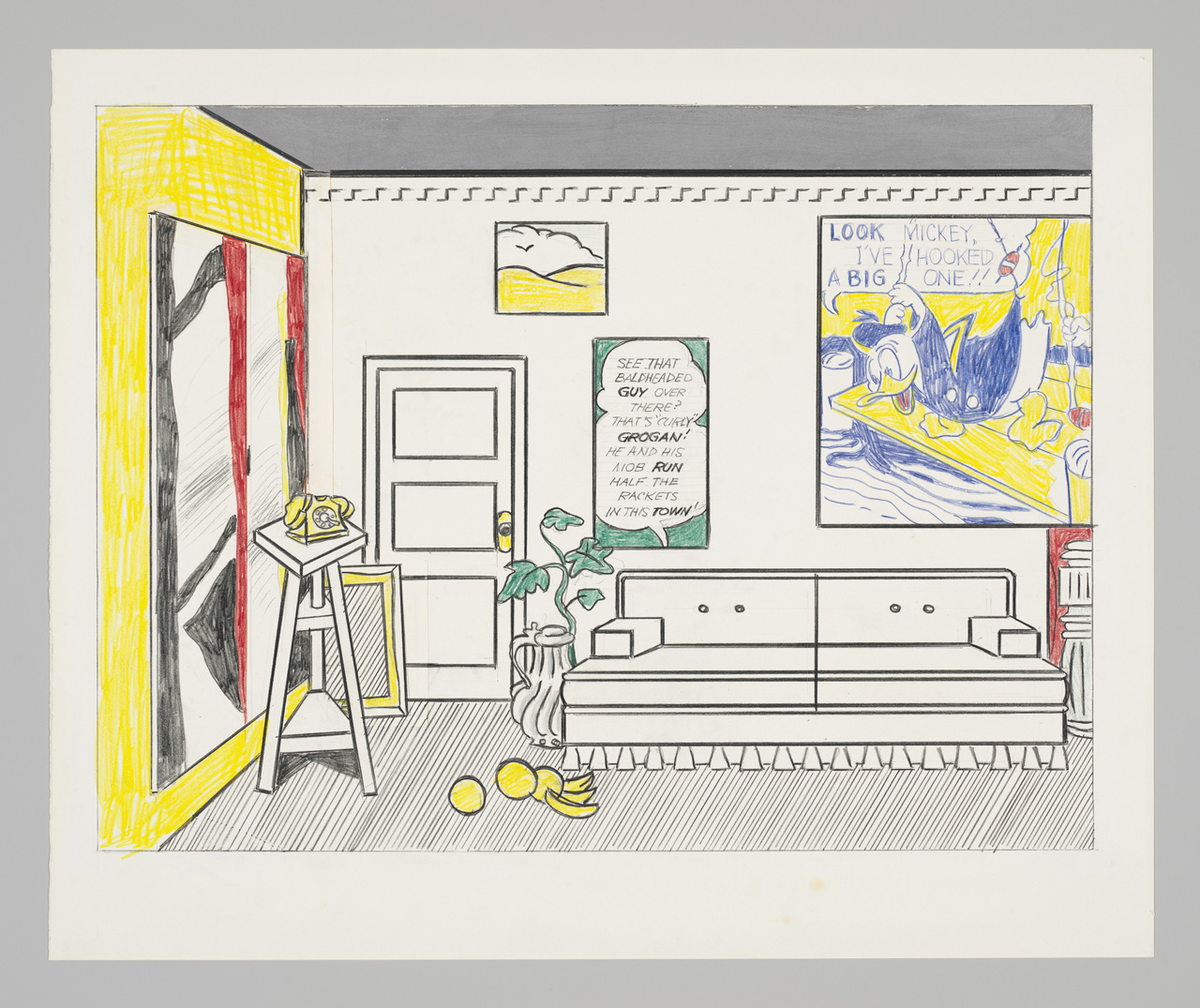
Lichtenstein’s “Artist’s Studios”, inspired in part by Henri Matisse’s “The Red Studio” (1911), present fictional interiors where images and motifs from across his practice are lifted from their original contexts, rearranged, and placed into new relationships. A playful take on the longstanding art-historical trope of the studio interior, these large paintings are filled with duplications of iconic works, reworked imagery from lesser-known works or studies, and paraphrases Lichtenstein’s dots were not a fixed formula, but a technique he continually refined from the early 1960s until his death in 1997. In works such as “Portrait of Allan Kaprow” (1961), he experimented with making dots by hand, pushing paint through the holes of a dog brush with the bristles removed to make rows of repeated marks. By the time he made” Happy Tears” (1964), his process had become more controlled, relying on commercial templates to evoke the look of mass-media printing while remaining handmade. For “Rouen Cathedral, Set III” (1968–69) and later works, he used custom-made dot templates that allowed for greater variation in scale, density, and atmosphere. In “Treetops Through the Fog” (1996), for example, the dots seem to dissolve into mist, showing how a technique associated with graphic clarity also produces subtlety and depth.of patterns and details. In these imagined settings, artworks become pictures on walls, decorative surfaces, and objects among objects.
The “Artist’s Studios” also served as a testing ground for Lichtenstein to try out ideas before fully committing to them. The result is a world of art within art, where the studio becomes less a private workspace than a space for reimagining pictures already in circulation. This gallery functions as a visual archive, bringing several of Lichtenstein’s Artist’s Studios into dialogue with the paintings, drawings, and other imagery referenced or reimagined in them.
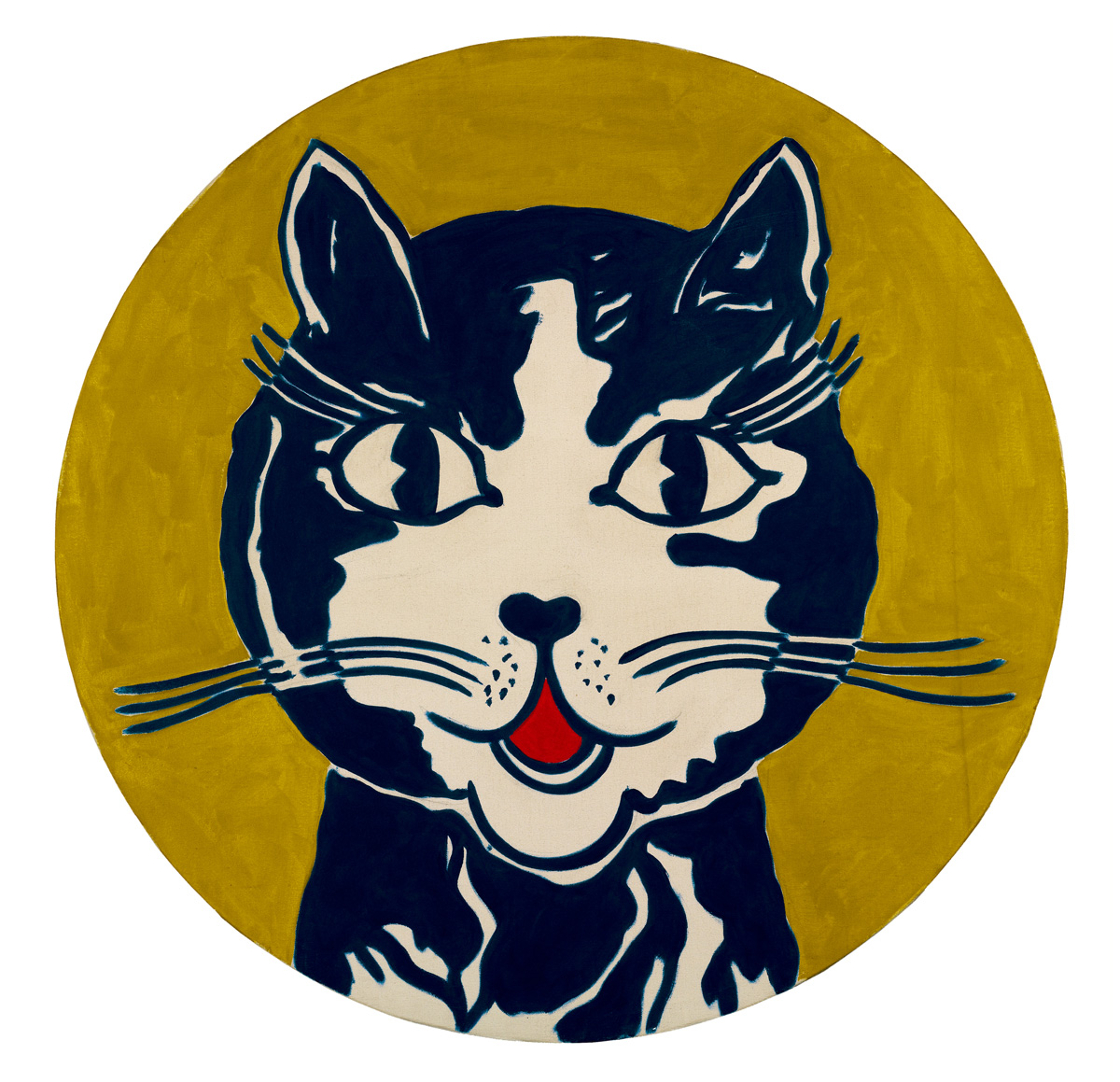
Photo: Roy Lichtenstein, Laughing Cat, 1961. Oil, graphite pencil on canvas, 31 7/16 in. (79.8 cm) (diameter). Private collection. © Estate of Roy Lichtenstein/DACS 2026
Info: Curators: Meg Onli and Alex Da Corte, Assistant Curators: Nakai Falcón and David Crane, Whitney Museum Of American Art, 99 Gansevoort St, New York, NY, USA,Duration: 11/9/2026-10/5/2027, Days & Hours: Mon, Wed-Thu & Sat-Sun 10:0-18:00, Fri 10:30-22:00, https://whitney.org/
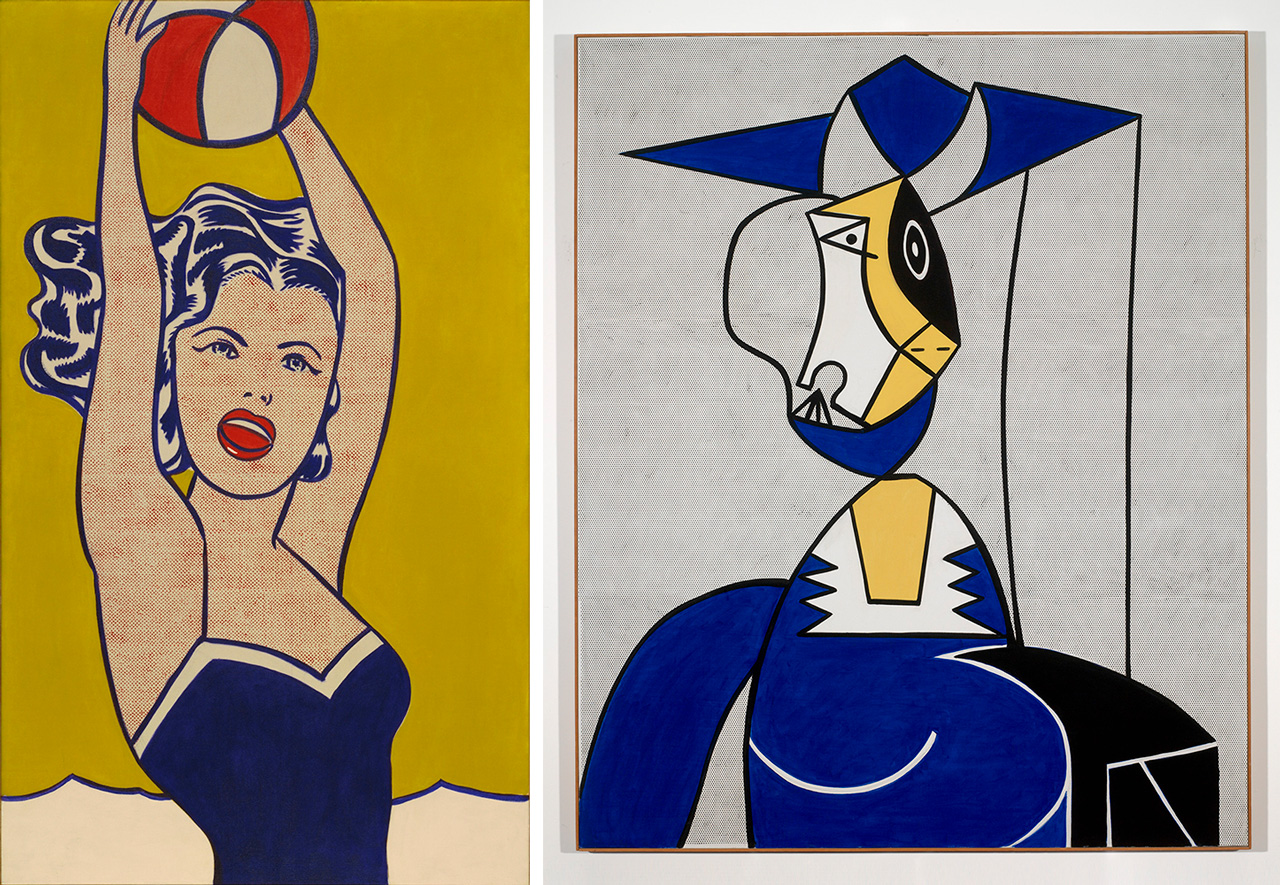
Right: Roy Lichtenstein, Femme au chapeau, 1962. Acrylic, oil, and graphite pencil on canvas, 68 × 56 in. (172.7 × 142.2 cm). Private collection. © Estate of Roy Lichtenstein/DACS 2026
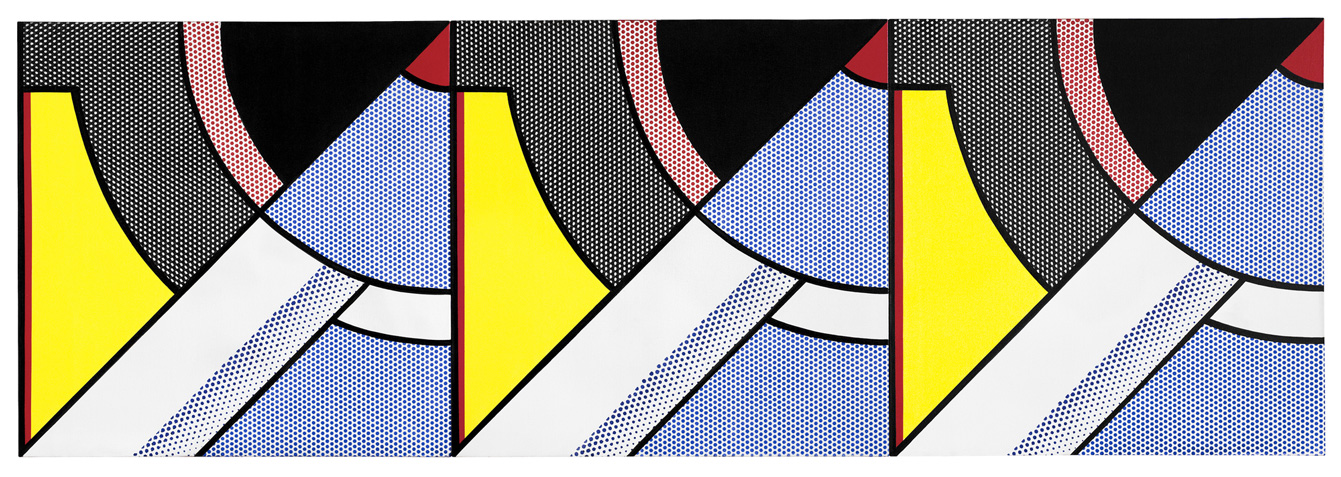
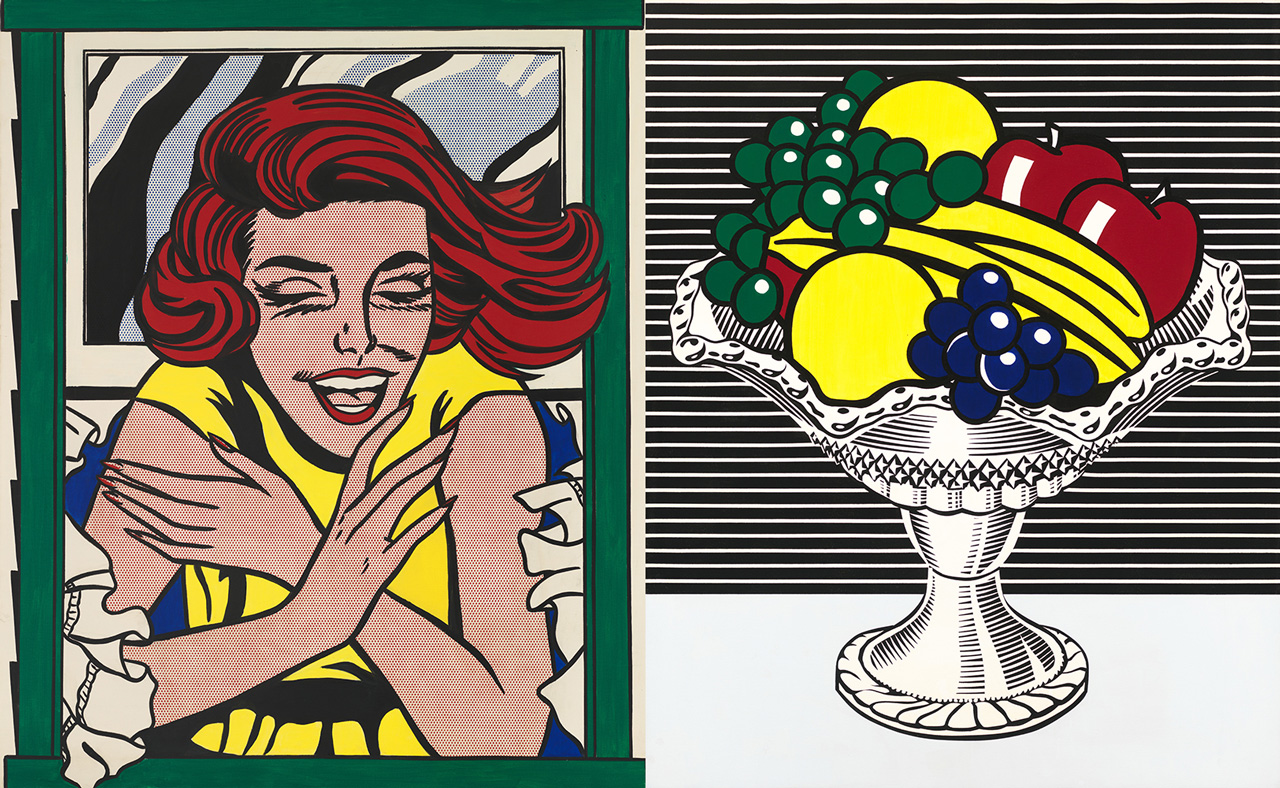
Right: Roy Lichtenstein, Still Life with Crystal Bowl, 1972. Oil and acrylic on canvas, 52 × 42 in. (132.1 × 106.7 cm). Whitney Museum of American Art, New York; purchase with funds from Frances and Sydney Lewis 77.64. © Estate of Roy Lichtenstein/DACS 2026
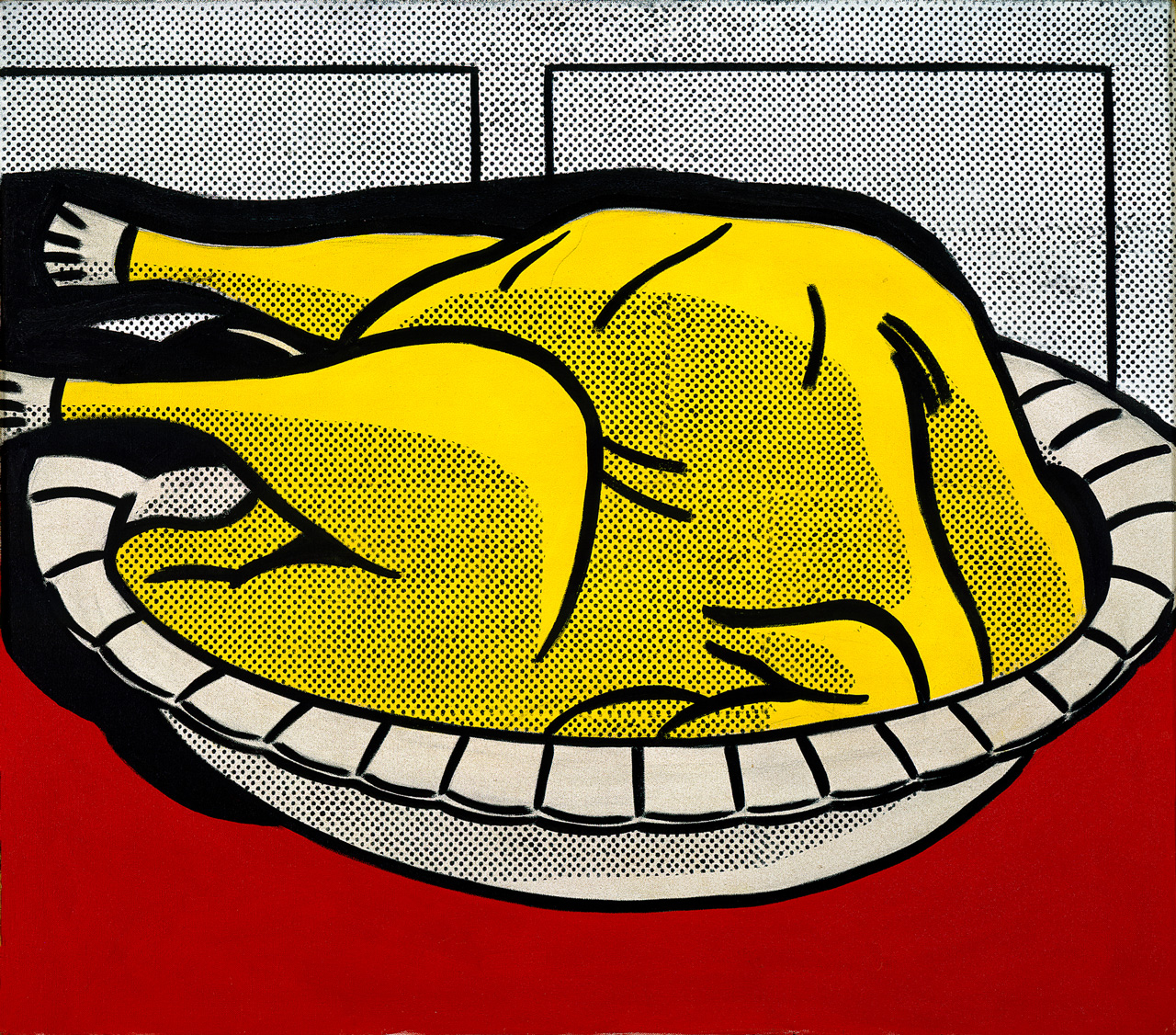
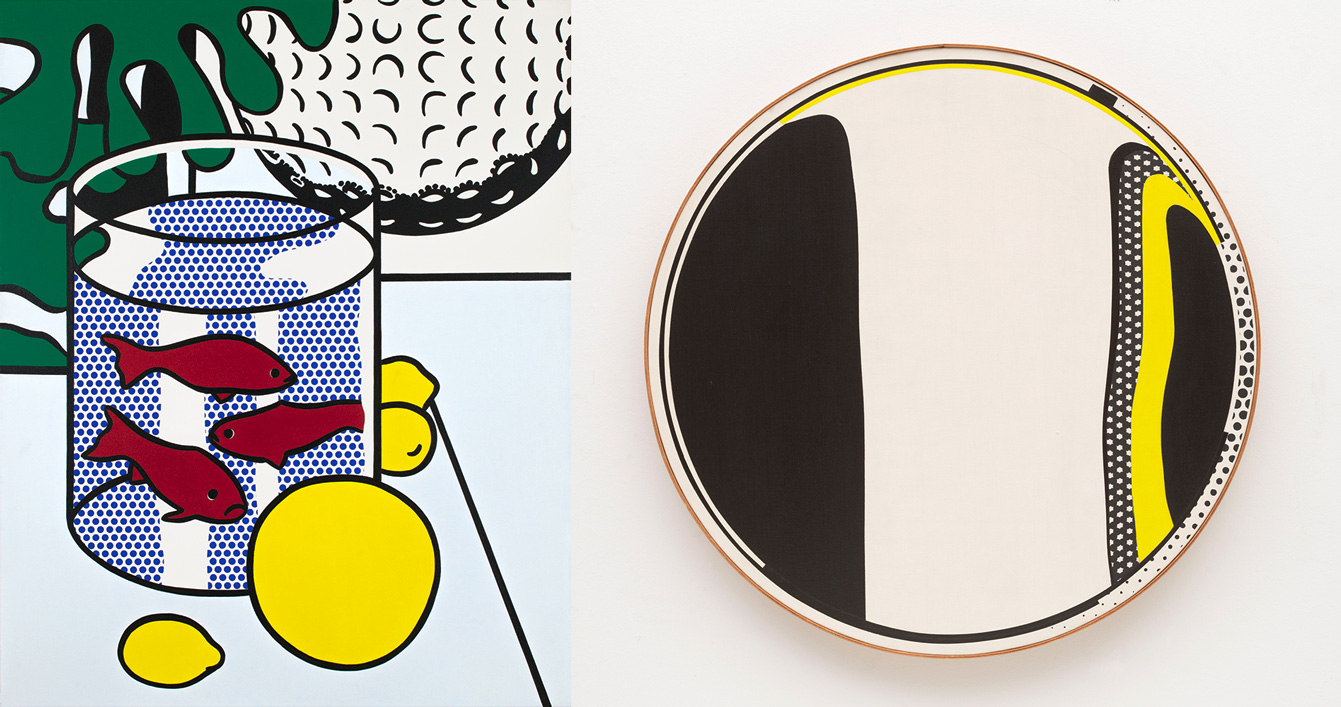
Right: Roy Lichtenstein, Mirror #10, 1970. Oil and magna on canvas, 24 in. (61 cm) in diameter. The Museum of Modern Art, New York. Gift of UBS. © Estate of Roy Lichtenstein/DACS 2026 © The Museum of Modern Art/Licensed by SCALA / Art Resource, NY
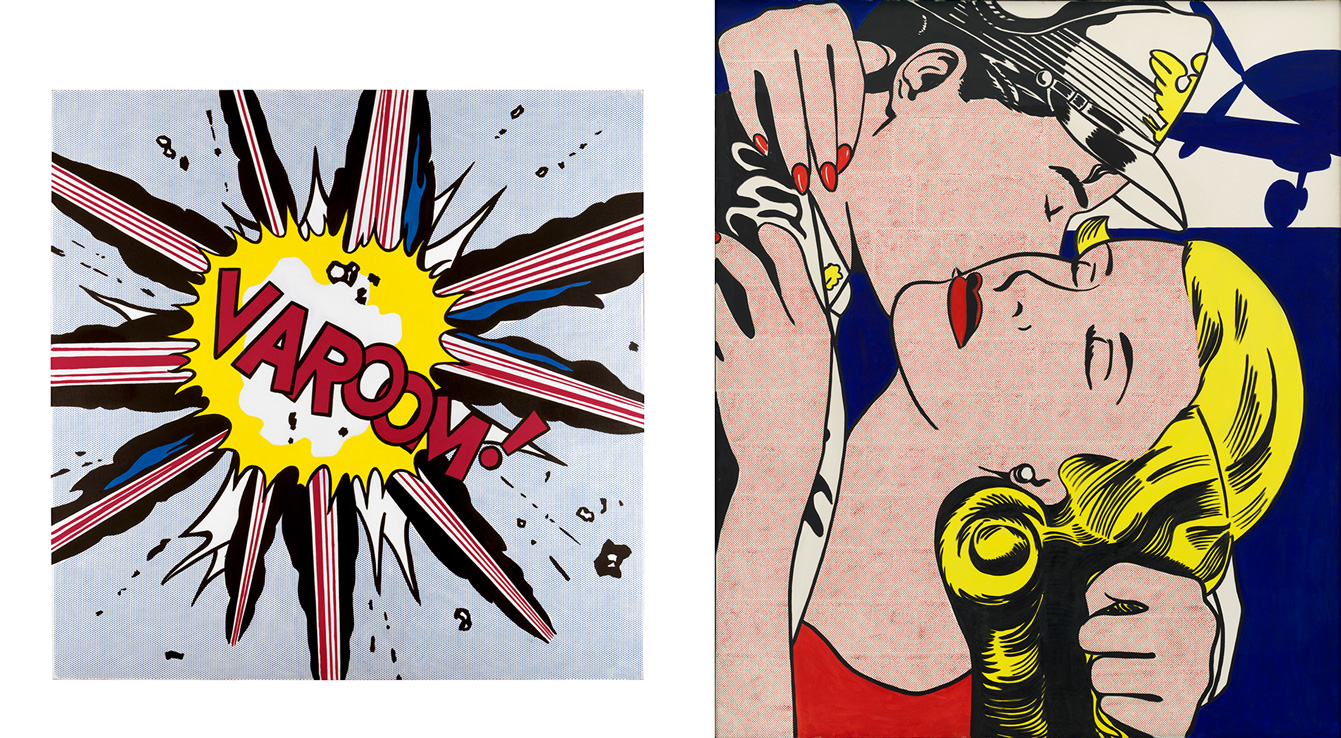
Right: Roy Lichtenstein, The Kiss, 1961. Oil, graphite pencil on canvas, 80 × 68 in. (203.2 × 172.7 cm). Private collection. © Estate of Roy Lichtenstein/DACS 2026