PRESENTATION Do Ho Suh
Do Ho Suh, one of the most internationally acclaimed Korean contemporary artists, has developed a distinctive artistic practice around questions of home, displacement, memory, identity, architecture, and community. Born in Seoul in 1962 and shaped by his experiences of living in South Korea, the United States, and Europe, Suh explores how people construct relationships with places and how memories transform the spaces we inhabit. Working across installation, sculpture, drawing, fabric, and video, his art considers home not as a fixed location but as a portable and continually evolving repository of personal and collective experience.
By Efi Michalarou
Photo: MMCA Archive
At the National Museum of Modern and Contemporary Art, Korea (MMCA) in Seoul, the major Do Ho Suh exhibition presents an extensive survey of more than three decades of his artistic practice, bringing together early experiments, major installations, drawings, fabric works, and ongoing projects. The exhibition traces the development of Suh’s ideas across different periods, media, and geographical locations.
Rather than organizing the exhibition strictly chronologically or thematically, MMCA creates connections between early and recent works, drawings and installations, the home and the body, and space and time. This approach reflects the interconnected nature of Suh’s practice, allowing visitors to move through his artistic world while bringing their own memories and experiences into dialogue with the works.
The exhibition begins outside the main galleries with “Seed Bank” an area devoted to Suh’s childhood drawings, sculptures, student experiments, and works produced before the beginning of his professional career. These early works reveal an artist already investigating the boundaries between two- and three-dimensional art, objects and spaces, and personal experience and physical environments.
Among the works are wooden carvings of sea creatures made in the courtyard of the artist’s childhood Hanok, his university graduation project, early installations, and experiments created during his student years. Together, they demonstrate how the ideas that would later define Suh’s career—home, migration, memory, space, and relationships—were already emerging in his early practice.
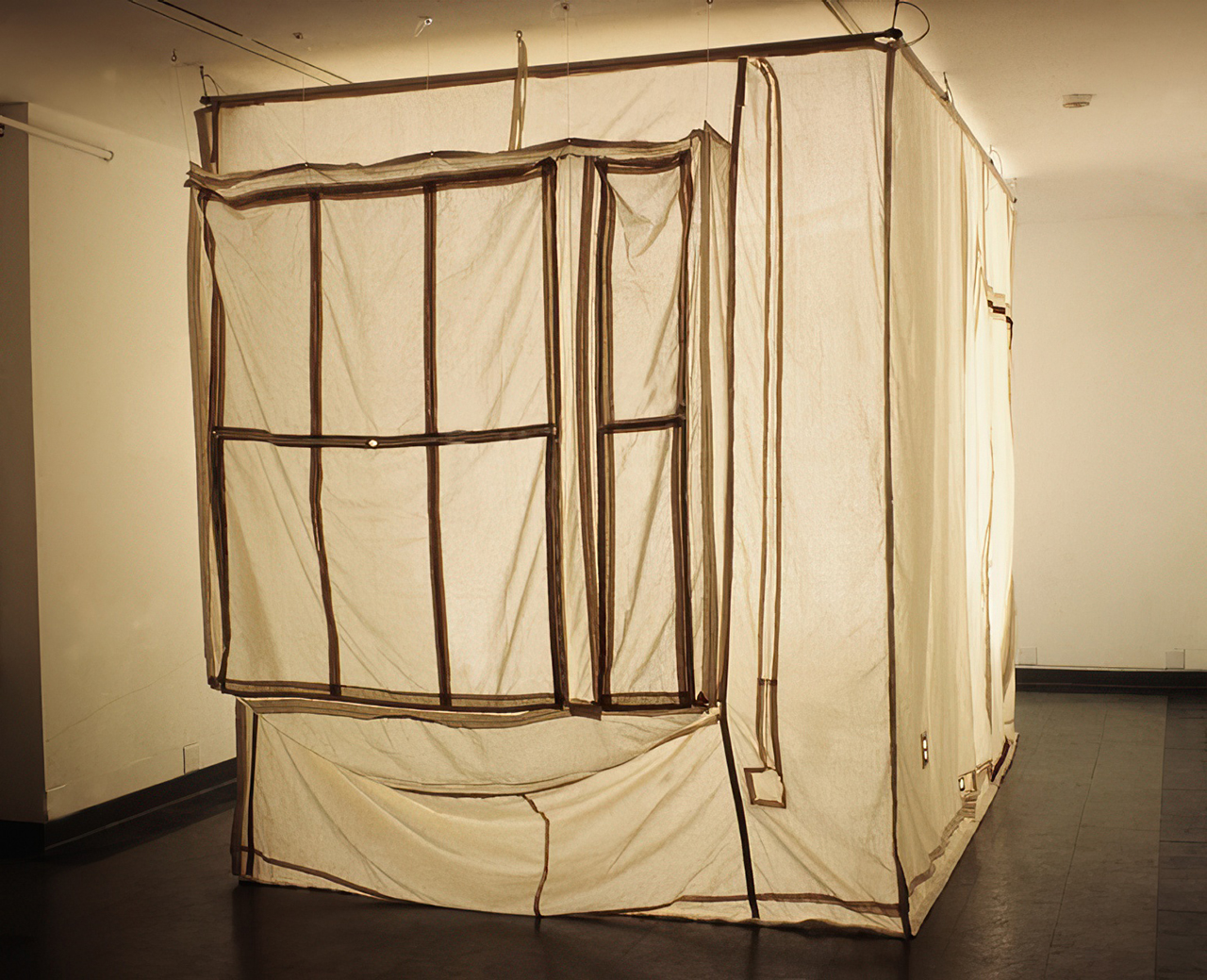
His subsequent years studying and working in the United States led to the development of his distinctive fabric installations and site-specific works. These experiments gradually established the formal language for which Do Ho Suh is now internationally recognized: architecture recreated through translucent textiles, spaces transformed into portable memories, and familiar environments reconstructed in unfamiliar contexts.
At the entrance to Gallery 3, visitors encounter “Small Gate” (2017), a fabric reconstruction of the gate to the Hanok in Seongbuk-dong, Seoul, where Suh once lived. The work functions both as an architectural reconstruction and as a symbolic threshold between different places and periods of the artist’s life.
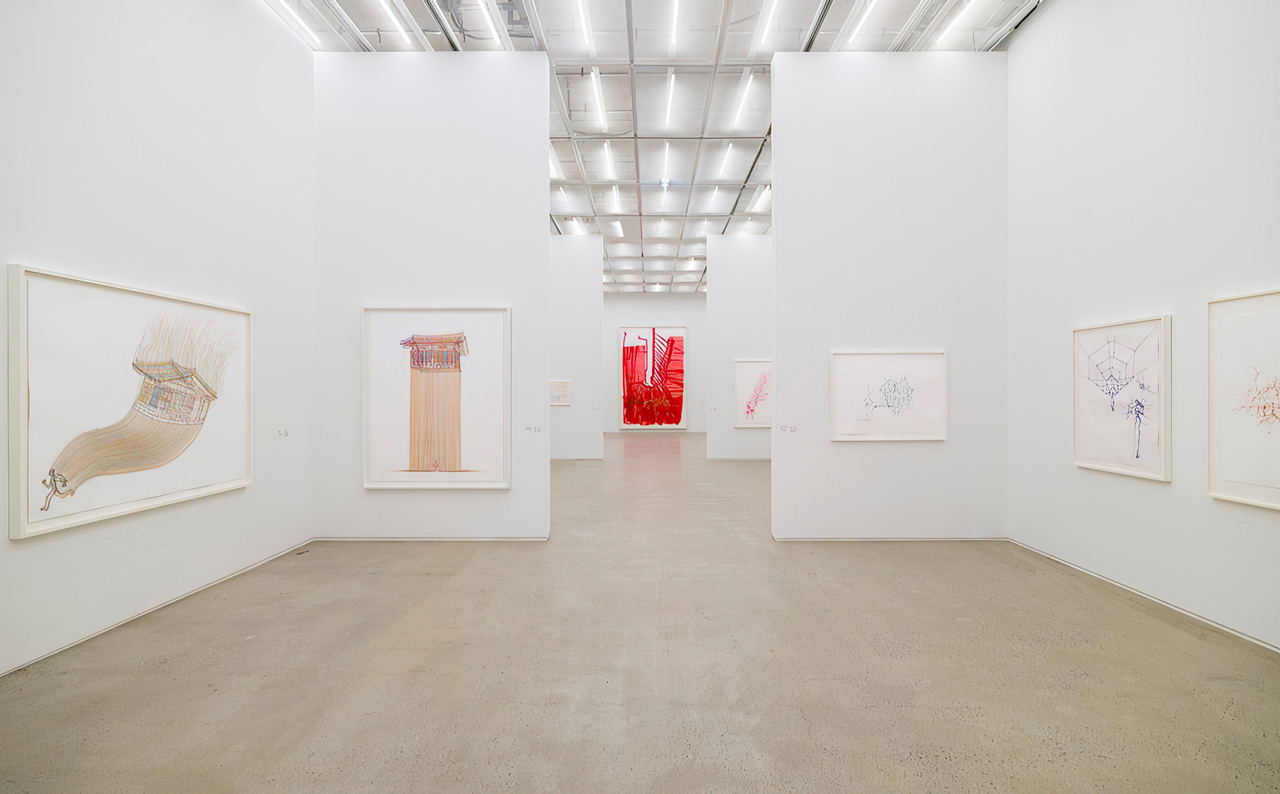
Approximately 200 drawings presented in the gallery expand this exploration of memory and space. Since 2009, Suh has worked with STPI in Singapore, developing a process that incorporates thread into gelatin tissue and handmade paper. The embedded threads create a sense of depth and materiality, transforming drawing from a flat image into a spatial experience.
Many of these works are being shown in Korea for the first time. Together, they reveal the evolution of Suh’s visual language and his continuing interest in the relationship between line, space, material, architecture, and memory.
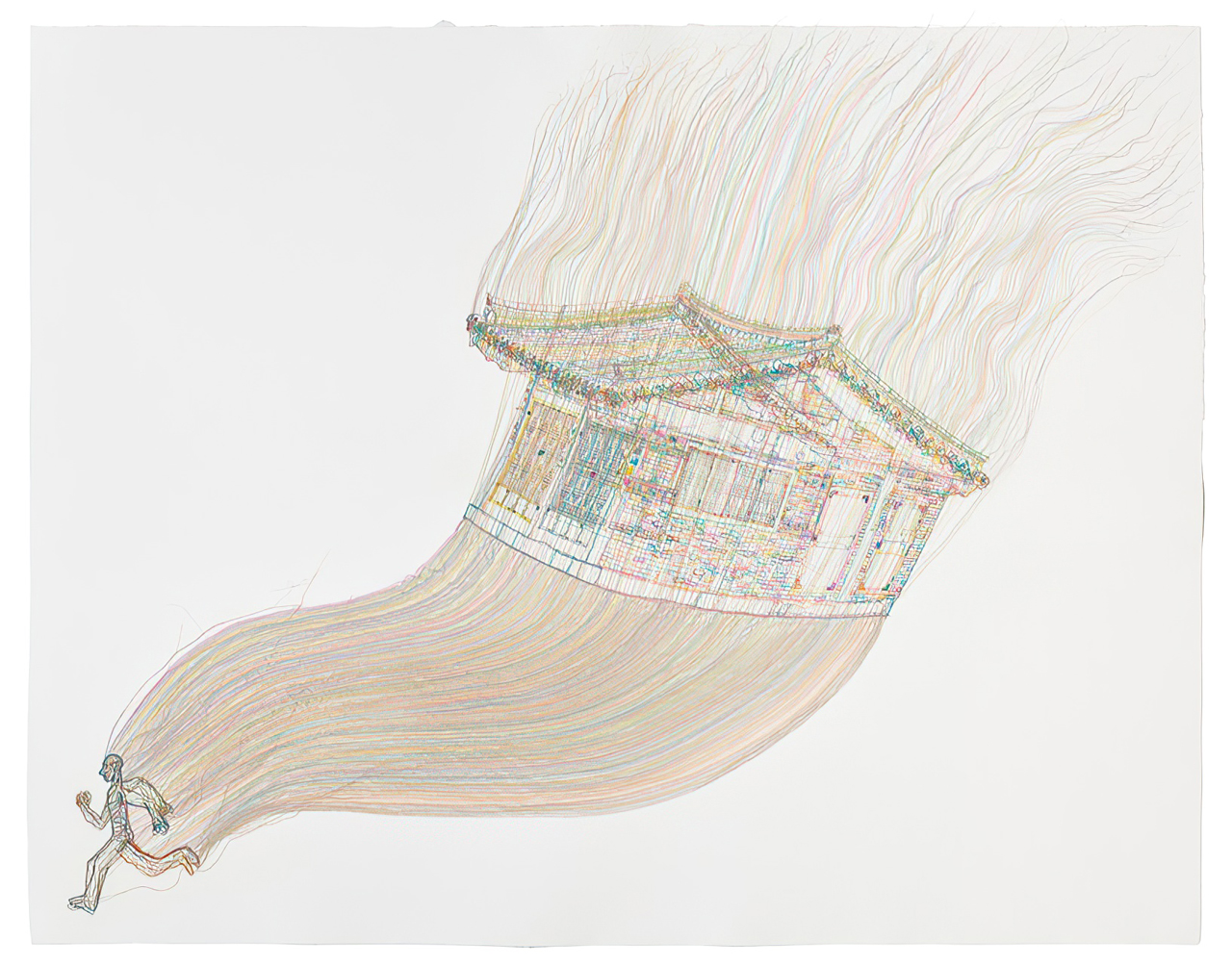
Gallery 4 focuses on the important “Rubbing/Loving” series, one of the clearest examples of Suh’s approach to preserving places through artistic practice. Using Hanji and paper, the artist covers the surfaces of buildings and objects associated with places he has left behind or that are disappearing. He then rubs the surfaces with graphite and colored pencil, recording their physical traces.
The title “Rubbing/Loving” reflects the phonetic similarity between the Korean words for rubbing and loving. The process transforms architectural documentation into an intimate act of remembrance. Rather than simply reproducing a building, Suh captures the accumulated traces of time, touch, use, family history, and personal experience.
In “Rubbing/Loving: Seoul Home” (2013–2022), the artist revisits the Hanok associated with his family and describes the work as a self-portrait of himself and his father. By contrast, “Rubbing/Loving: Company Housing of Gwangju Theater” (2012) expands the project from personal memory to collective history. Created through the collaborative act of tracing and rubbing the building, the work becomes a form of collective remembrance for a disappearing place.
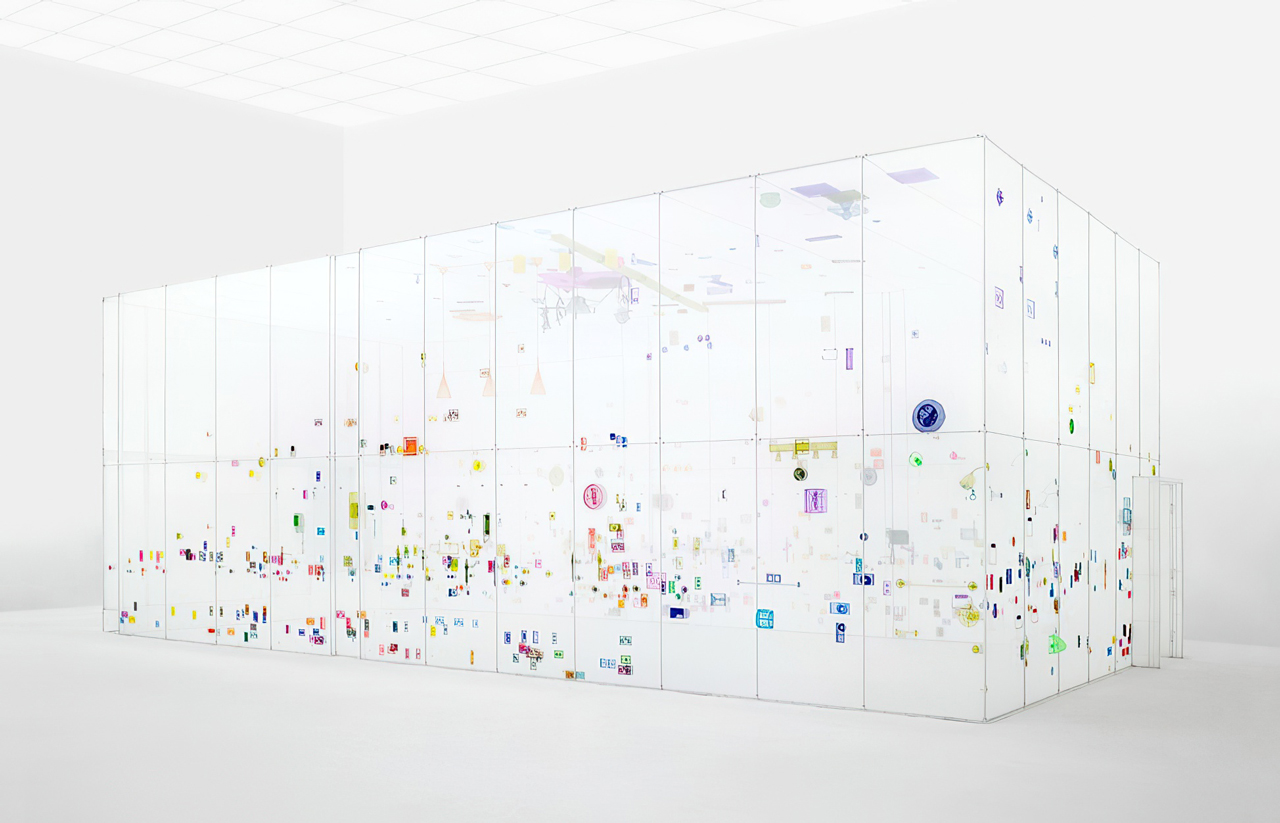
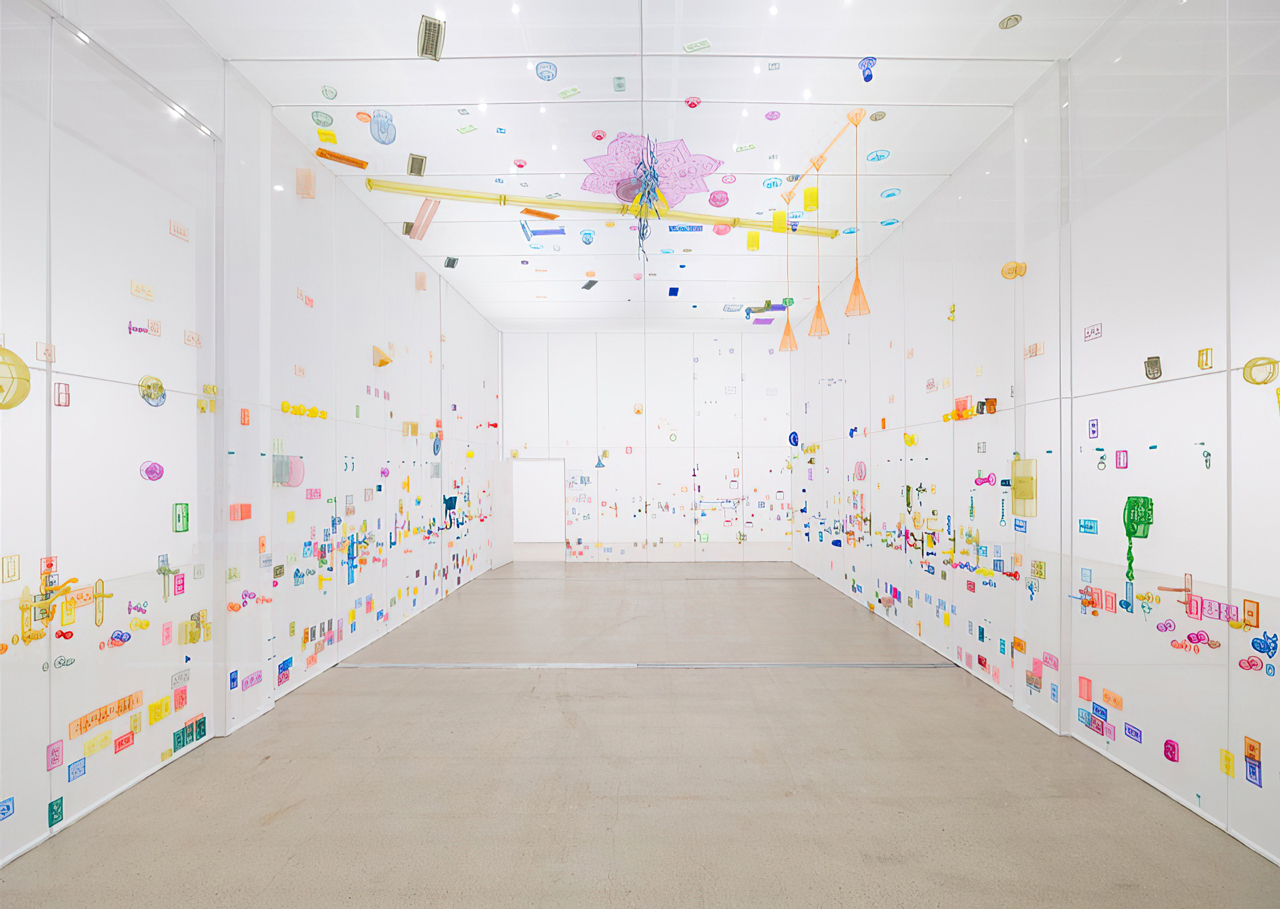
Gallery 5 brings together several major works that encapsulate the central concerns of Do Ho Suh’s art. Among them is “Perfect Home: London, Horsham, New York, Berlin, Providence, Seoul” (2024), in which architectural details—including door handles, electrical outlets, and light switches—from homes the artist has inhabited are incorporated into a reconstruction of his London apartment.
The work functions as an architectural autobiography, bringing different locations and periods of Suh’s life into a single structure. Home becomes a composite space rather than a singular address: a place assembled from memories, objects, journeys, and experiences.
Another major work is the “Bridge Project” an ongoing project that began in 1999 with the imagined possibility of connecting Seoul and New York. Later expanded to include London, the project brings together architects, philosophers, anthropologists, and engineers to reconsider the idea of home in relation to migration, global connectivity, society, coexistence, and the environment.
The exhibition also presents “Who Am We?” (2000) and “Floor” (1997–2000), two key works exploring the relationship between the individual and the collective. “Who Am We?” transforms portraits from school yearbooks into an immense wallpaper-like field of faces. From a distance, the images appear almost anonymous; from close range, individual identities emerge.
In “Floor” countless miniature figures support a transparent platform. Visitors physically walk across the work, experiencing Suh’s central idea that the individual exists through relationships and interdependence with others.
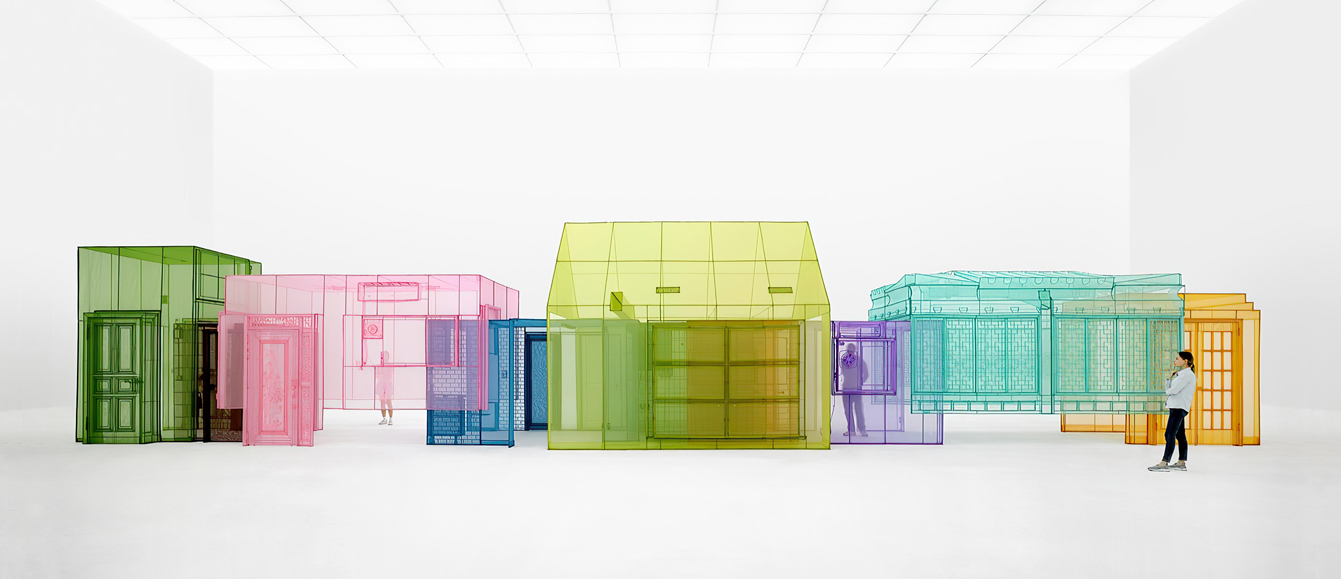
The section culminates in “Nest/s” (2024), a monumental installation measuring more than 22 meters in length. Drawing on residences and studios in Seoul, New York, London, Berlin, and other cities, the work combines architectural fragments into a continuous structure that exists nowhere in reality. It transforms multiple homes into a new, physically inhabitable space.
At MMCA Studio, the exhibition shifts from architecture and urban space toward one of Suh’s most intimate subjects: family. Miniature models of large-scale installations are presented alongside works exploring fatherhood and personal memory.
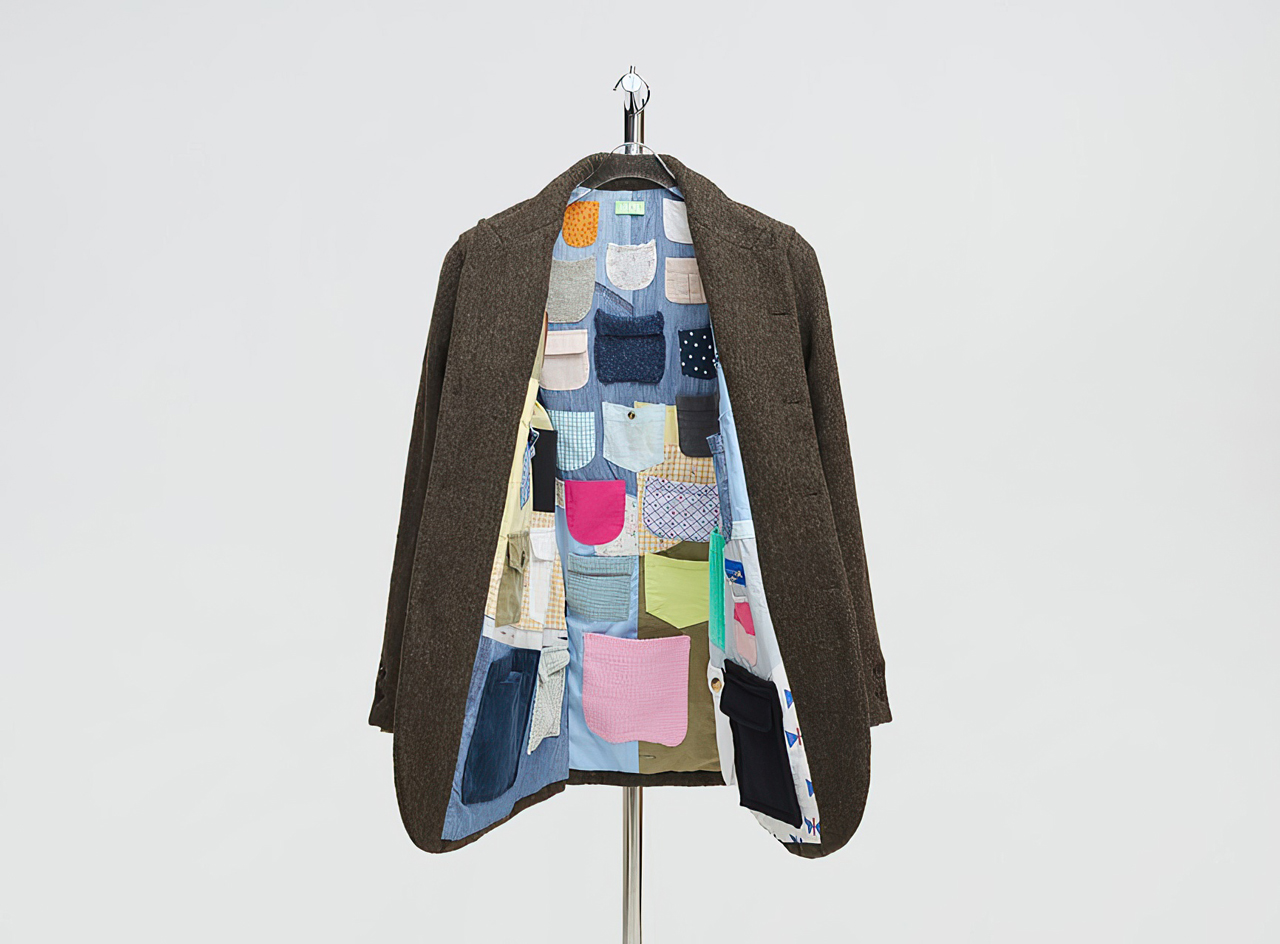
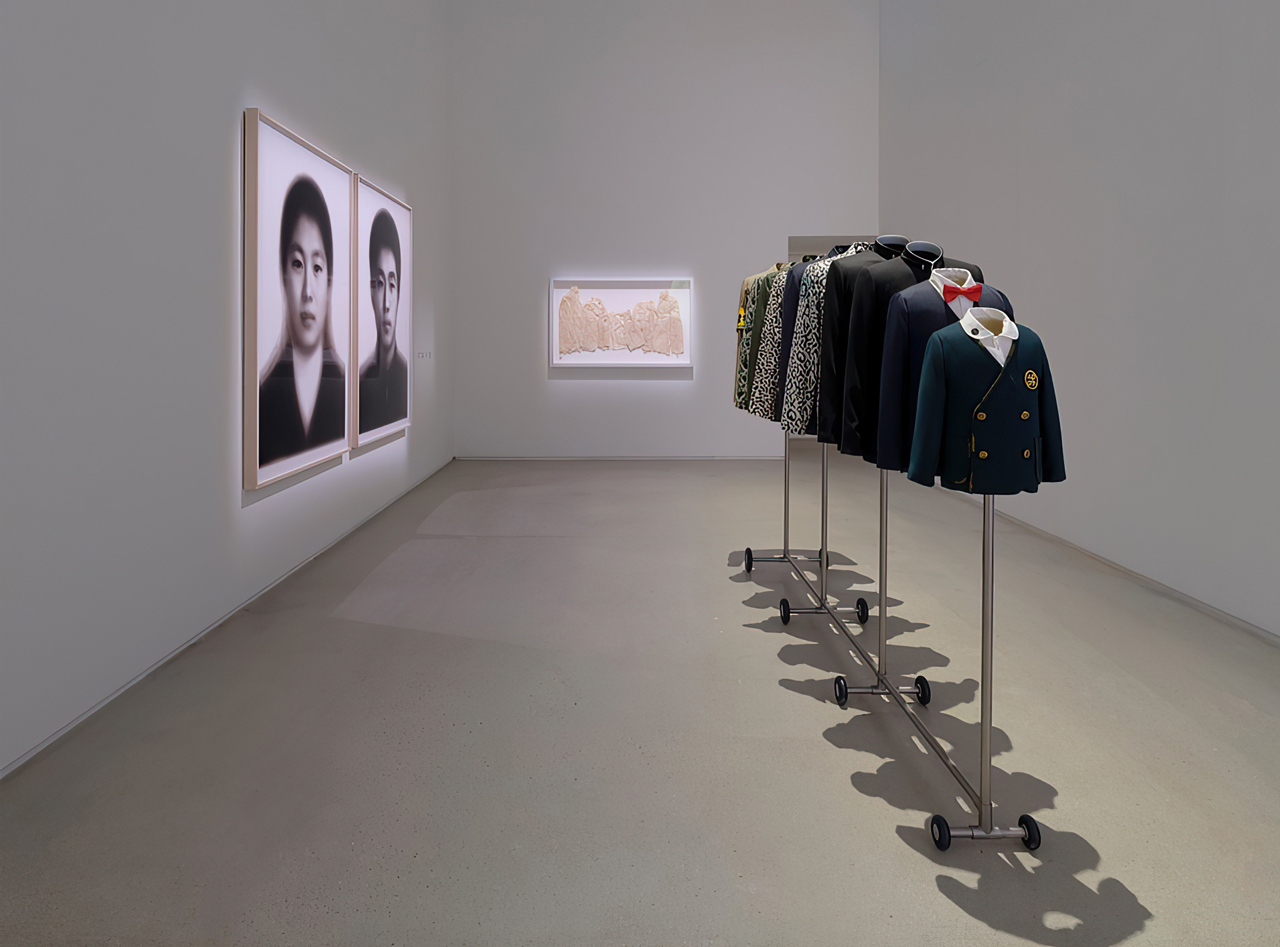
The newly presented “Memory of Love” (2026) incorporates pockets cut from clothing belonging to the artist’s family into the interior of his own coat. Personal objects are placed inside the pockets, creating layers of memory carried directly on the body.
The work brings together several recurring themes in Suh’s practice—clothing, the body, home, family, migration, and memory. Clothing becomes a form of portable architecture, while the body becomes a temporary home capable of carrying memories across geographical and emotional distances.
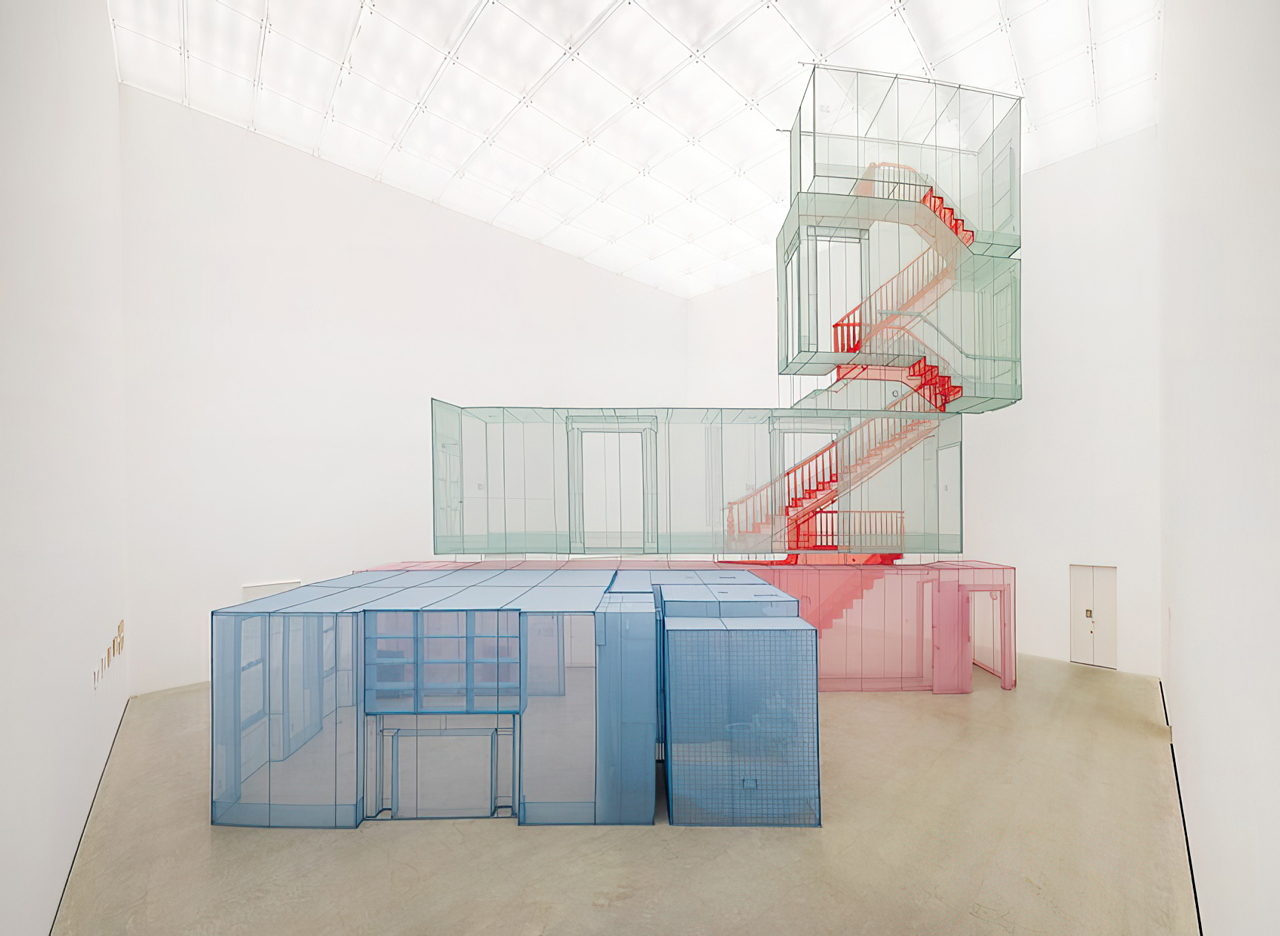
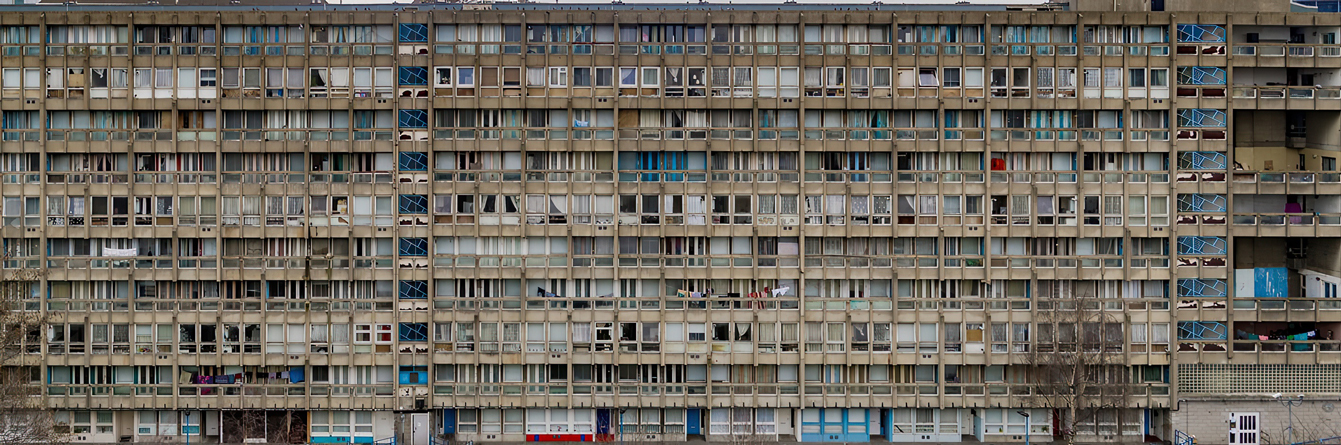
The exhibition extends into the Seoul Box, where Suh’s iconic “Apartment A, Unit 2, Corridor, and Staircase, 348 West 22nd Street, New York, NY 10011, USA” (2012) will be presented from December 18, 2026, through March 28, 2027. The complete set of units will be displayed together for the first time in one location, allowing visitors to experience the work at its full architectural scale.
Across his career, Do Ho Suh has transformed the concept of home into one of the most powerful subjects in contemporary art. His architecture is never simply architecture: it is a repository of memory, identity, relationships, displacement, and belonging.
By reconstructing apartments, corridors, doors, staircases, domestic objects, and architectural fragments, Suh turns personal history into a universal meditation on what it means to inhabit a place. His works suggest that home is not necessarily defined by permanence or geography, but by the memories and relationships accumulated within it.
The Do Ho Suh exhibition at MMCA Seoul brings these ideas together in an expansive presentation of the artist’s practice, connecting his early experiments with his most recent projects. Moving between Korean contemporary art, installation art, architecture, migration, memory, identity, and the experience of home, the exhibition demonstrates why Suh has become a major figure in contemporary art internationally.
Photo: Do Ho Suh, Nest/s, 2024, Polyester and stainless steel, 410.1 x 2,148.7 × 375.4 cm, © Do Ho Suh, Courtesy the artist and : National Museum of Modern and Contemporary Art, Korea (MMCA)
Info: National Museum of Modern and Contemporary Art, Korea (MMCA), 30 Samcheong-ro, Jongno District, Seoul, South Korea, Duration: 27/8/2026-9/2/2027, Days & Hours: Mon-Tue, Fri & Sun 10:00-18:00, Thu & Sat 10:00-21:00, www.mmca.go.kr/