
PHOTO: Hiroshi Sugimoto-Extinction
![Hiroshi Sugimoto, Opticks 058, 2018, chromogenic print, 60 x 60 inches (framed) [152.4 x 152.4 cm], edition of 1, © Hiroshi Sugimoto, Courtesy the artist and Gallery Koyanagi](http://www.dreamideamachine.com/web/wp-content/uploads/2026/07/00-20.jpg)
Hiroshi Sugimoto is a multidisciplinary contemporary artist whose ongoing activities encompass photography, architecture, and stage direction, among many other genres. It is, however, gelatin silver photography that is the point of origin for all Sugimoto’s art. Known for long exposures exploring time and memory, his minimalist monochrome images, such as his famous seascapes, employ precise analog craftsmanship to probe human existence and reality.
By Dimitris Lempesis
Photo: The National Museum of Modern Art Tokyo Archive
Drawing on 13 of Hiroshi Sugimoto’s photographic series, the exhibition “Extinction” traces the evolution of his artistic universe following a loose chronological sequence. Extinction is a theme that emerged from Sugimoto’s contemplation of the imminent demise of silver gelatin media and of the imminent cessation of his own activities as an artist. His vision of extinction does not, however, end there. So what else is facing extinction? Look out for “extinction” as a theme that runs like a basso continuo throughout this exhibition surveying the entirety of Sugimoto’s oeuvre, which has broadened and deepened the expressive possibilities of photography as a medium over the last half century.
Chapter One: “Time, Light and Memory” presents the origins of Sugimoto’s artistic universe through “Dioramas,” “Theaters” and “Seascapes.” These three series, all of which were started in the 1970s and 1980s, established Sugimoto’s reputation.
Dioramas: Sugimoto used a large-format camera to photograph wildlife dioramas at the American Museum of Natural history in New York in extraordinary detail. A medium that normally arrests motion worked here in reverse, making motionless taxidermy appear as living animals caught mid-movement. As Sugimoto has said, “However fake the subject, once photographed, it’s as good as real.” The first work in the series, shot in 1975, launched his career as a contemporary artist. This exhibition brings together, for the first time in comprehensive form, works from the series that trace the history of humankind, including new additions.
Theaters: Sugimoto often thinks by posing himself questions and answering them. “Suppose you shoot a whole movie in a single frame?” was one such question. His answer: “You get a shining screen.” A long exposure spanning a film from beginning to end reduces its narrative to a single radiant white rectangle. His locations were theaters built in cinema’s golden age. Illuminated by the screen, the opulent interiors testify to a lost grandeur. But by the late 1970s, when he began work on “Theaters,” cinema was itself already in decline, and a sense of impending extinction ran through the series from the start. He later extended it to drive-ins, abandoned theaters, and the opera houses of Europe.
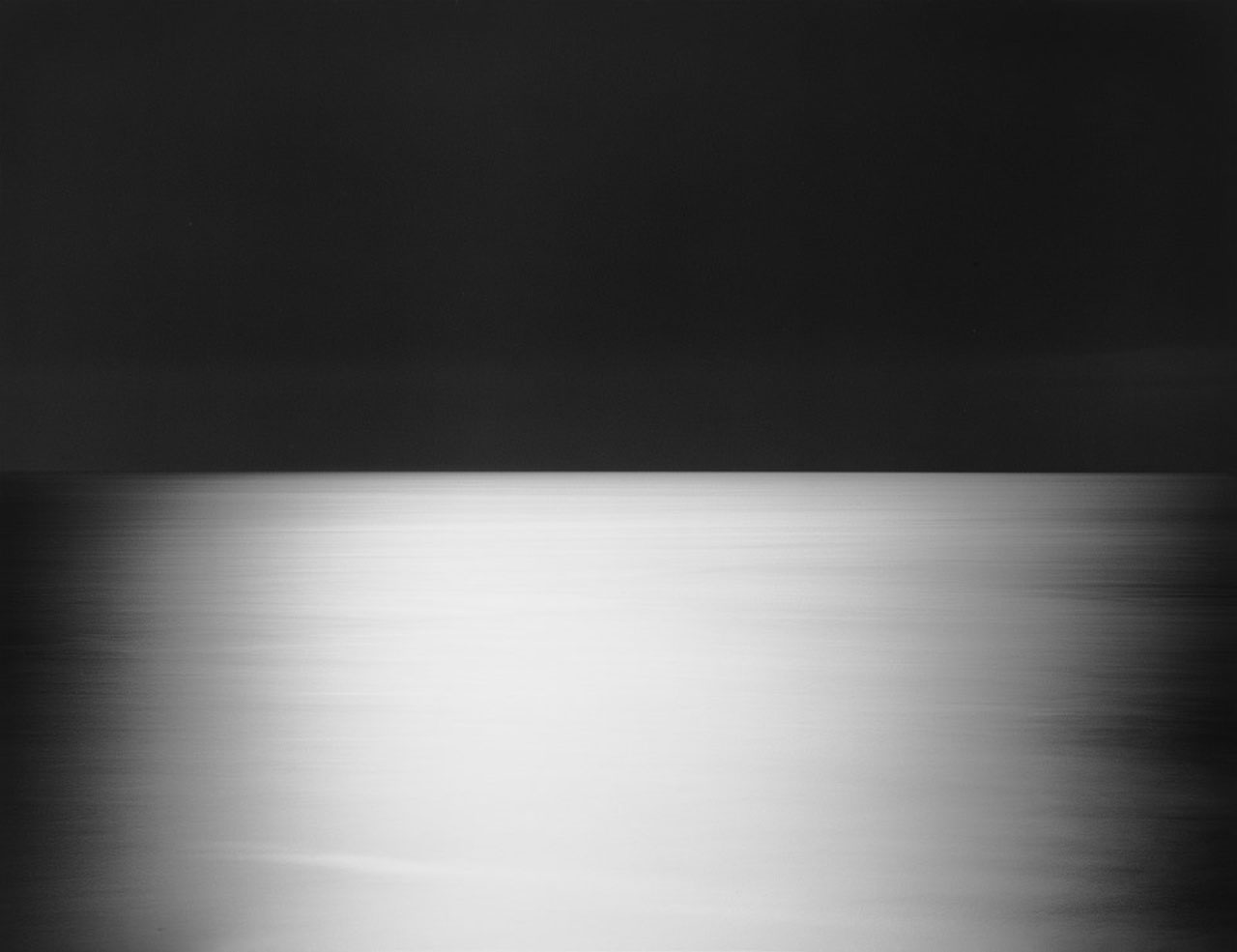
Seascapes: The horizon bisects the frame: sea below, sky above, nothing else. This view has remained unchanged for billions of years, since water and air first appeared on earth. “Seascapes” is Sugimoto’s answer to a question he posed himself: “Can someone today view a scene just as primitive man might have?” In this series, he turned photography into a vehicle for reaching back across time to the first stirrings of human consciousness. His own earliest memory is of a view of the Bay of Sagami. Since the first work in the series, “Caribbean Sea, Jamaica” (1980, exhibit number 17), he has shot the horizons of seas around the world, always with the same identical composition, a practice he continues today.
Chapter Two: “Conceptual Forms” presents the process of the expansion and deepening of Sugimoto’s artistic universe through series such as “Conceptual Forms” and “Stylized Sculpture,” which were begun at the end of the 1990s and take the variety of forms produced by the human intellect and imagination as their subject.
Stylized Sculpture: Clothing began as animal fur worn for bodily protection, then diversified in material and form, its meaning and function shifting as adornment became an end in itself. In the 20th century, fashion developed in close dialogue with modern art. Sugimoto began this series for a 2007 US exhibition of contemporary Japanese fashion, photographing the work of era-defining designers from “a view toward the human body clothed in ‘artificial skin’ as modern sculpture” and reassessing modernism in the process. The result is a hybrid: the body, the part of nature closest to us, merged with clothing, an artifact conceived in the mind.
Conceptual Forms: This series of photographs of plaster mathematical models gives three-dimensional form to cubic equations. Sugimoto saw an analogue to art in these models, which render otherwise invisible equations in visible form. Art, too, is the work of giving form to the normally invisible. Mathematics, a product of the human mind, underpins the natural sciences, our scientific understanding of the world, and the progress of modern technology. Among the fruits of that progress are photography and the camera themselves. After photographing the “Meiji era” (1868–1912) mathematical models in the collection of the University of Tokyo, Sugimoto pursued a still more perfect embodiment of the “conceptual form,” commissioning metal models fabricated on computer-controlled machine tools with the highest possible precision.
Chapter Three: “Extinction” explores Sugimoto’s evolving vision of the “extinction” he foresees. It is composed of six series which go all the way back to the origins of soon-to-be extinct silver gelatin photography, from “Pre-Photography Time-Recording Device” and “Photogenic Drawing” to the more recent “Opticks.”
Pre-Photography Time-Recording Device: Sugimoto named this series of photographs of fossils from his own collection “Pre-Photography Time-Recording Device.” The resemblance between photography and fossils first struck him while he was photographing a diorama reconstructing the Cambrian period seafloor. To photograph a trilobite reconstructed from a fossil sealed in geological strata hundreds of millions of years old is to seal it once again, as an imprint of time, inside a photograph.
Photogenic Drawing: Before the first practical photographic process, the daguerreotype, was made public in 1839, the English scholar William Henry Fox Talbot had already succeeded in capturing images. His earliest photographs, which he called photogenic drawings, were negative images. The negative-positive process, in which a negative is reversed to produce a positive with correct tonal values, was realized in 1841. From the mysterious negatives made at photography’s dawn, Sugimoto set out to produce the positive prints that Talbot himself never saw.
Opticks: In this seres Sugimoto re-creates the prism experiments in which Sir Isaac Newton split light into its component colors in the 17th century, and observes the resulting colors of light. The series reaches back to the beginnings of modern optics, which would later give rise to the precision manufacture of lenses. The production method breaks with Sugimoto’s usual practice: the images are shot on Polaroid film, digitally processed to remove noise, and then printed on large-format color photographic paper. Sugimoto made the series by splitting winter-morning sunlight through a prism at the window of his Tokyo home and standing before the sea of color that played across his white plaster wall.
Photo: Hiroshi Sugimoto, Opticks 058, 2018, chromogenic print, 60 x 60 inches (framed) [152.4 x 152.4 cm], edition of 1, © Hiroshi Sugimoto, Courtesy the artist and Gallery Koyanagi
Info: The National Museum of Modern Art Tokyo, 3-1 Kitanomarukōen, Chiyoda City, Tokyo, Japan, Duration: 16/6-13/9/2026, Days & Hours: Tue-Sun 10:00-17:00, www.momat.go.jp/
![Hiroshi Sugimoto, Tasman Sea, Rocky Cape, 2016, gelatin silver print, 20 x 24 inches (mount) [51 x 61 cm], edition of 25, © Hiroshi Sugimoto, Courtesy the artist and Gallery Koyanagi](http://www.dreamideamachine.com/web/wp-content/uploads/2026/07/bdc3a5e9d5c6cb939f00ad3fe7c23235-1536x1194-1.jpg)
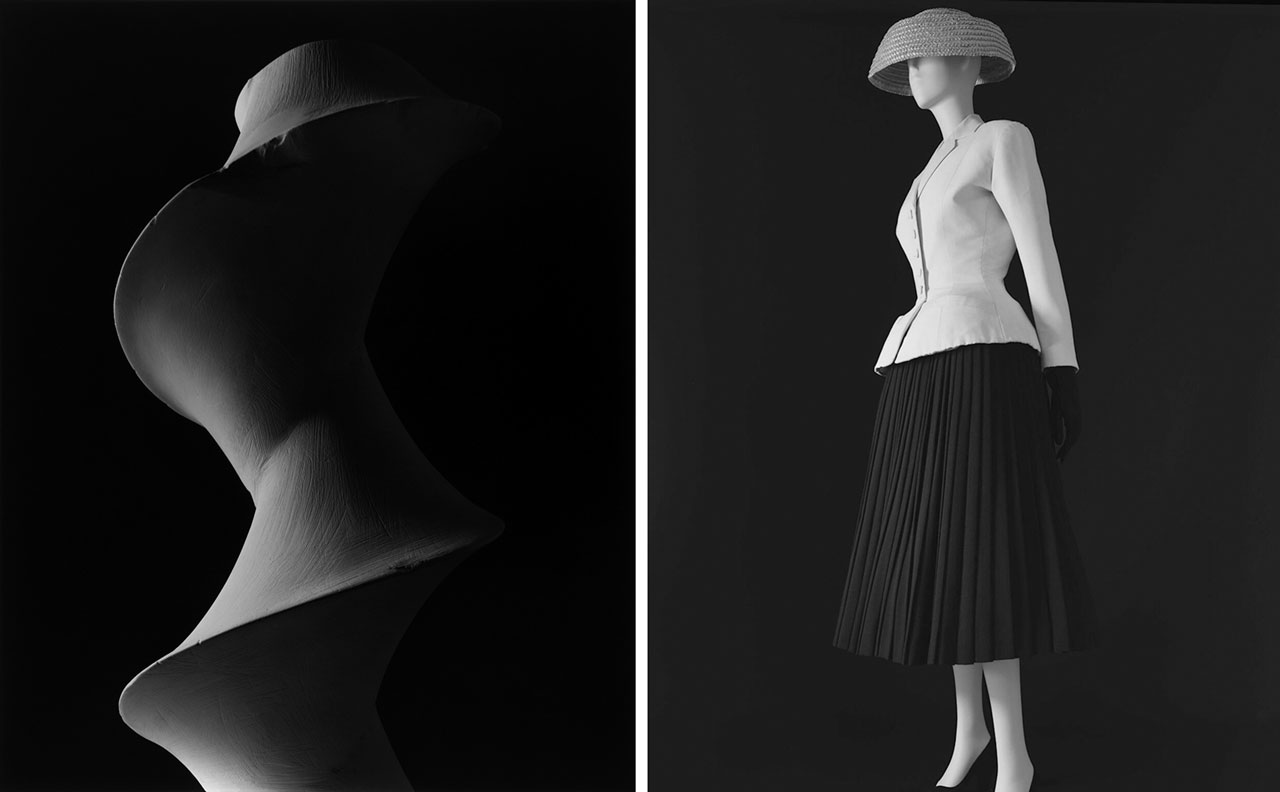
Right: Hiroshi Sugimoto, Stylized Sculpture 120, Christian Dior, Bar, 1947, 2025, gelatin silver print, 149.2 × 119.4 cm, © Hiroshi Sugimoto, Courtesy the artist and Gallery Koyanagi
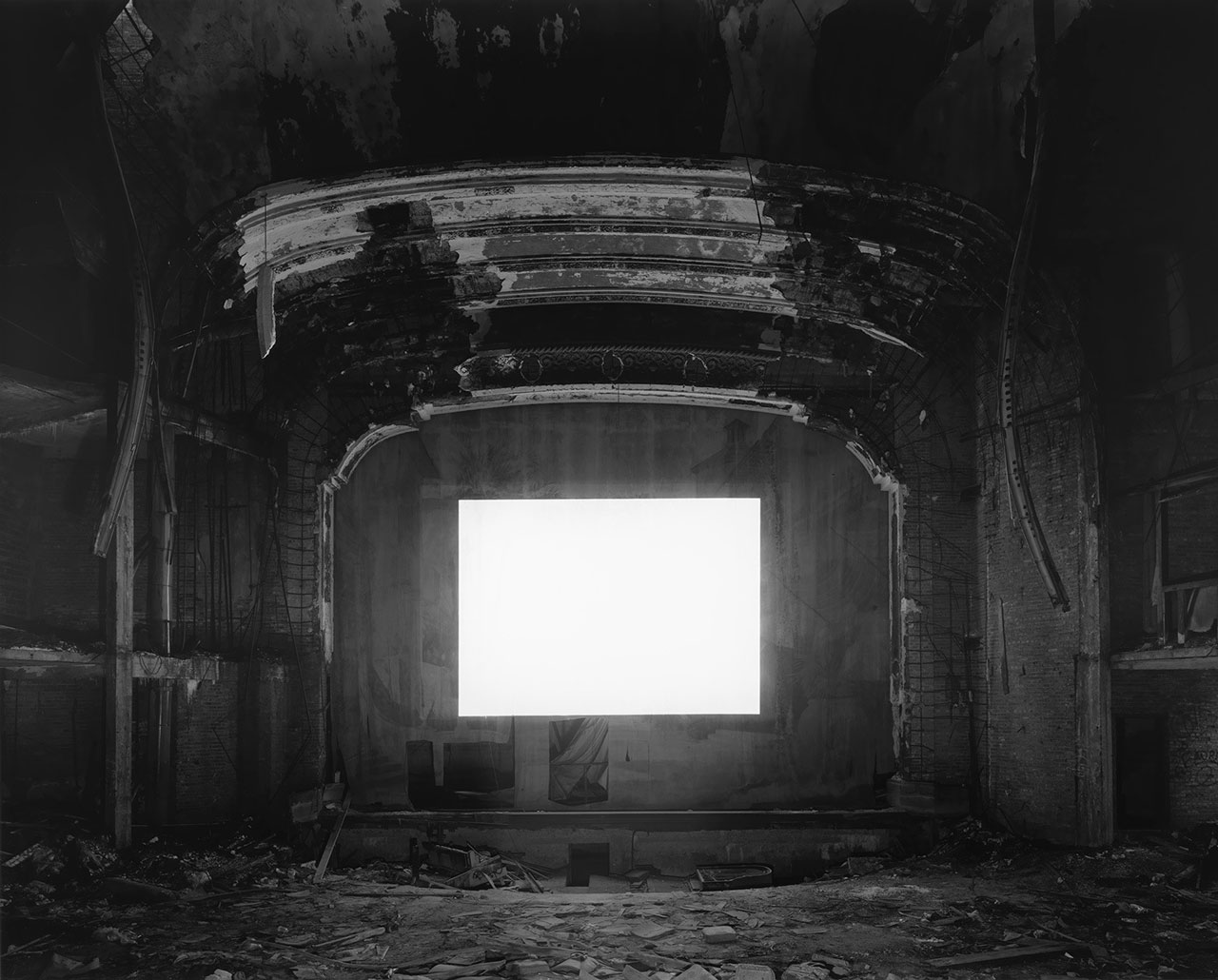
![Hiroshi Sugimoto, Cinerama Dome, Hollywood, 1993, gelatin silver print, 60-1/4 x 72 inches (framed) [153.0 x 182.9 cm], edition of 5, © Hiroshi Sugimoto, Courtesy the artist and Gallery Koyanagi](http://www.dreamideamachine.com/web/wp-content/uploads/2026/07/SUG-250-Framed-large.jpg)
![Left: Hiroshi Sugimoto, Staircase at Villa Farnese II, 2016, gelatin silver print, 25 x 20 inches (mount) [63.5 x 50.8 cm], edition of 25, © Hiroshi Sugimoto, Courtesy the artist and Gallery Koyanagi Right: Hiroshi Sugimoto, Mathematical Form: Surface 0010, 2004, gelatin silver print, 71-3/4 x 60 inches (framed) [182.3 x 152.4 cm], edition of 5, © Hiroshi Sugimoto, Courtesy the artist and Gallery Koyanagi](http://www.dreamideamachine.com/web/wp-content/uploads/2026/07/SUG-33.jpg)
Right: Hiroshi Sugimoto, Mathematical Form: Surface 0010, 2004, gelatin silver print, 71-3/4 x 60 inches (framed) [182.3 x 152.4 cm], edition of 5, © Hiroshi Sugimoto, Courtesy the artist and Gallery Koyanagi
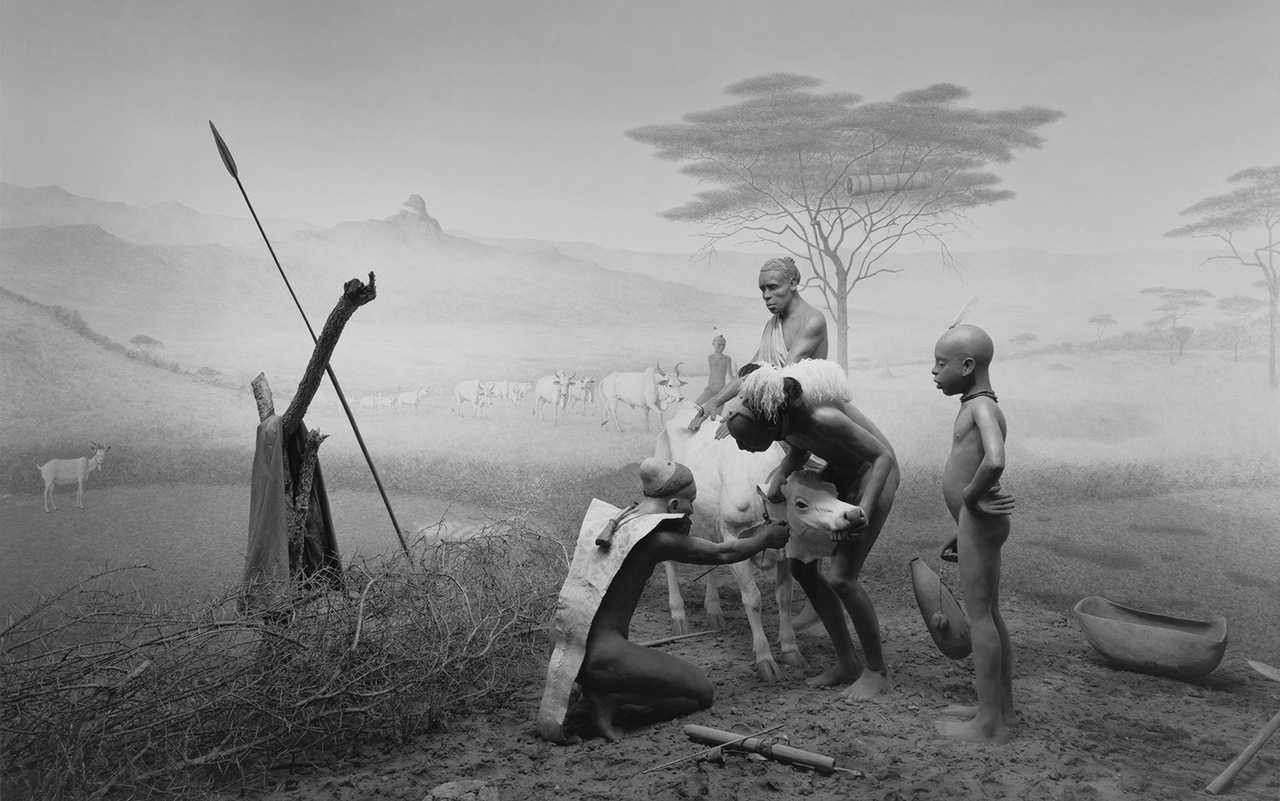
![Hiroshi Sugimoto, Lion, 1994, gelatin silver print, 20 x 25 inches (mount) [50.8 x 63.5 cm], edition of 25, © Hiroshi Sugimoto, Courtesy the artist and Gallery Koyanagi](http://www.dreamideamachine.com/web/wp-content/uploads/2026/07/SUG-133.jpg)