PRESENTATION: Françoise Pétrovitch-Homage to George Sand
Françoise Pétrovitch explores various different media. Her artworks range from ceramics to video to drawing to painting. Françoise has developed a high reputation for her drawings and ink wash works. Similarly, her source of inspiration comes from all different kind of fields for one she cites as inspiration painters like Henri Matisse but also literature written by female authors like Joyce Carol Oates and Marguerite Duras. Ultimtely figuration, specifically the human form, play an important role in Pétrovitch’s art. It adds a narrative quality, but also acts as a support for carefully crafted colourful works that have a sense of otherworldliness.
By Efi Michalarou
Photo: Cité internationale de la tapisserie – Aubusson Archive
In 2026, France commemorates the 150th anniversary of the death of one of its most influential literary figures, George Sand (1804–1876)—the novelist, essayist, political thinker and pioneering feminist whose work transformed nineteenth-century literature. To mark the occasion, the Cité internationale de la tapisserie in Aubusson has commissioned an ambitious artistic project that reimagines both the legacy of Sand and the future of tapestry itself. Rather than creating a conventional wall hanging, the institution has conceived a monumental textile installation that dissolves the traditional boundaries between tapestry, sculpture and architecture.
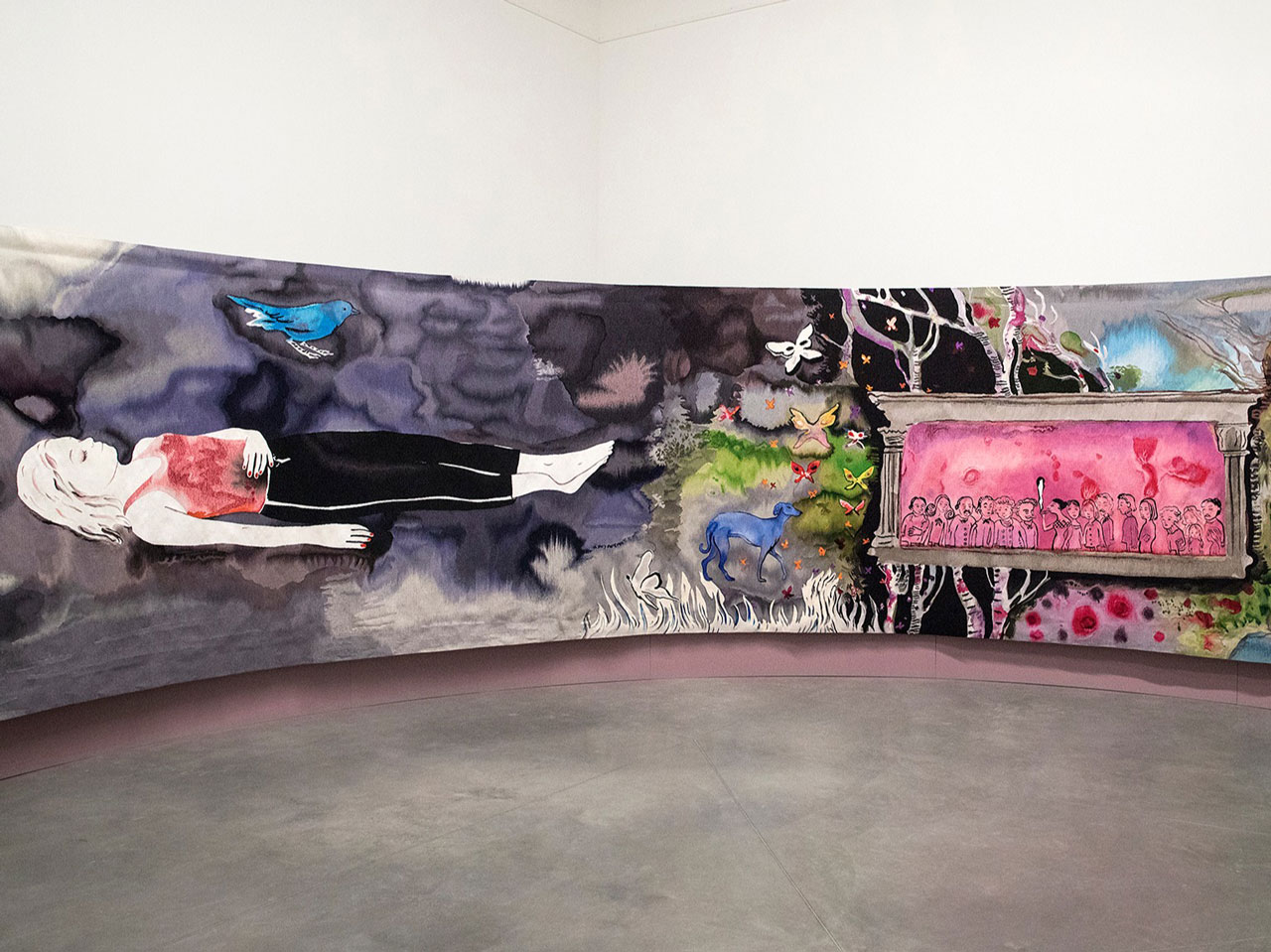
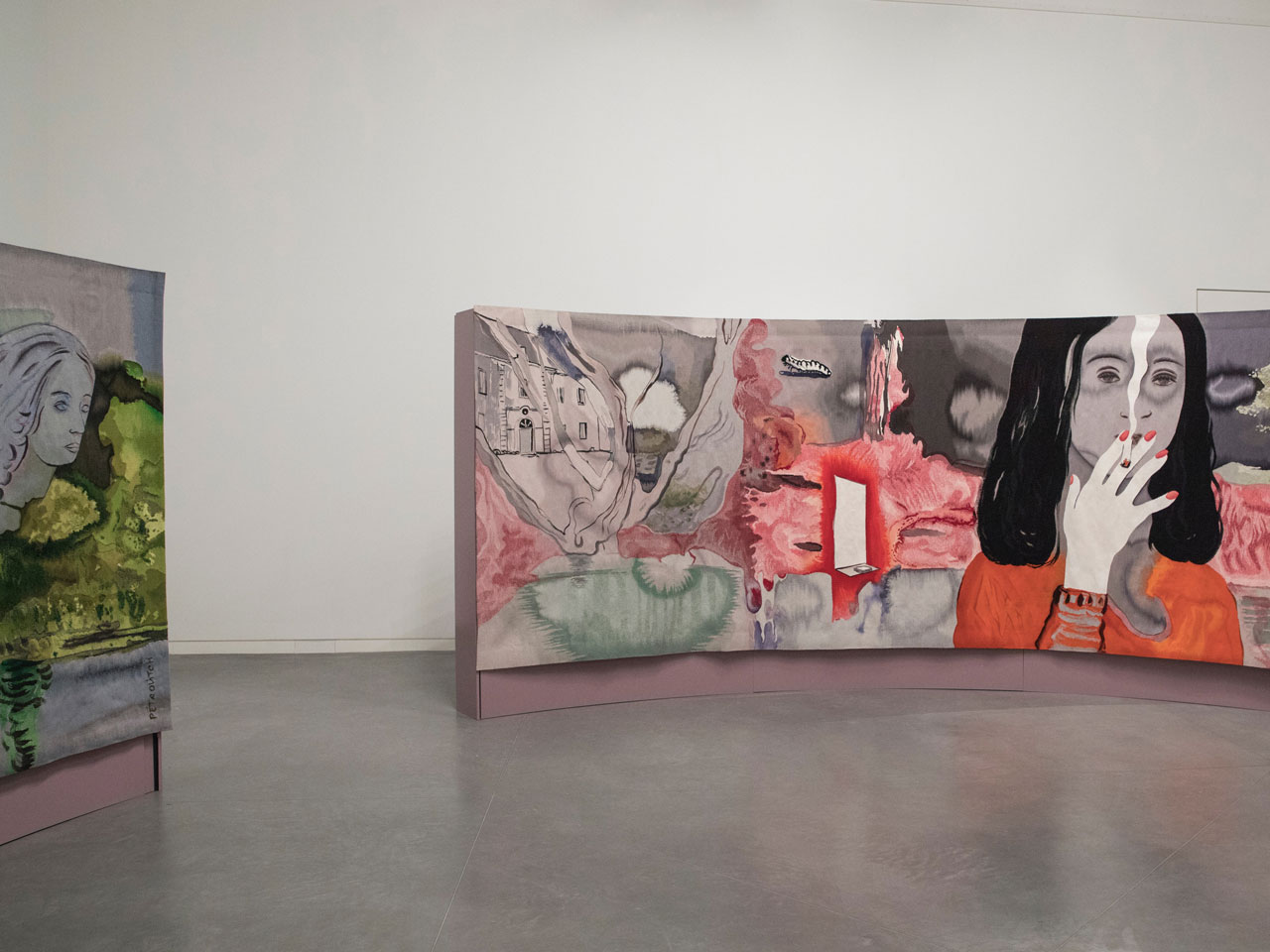
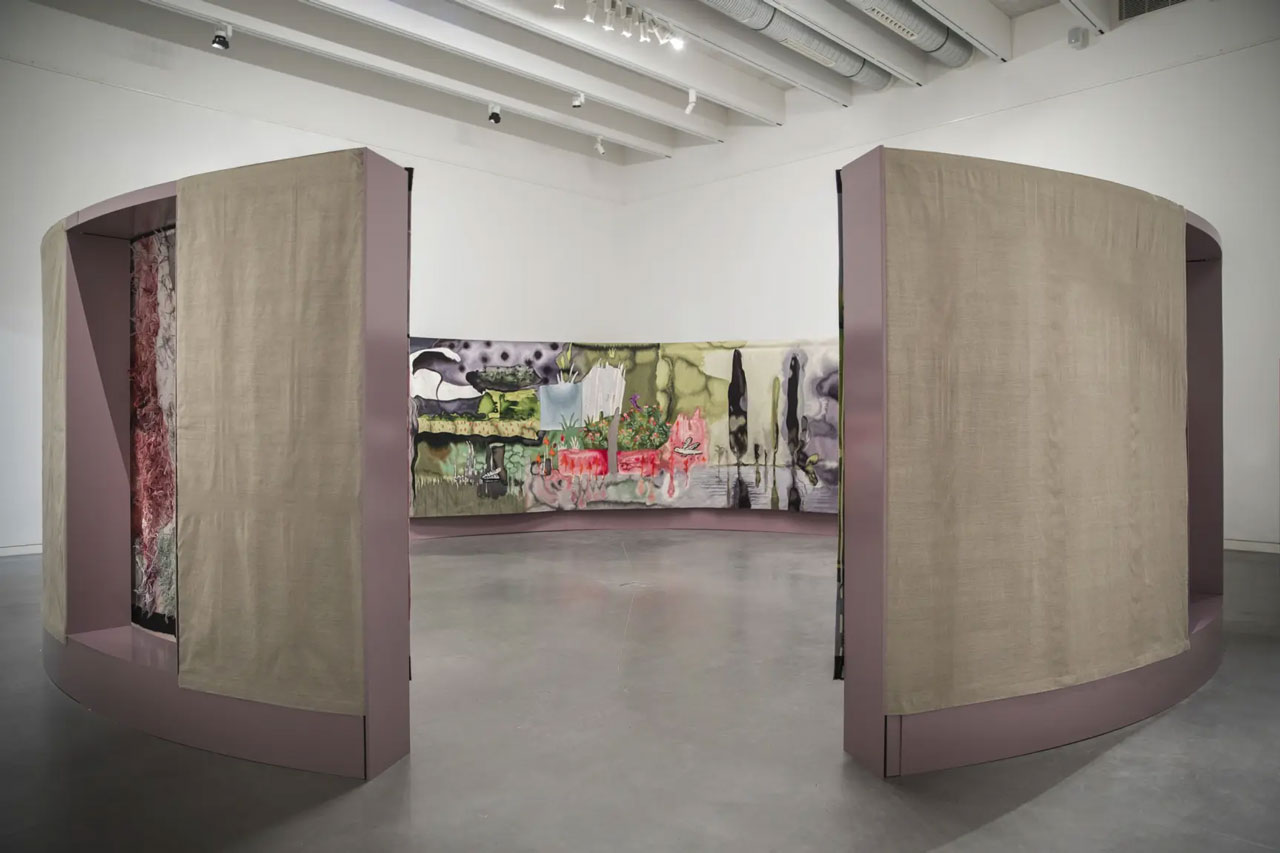
Conceived as a 23-metre-long ribbon tapestry, “Homage to George Sand” represents a landmark commission for contemporary textile art. Created by the French artist Françoise Pétrovitch and woven by the historic Manufacture Robert Four in Aubusson, the work demonstrates how one of Europe’s oldest artistic traditions continues to evolve through collaboration between artists, artisans and innovative technical research.
For centuries, Aubusson has been synonymous with excellence in tapestry weaving. Since the sixteenth century, its workshops have produced some of Europe’s most celebrated woven masterpieces, and in 2009 the Aubusson tapestry tradition was inscribed on UNESCO’s Representative List of the Intangible Cultural Heritage of Humanity. Today, the Cité internationale de la tapisserie continues this legacy by inviting contemporary artists—from graphic novelists to painters and designers—to reinterpret tapestry as a living artistic language rather than a historical craft.
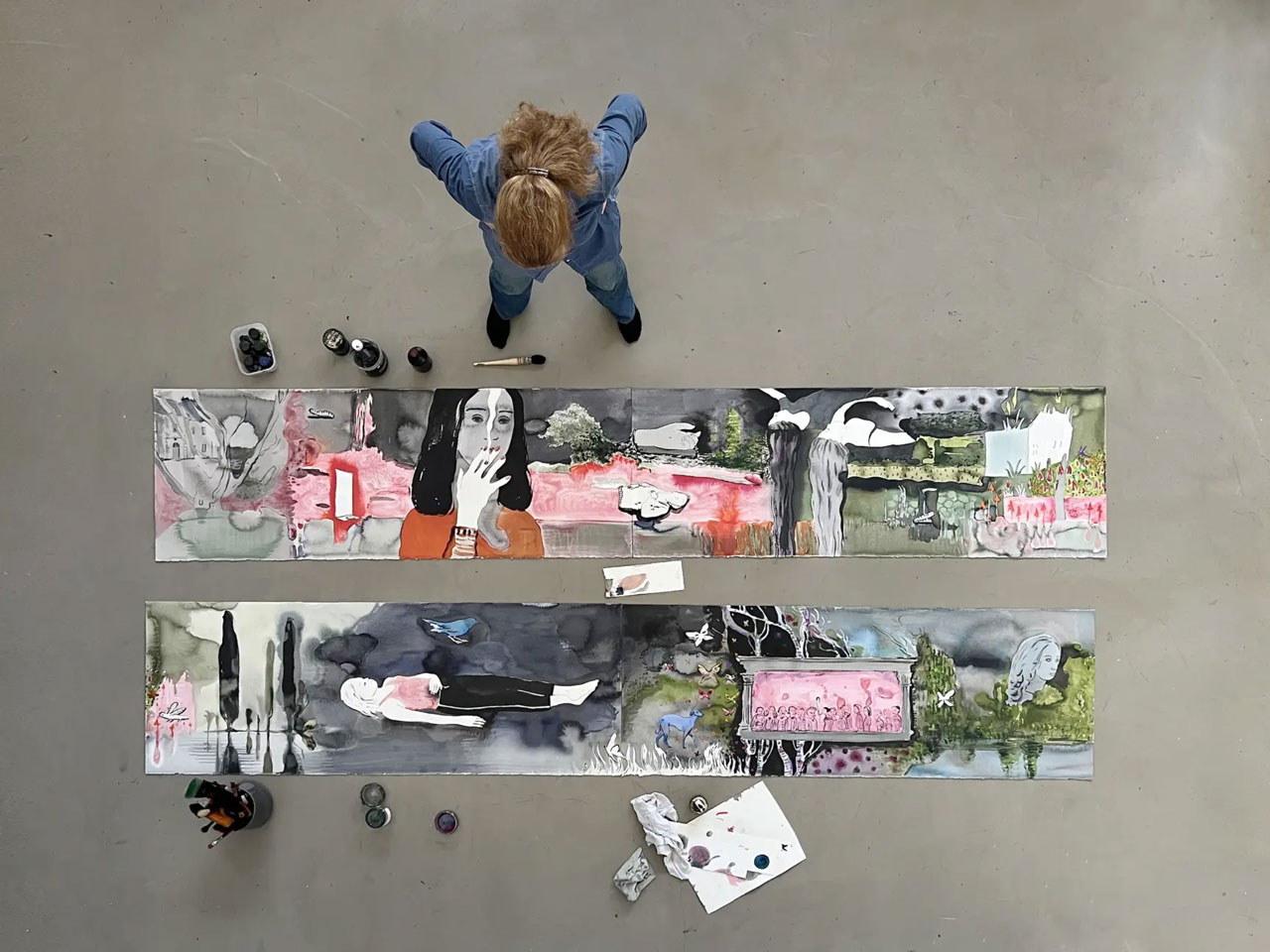
At the heart of “Homage to George Sand” lies Françoise Pétrovitch’s distinctive visual vocabulary. Widely recognised for her paintings, drawings, ceramics and sculptures, the artist has developed an expressive practice centred on ambiguity, vulnerability and psychological presence. Her works frequently depict solitary figures suspended between adolescence and adulthood, reality and dream, intimacy and estrangement. For this commission, she employs one of the defining techniques of her practice: the lavis, or wash drawing.
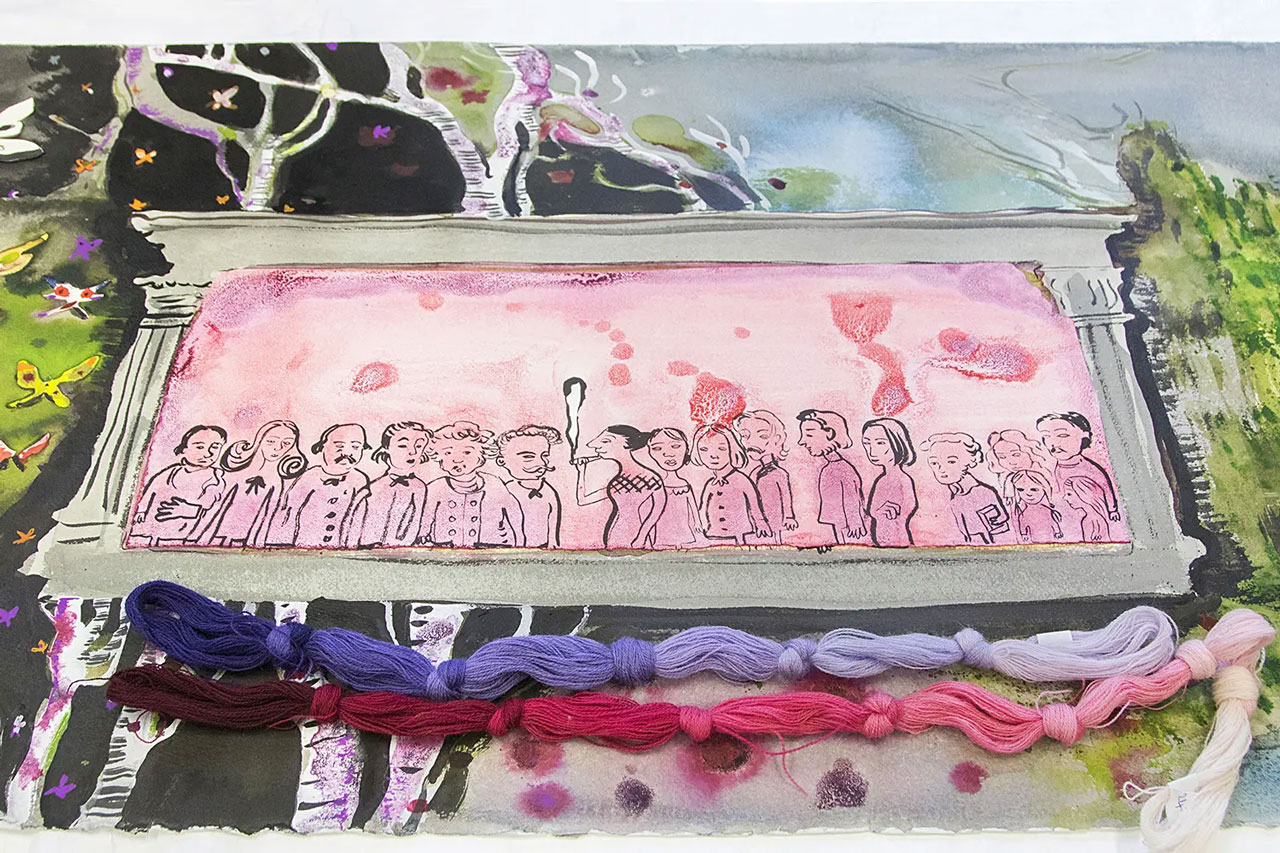
Unlike conventional drawing, the lavis technique builds form through transparent layers of diluted ink and pigment. Soft tonal transitions replace hard outlines, allowing images to emerge gradually through atmospheric veils of colour. Translating this delicate painterly language into tapestry presented one of the project’s greatest technical challenges. Every subtle variation in tone, every diffusion of pigment and every fluid transition had to be reinvented through woven thread.
The transformation from drawing to textile required close collaboration between Pétrovitch and Delphine Mangeret, cartoon maker and colourist, who developed the full-scale tapestry cartoon used beneath the loom during weaving. Together they reconsidered every nuance of the original composition, determining how woven fibres could reproduce the softness of washes while preserving the vitality of the artist’s gesture.
Equally innovative was the work undertaken by master dyer Nadia Petkovic. Rather than dyeing yarns in single uniform colors, she developed an unprecedented process in which multiple shades were applied to individual skeins. This subtle chromatic variation allows the tonal effects of wash painting to exist directly within the thread itself, enabling weavers to build painterly transitions through the layering of colored fibres rather than relying solely on traditional weaving techniques.
Extensive technical experimentation also involved weaver France-Odile Perrin-Crinière, director of Atelier A2, who produced numerous woven samples to determine the ideal warp calibration. The challenge was to accommodate both the expansive atmospheric fields characteristic of Pétrovitch’s compositions and the fine linear details that animate the work. Such research exemplifies the remarkable dialogue between artistic intention and artisanal expertise that defines contemporary Aubusson tapestry.
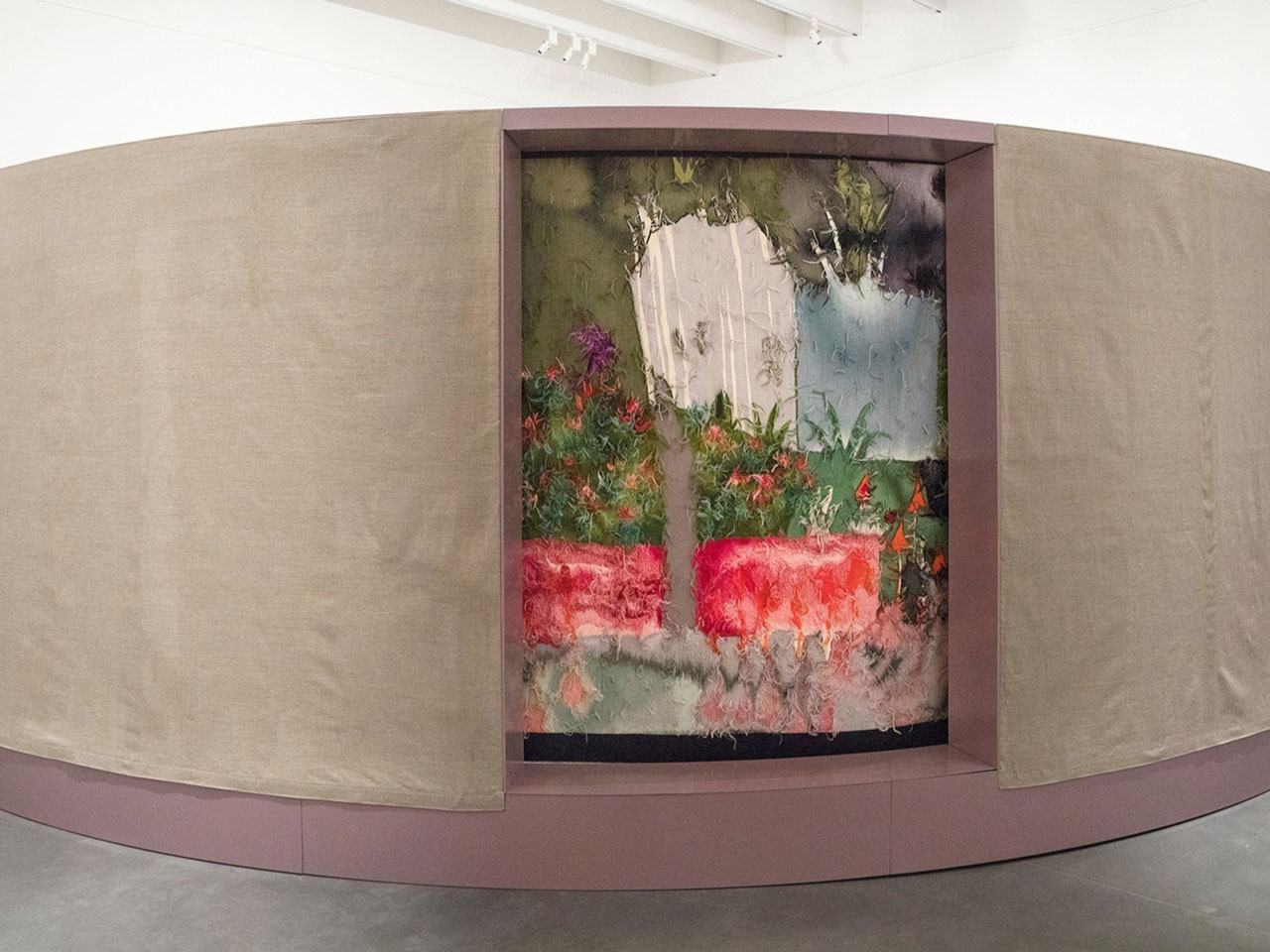
Yet the innovation of “Homage to George Sand “extends beyond its woven surface. Instead of functioning as a flat textile designed exclusively for walls, the tapestry has been conceived as a self-supporting installation. A specially designed modular structure allows the monumental ribbon to curve, fold and adapt to different exhibition spaces, creating sculptural forms that viewers can encounter from multiple perspectives.
This architectural approach fundamentally transforms the relationship between tapestry and space. Sections of the reverse become intentionally visible while others remain concealed beneath fabric coverings, revealing the physical construction of the textile itself. The work becomes not merely an image but an immersive environment, encouraging movement around and through the installation while emphasizing the materiality of weaving.
The imagery unfolds like a continuous visual narrative inspired by George Sand’s estate at Nohant, the house and surrounding landscape that nourished much of her literary imagination. Gardens, vegetation and atmospheric horizons merge with references to the mysterious dendritic forms that appear in Sand’s experimental artistic practice. The fluidity of the wash technique evokes the humid mornings of the Berry countryside, recalling the dew-covered landscapes that populate many of her Romantic novels.
Human figures punctuate this expansive landscape with characteristic subtlety. Reclining women, cascading hair and solitary smokers belong to Pétrovitch’s recurring iconography, yet here they establish an intimate dialogue with Sand’s enduring legacy. Significantly, these figures wear contemporary clothing—leggings, tank tops and other unmistakably modern garments—affirming that George Sand’s intellectual and social relevance belongs as much to the twenty-first century as to the nineteenth.
This temporal overlap reflects one of the artist’s central intentions. Rather than reconstructing a historical portrait of Sand, Pétrovitch presents her as an active contemporary presence whose ideas about artistic freedom, gender, identity and social independence continue to resonate. The tapestry becomes less a monument than a conversation across generations.
Throughout her life, George Sand challenged the conventions of her era—not only through her prolific literary production but also through her unconventional lifestyle, political engagement and refusal to accept prescribed roles for women. She adopted a male pseudonym, wore men’s clothing in Paris to access intellectual spaces unavailable to women, and produced an extraordinary body of novels that combined Romanticism with social critique. In many respects, her life anticipated debates that remain central today.
By intertwining Sand’s legacy with one of France’s most prestigious textile traditions, “Homage to George Sand” becomes far more than a commemorative commission. It demonstrates how heritage can remain dynamic when placed in dialogue with contemporary artistic experimentation. The project honours not only an extraordinary writer but also the continuing vitality of Aubusson’s weaving tradition, proving that craftsmanship, innovation and artistic imagination can coexist within a single monumental work.
Photo: Detail of the tapestry installation “Tribute to George Sand” – Françoise Pétrovitch – Cité internationale de la tapisserie – Aubusson 2026, © Zoé Forget
Info: Cité internationale de la tapisserie, Aubusson, BP 89 — Rue des Art, Aubusson, France, Duration: 9/6-20/9/2026, Days & Hours: Mon & Wed-Sun 9:30-12:00 & 14:00-18:00, www.cite-tapisserie.fr/
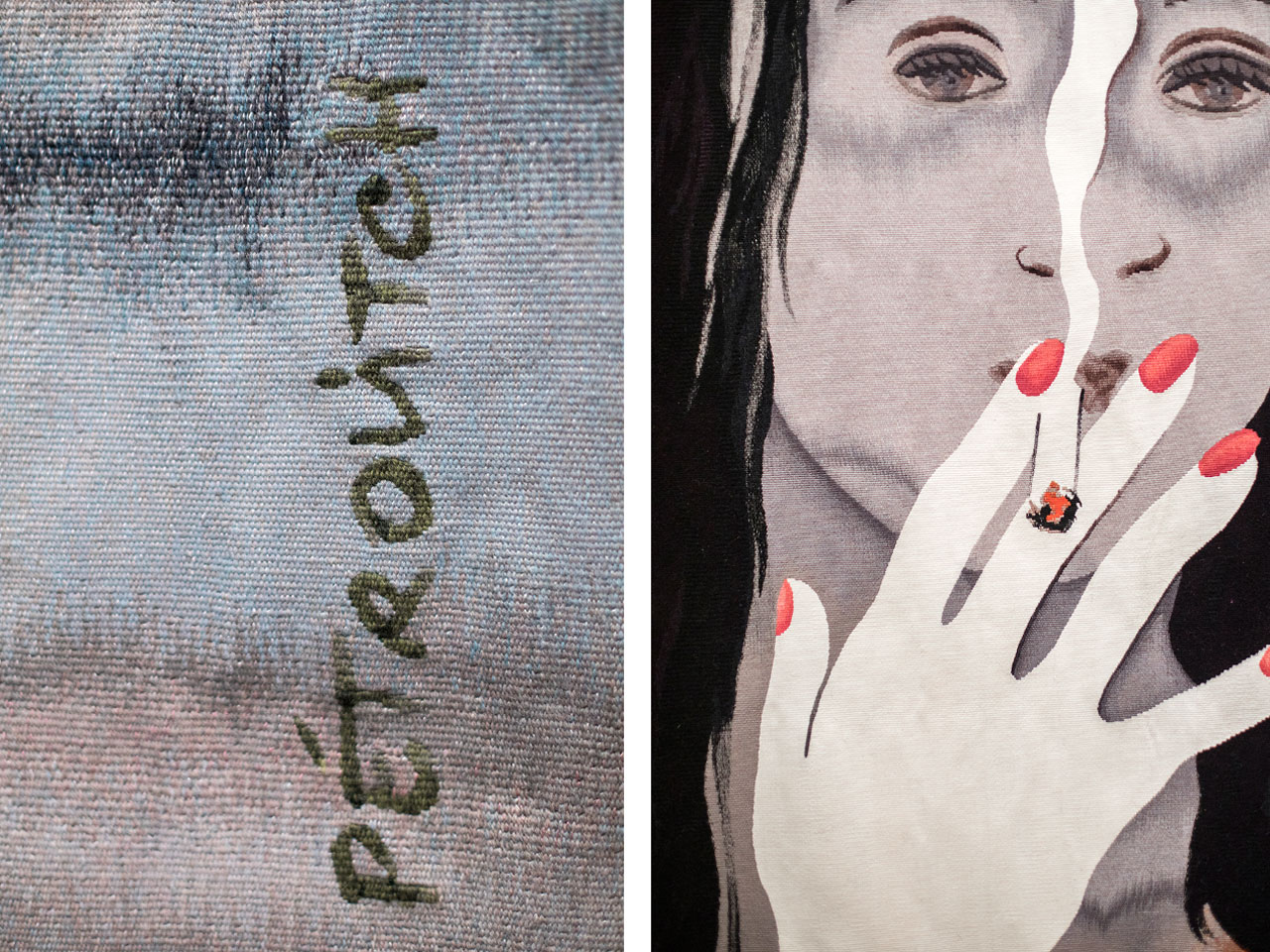
Right: Detail of the portrait of George – George tapestry, based on the work of Françoise Pétrovitch, © Zoé Forget