ART CITIES:Paris-Sterling Ruby
Sterling Ruby opened “TILL DEATH DO US PART” , presenting a new body of collages and cast-bronze sculptures that extends his ongoing investigation into mortality, material transformation, and the psychological pressures embedded within contemporary life. The exhibition continues Ruby’s longstanding engagement with autobiography, art history, and the tensions that define his practice: fluidity and stasis, Expressionism and Minimalism, beauty and abjection.
By Efi Michalarou
Photo: Gagosian Arcihve
For more than two decades, Ruby has worked across an extraordinary range of media—painting, ceramics, sculpture, collage, drawing, textile works, and video—developing a visual language that oscillates between violence and tenderness. In “TILL DEATH DO US PAR”T, flowers become the primary vehicle through which these concerns are explored. Drawn from the artist’s expanding garden in Vernon, California, and informed by extended periods spent in the Eastern Sierra region, the exhibition transforms the floral motif into an elegiac meditation on love, decay, and permanence.
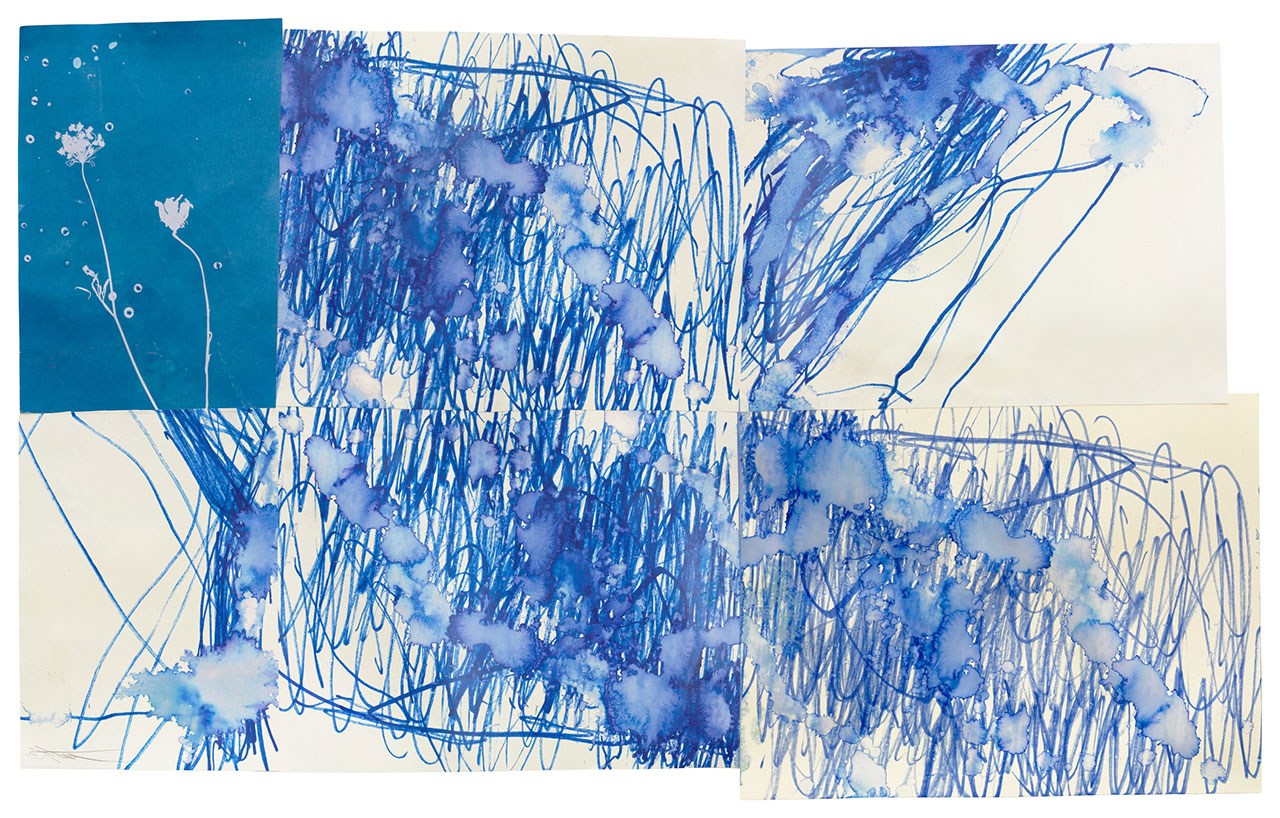
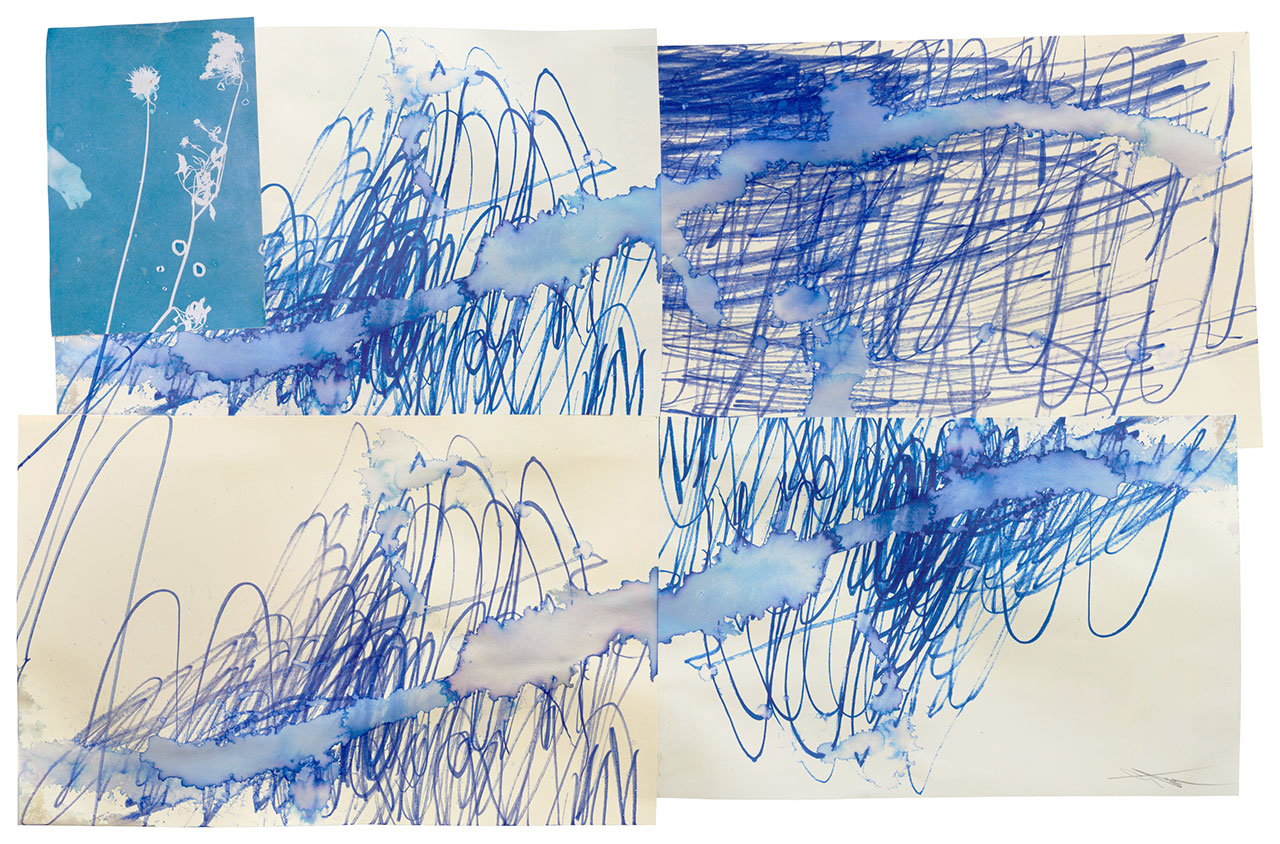
The exhibition unfolds as an immersive environment. Large-scale prints from Ruby’s “GHOSTS” series (2026) cover the gallery walls with dense fields of deep blue marks. Resembling windswept grasslands or turbulent atmospheric currents, these architecturally scaled works create a visual landscape through which visitors move. The source collages, composed of cyanotypes and gestural drawing, hang above these blue expanses, revealing the intimate processes that underpin the monumental installation.
At the center of the exhibition stand the bronze sculptures from the “Bound Flowers. Couple.” series (2025–). These works depict pairs of flowers physically intertwined, their stems and blooms locked in embraces that suggest affection, dependency, and confinement simultaneously. Ruby transforms botanical specimens into anthropomorphic figures whose postures evoke the formal compositions of wedding portraits. The exhibition’s title, “TILL DEATH DO US PART” finds its clearest expression here, where flowers become stand-ins for human relationships and the promises that bind individuals together.
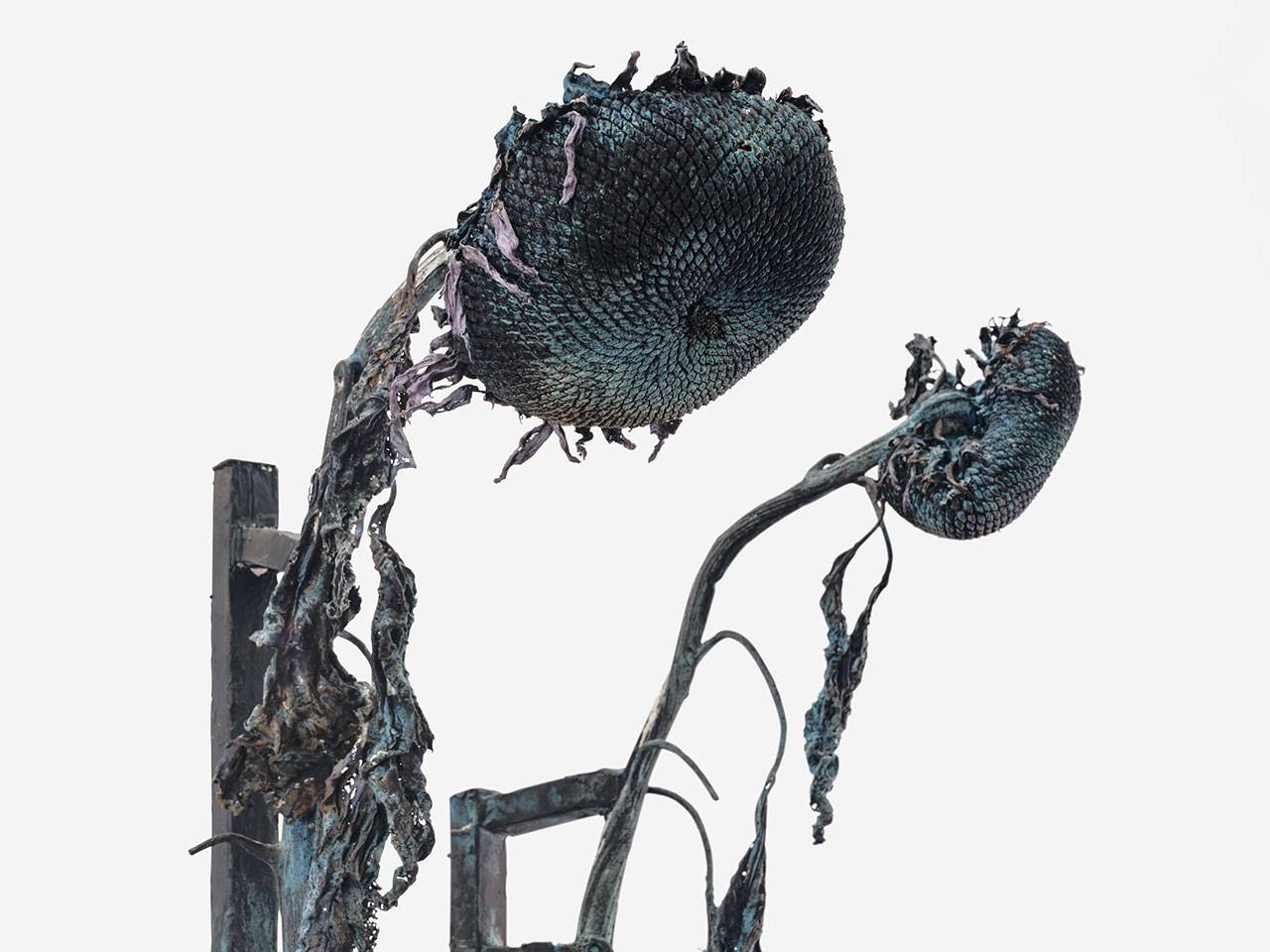
Marriage, however, is not presented romantically. Rather, Ruby emphasizes the paradoxical nature of commitment. The sculptures communicate intimacy and restraint in equal measure. Flowers appear to lean toward one another, overlap, or gaze across space, yet they are simultaneously immobilized. Their gestures suggest affection, but their material condition suggests inevitability. Cast in bronze after undergoing a destructive process of transformation, these flowers embody the tension between life and preservation, between vitality and memorialization.
This dialogue with mortality is reinforced through Ruby’s engagement with seventeenth-century Flemish and Dutch still-life painting. Like the vanitas traditions of those historical works, his flowers operate as symbols of impermanence. Their blooms exist in varying stages of decay, recalling the historical use of floral imagery to signify the brevity of earthly existence. Yet Ruby departs from traditional still life by foregrounding the labor and violence of artistic production itself. The sculptures reveal not only the flowers they represent but also the processes that transformed them.
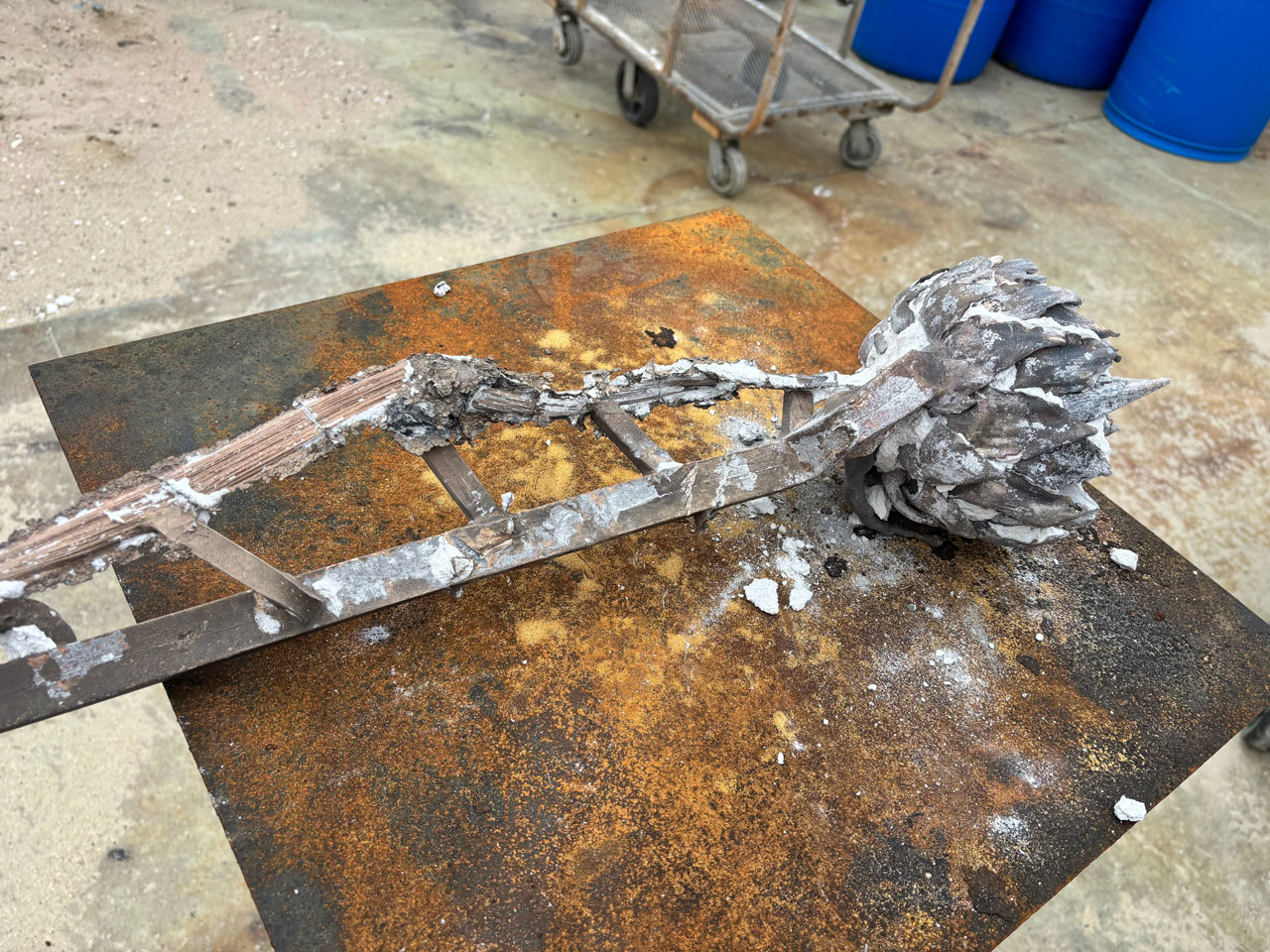
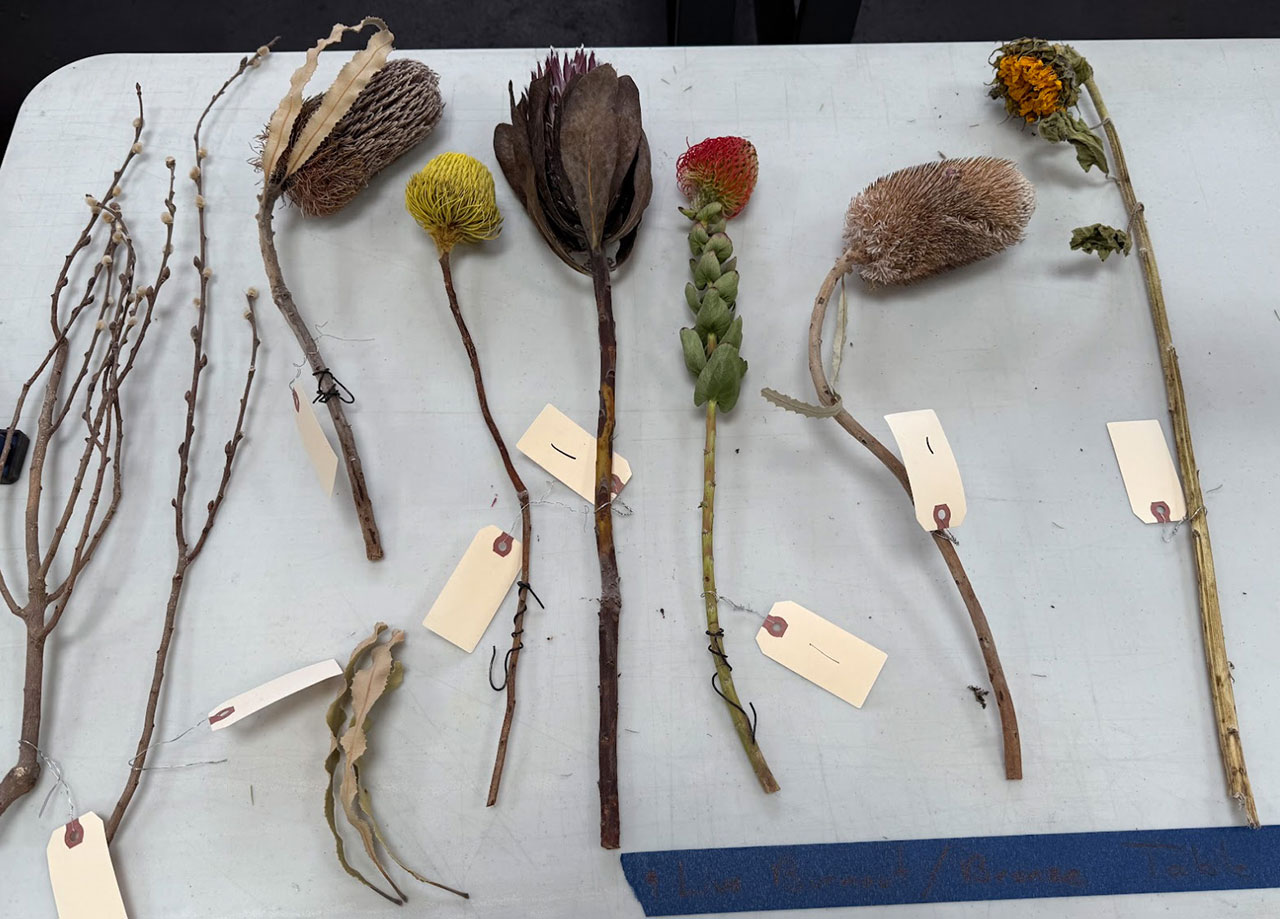
The live bronze-casting method is central to this conceptual framework. Organic specimens are encased in silica and effectively cremated during casting, leaving only their metallic afterimage. Traces of silica remain embedded within the finished surfaces as residues of absence. Pouring channels, typically removed in conventional bronze production, are preserved by Ruby as visible structural elements. These conduits once directed molten metal into the mold, but within the context of the exhibition they assume a symbolic role, functioning almost as cages that lock the flowers into eternal poses. The resulting sculptures are memorials to something that no longer exists, physical records of a living form that has been destroyed in order to be preserved.
Environmental concerns further deepen the work’s resonance. Many of the sculptures depict sunflowers and banksias, species associated with Southern California’s increasingly volatile climate. Their shriveled petals and darkened surfaces evoke landscapes marked by wildfire. Ruby highlights the remarkable adaptations of these plants—their waxy textures, resilient structures, and in some cases their ability to release seeds only after exposure to fire. Through these references, the flowers become metaphors not only for individual mortality but also for ecological precarity and regeneration.
In contrast to the darkened bronze sculptures, the “GHOSTS” collages immerse floral imagery in luminous fields of Prussian blue, ultramarine, indigo, and violet. The cyanotype process captures actual plant stems from the artist’s garden, while frenetic drawn lines extend outward from these impressions. The resulting compositions blur distinctions between observation and imagination. The flower is no longer merely a botanical specimen; it becomes an active presence, generating energy that radiates across the page and into the surrounding architectural space.
These works also connect to Ruby’s broader artistic trajectory. Like his earlier DRFTRS series, the collages establish a dynamic relationship between individual elements and larger fields of activity. Small forms drift within expansive spaces, creating a visual conversation between containment and dispersal. The flower emerges as both subject and symbol—a fragile organism transformed into an icon of consciousness itself.
“ TILL DEATH DO US PART “reveals Sterling Ruby at his most contemplative. While his work has often been associated with social violence, institutional power, and cultural fragmentation, this exhibition turns toward the intimate sphere of relationships and loss. Yet the political and environmental dimensions remain present, embedded within the flowers’ associations with wildfire, resilience, and mortality. Through bronze, cyanotype, and collage, Ruby creates a poignant meditation on attachment and impermanence, reminding viewers that every act of preservation contains an act of destruction, and that every living form is already shadowed by its eventual disappearance.
Photo: Sterling Ruby, GHOSTS (9180), 2026, Watercolor, cyanotype, and mixed-media collage on paper, 16 1/4 x 26 inches (41.3 x 66 cm), © Sterling Ruby, Photo: Sterling Ruby Studio, Courtesy the artist and Gagosian
Info: Gagosian, 9 rue de Castiglione, Paris, France, Duration: 12/6-3/10/2026, Days & Hours: Tue-Sat 10:30-18:30, https://gagosian.com/
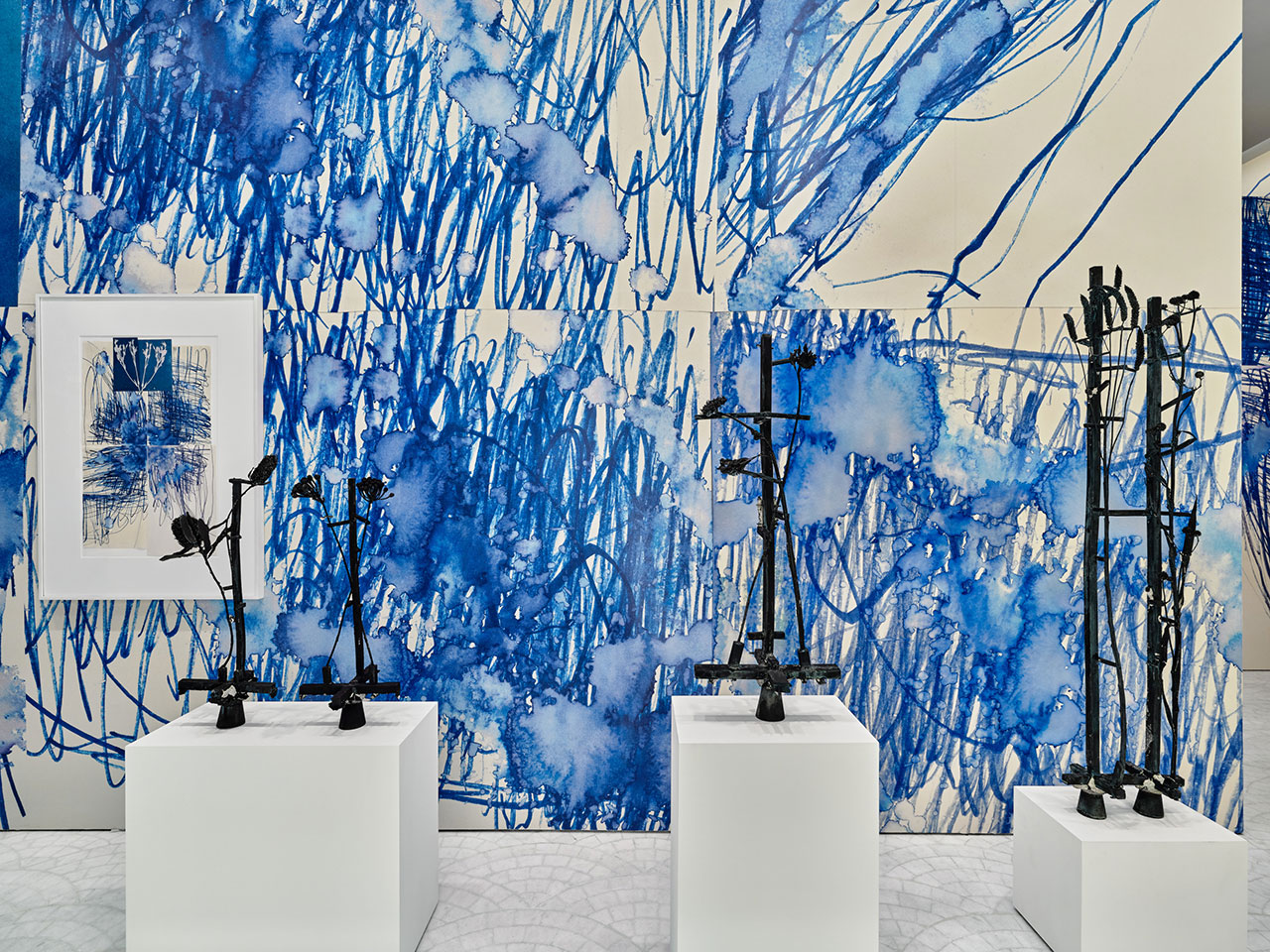
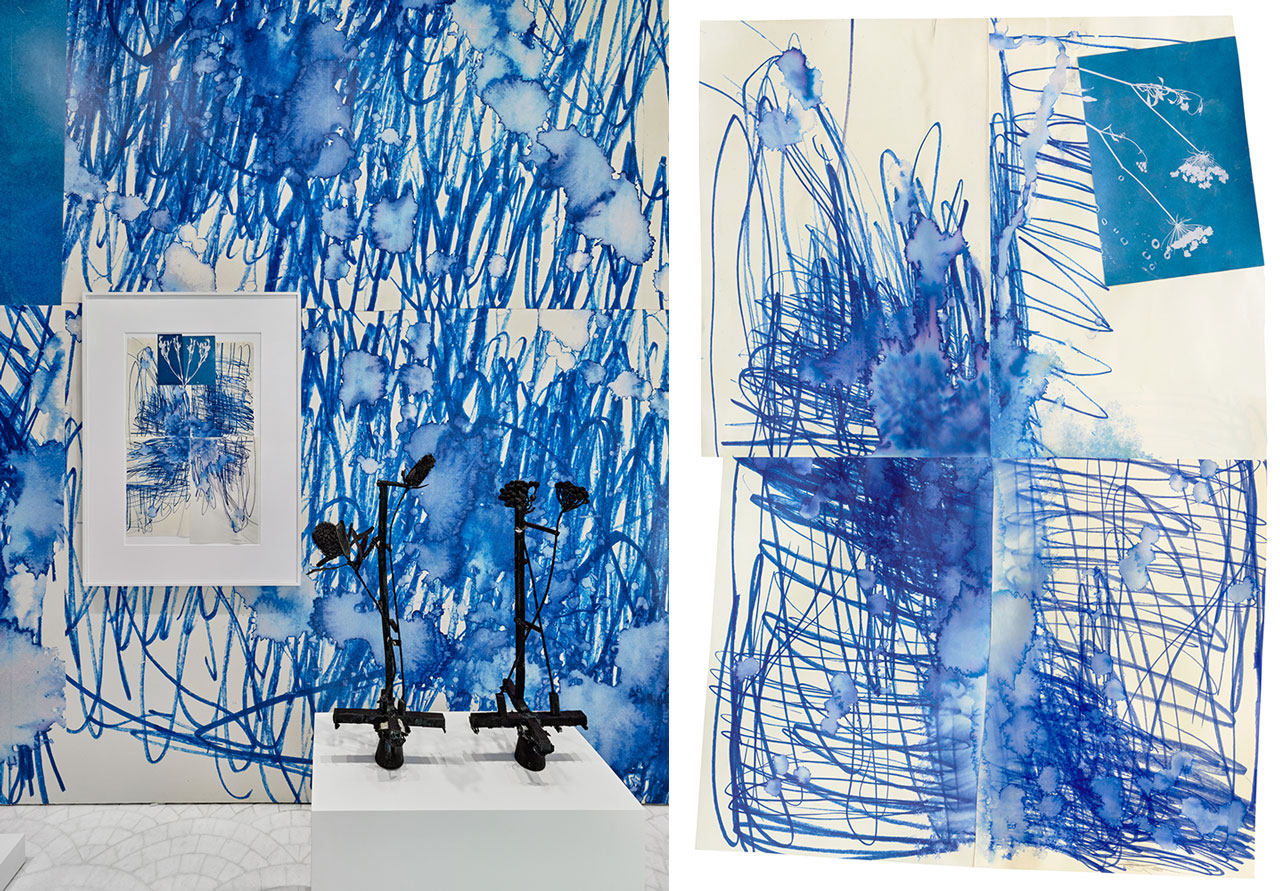
Right: Sterling Ruby, GHOSTS (9181), 2026, Watercolor, cyanotype, and mixed-media collage on paper, 30 x 20 inches (76.2 x 50.8 cm), © Sterling Ruby, Photo: Sterling Ruby Studio, Courtesy the artist and Gagosian
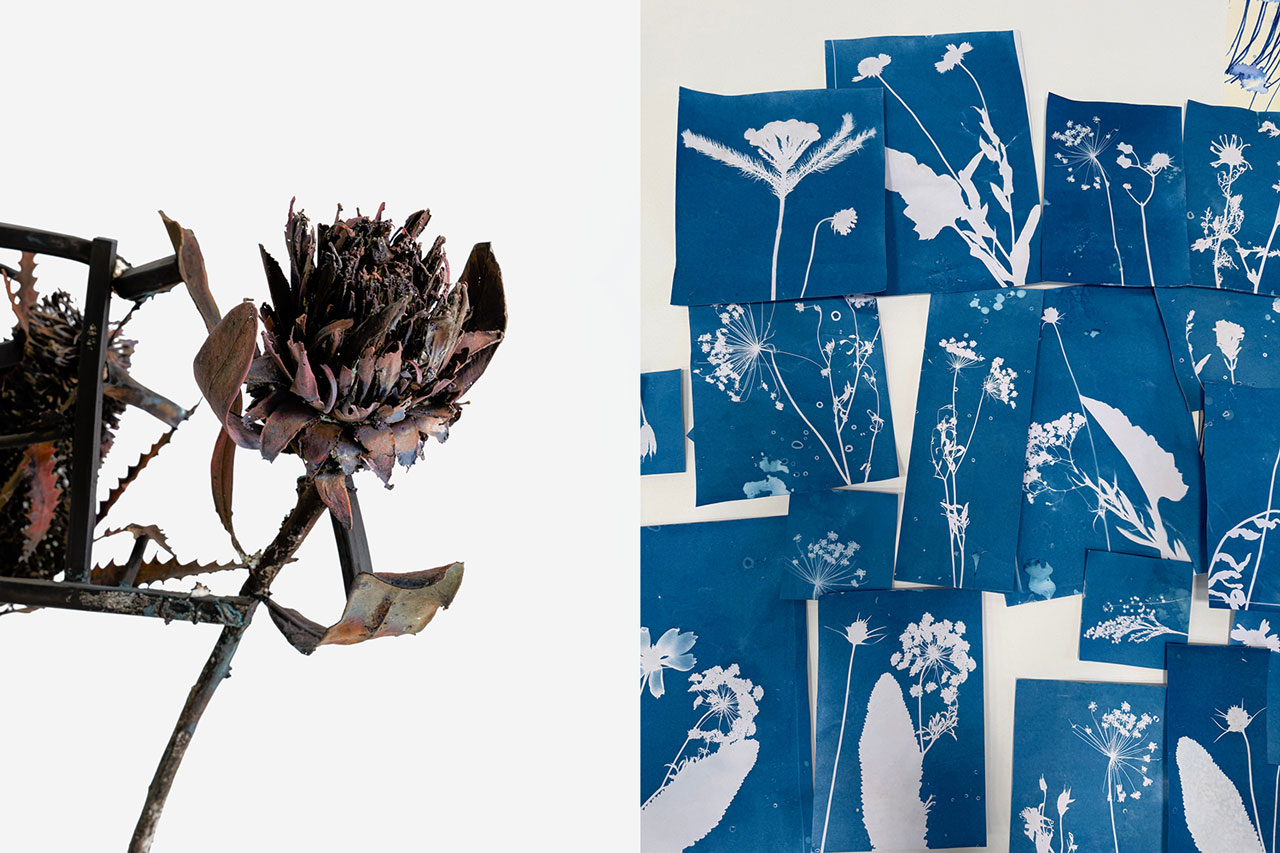
Right: Samples for artwork production, Photo: Sterling Ruby Studio, Courtesy the artist and Gagosian