PRESENTATION:Joan Snyder-Earthsongs
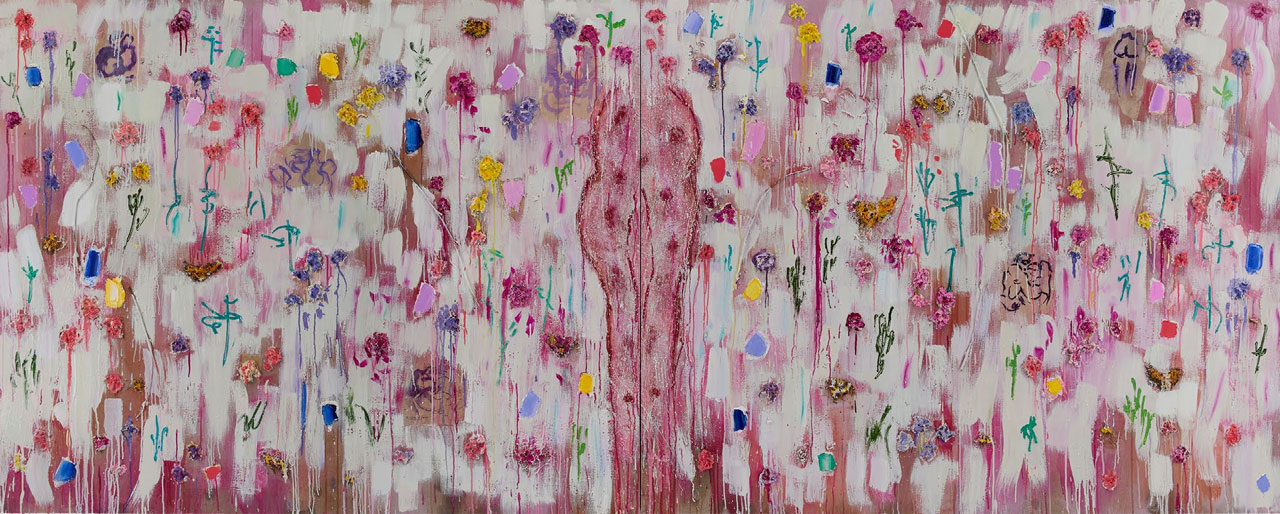
For over sixty years, Joan Snyder has transformed abstraction into a deeply personal and narrative art form. Rising to prominence in the 1970s with her Stroke paintings, she challenged male-dominated artistic traditions by combining abstraction with autobiography. Through recurring symbolic motifs and layered materials, Snyder explores memory, emotion, and female experience, expanding the possibilities of contemporary American painting through a distinctly feminist perspective.
By Efi Michalarou
Photo: Thaddaeus Ropac Gallery Archive
At eighty-six, American artist Joan Snyder continues to expand the possibilities of contemporary abstraction. “Earthsongs”, her first solo exhibition in France, brings together a new body of paintings and works on paper that reaffirm the singular vision she has cultivated over six decades. Oscillating between the earthly and the spiritual, the exhibition reveals an artist whose work remains as emotionally charged, materially inventive, and intellectually vital as ever.
Since emerging in the early 1970s, Snyder has challenged the dominant narratives of abstraction by insisting on the presence of autobiography, emotion, and female subjectivity within painting. Rather than embracing the detached formalism of Minimalism or Colour Field painting, she transformed abstraction into a site of personal testimony. In “Earthsongs”, this commitment remains central. Each work functions like a diary entry, where narrative and memory guide formal experimentation. The exhibition demonstrates how Snyder continues to merge lived experience with abstraction, creating images that are at once intimate and universal.
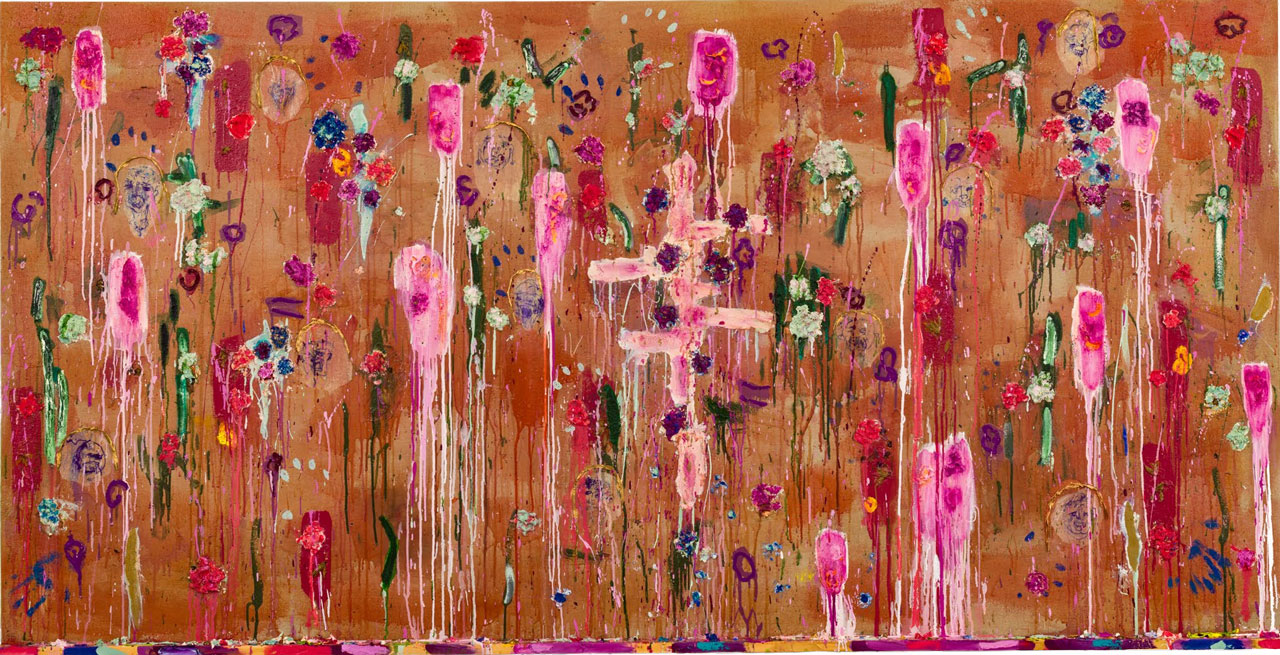
Throughout her career, Snyder has developed a symbolic vocabulary rooted in recurring motifs: roses, breasts, trees, moons, ponds, totems, and flowers. These images reappear in “Earthsongs”, forming a visual language through which she explores identity, mortality, renewal, and the female body. Their persistence across decades transforms them into personal archetypes, carrying emotional and psychological resonance while resisting fixed interpretation.
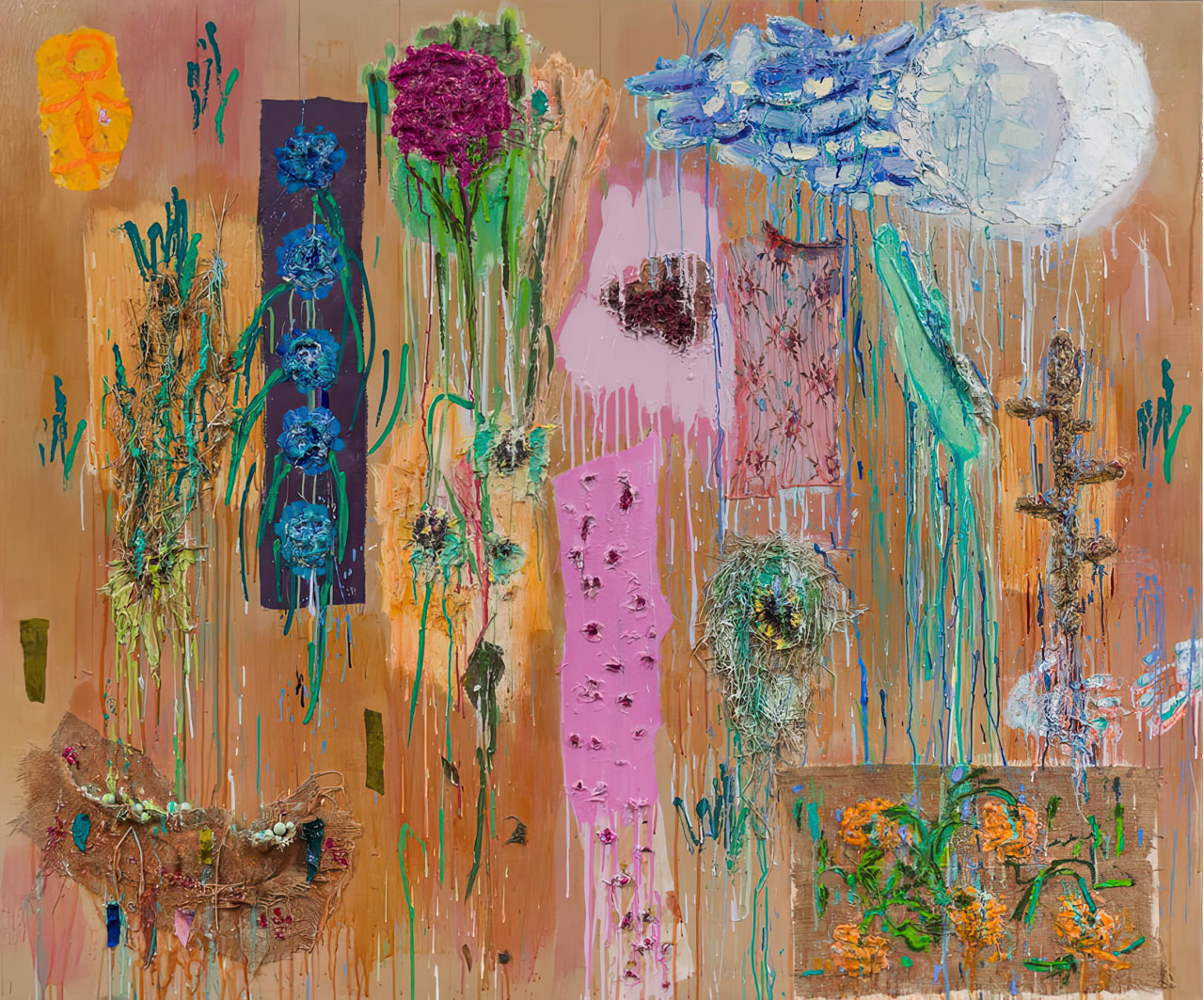
Materiality plays an equally important role. Snyder’s paintings are constructed through an additive process that blurs the boundaries between painting, sculpture, and assemblage. Twigs, dried flowers, mud, straw, lace, velvet, glitter, plastic beads, burlap, and papier-mâché accumulate across the canvas surface. These heterogeneous materials create densely layered compositions that seem to embody the textures of memory itself. Writer Rachel Cusk, whose essay accompanies the exhibition catalogue, describes this approach as engaging with “the undocumented materiality of female existence”—a phrase that captures the physical and emotional weight embedded within Snyder’s work. (
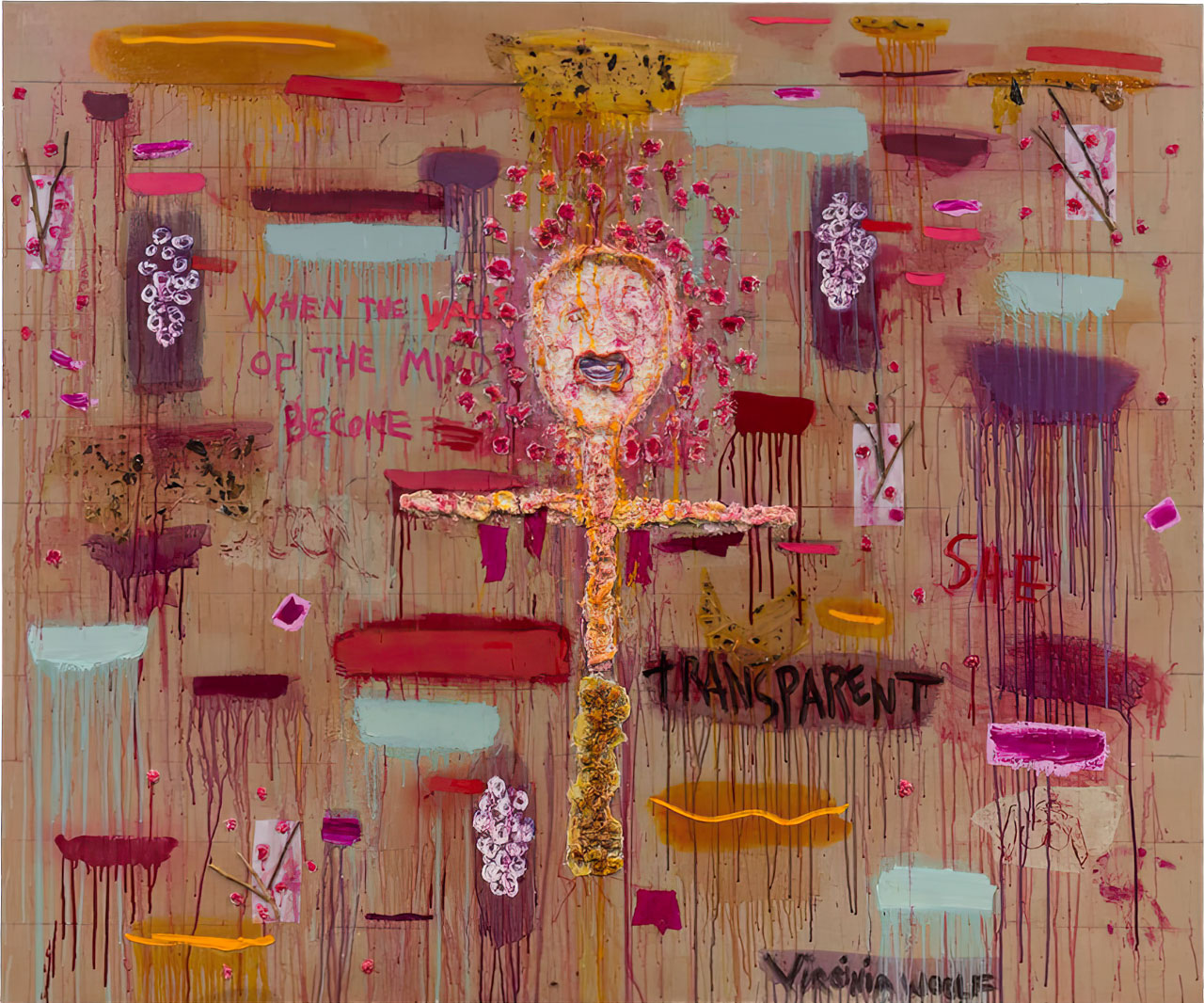
Language has long occupied a significant place in Snyder’s practice, and several works in the exhibition incorporate handwritten text. Literature serves as an enduring source of inspiration, particularly the writings of women authors. In “The Walls of My Mind” (2026), Snyder references Virginia Woolf’s novel “The Waves”, invoking the phrase “when the walls of the mind grow thin.” The quotation reflects a dissolution of boundaries between inner and outer worlds, a condition that resonates throughout the exhibition. Nature becomes a vehicle through which personal feeling and collective experience converge.
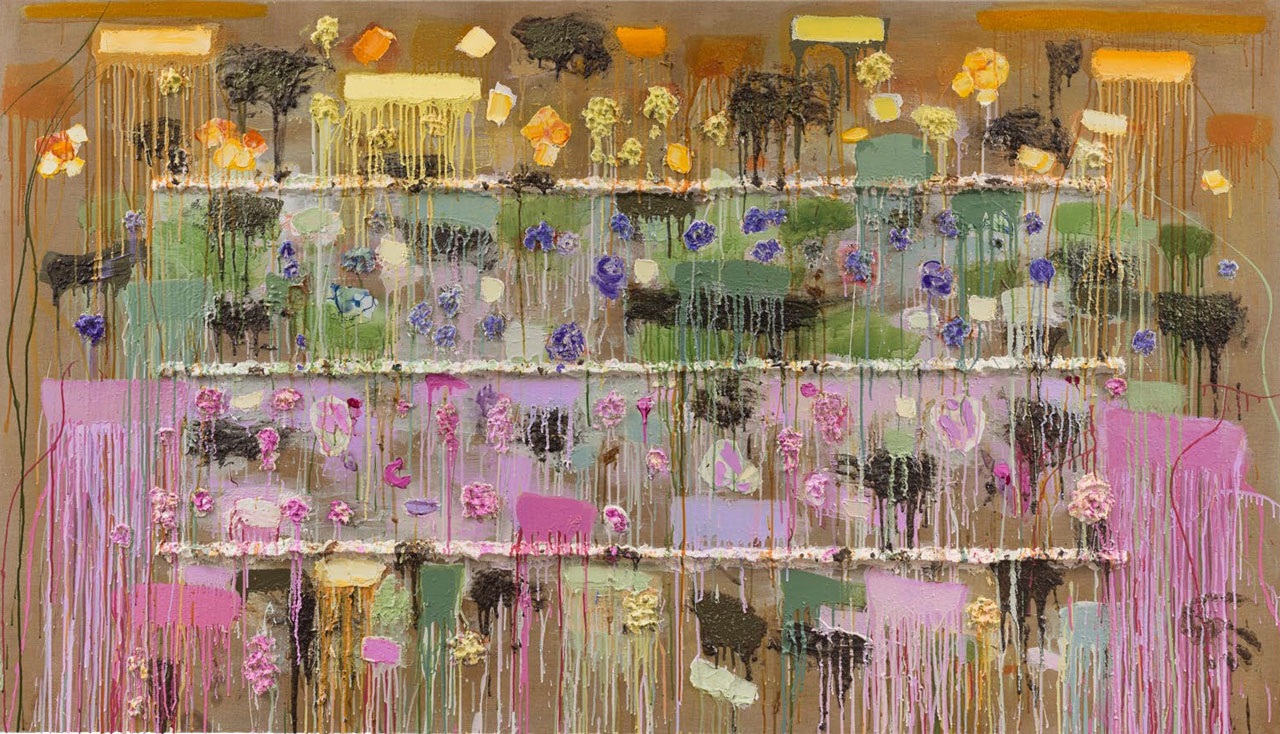
Many of the new works possess a striking sculptural dimension. Fabric, burlap, and papier-mâché swell into pouch-like forms that contain seeds, flowers, and pools of pigment, transforming the paintings into repositories of memory and growth. In monumental works such as “The Forest Becomes a Symphony” (2025) and “Elegy for Souls: (2025), wooden shelves project from the lower edge of the canvas. Introduced into Snyder’s work during the 1990s, these structures function simultaneously as supports, altars, and containers, lending the paintings a devotional character. The repeated appearance of tree-like cruciform forms, along with diptych and triptych formats, further evokes the visual traditions of religious altarpieces. Snyder’s longstanding belief that painting constitutes a spiritual practice is evident throughout the exhibition. (
The exhibition also reconnects with Snyder’s celebrated “Field” paintings of the 1980s, developed after her move from New York City to a rural environment. The all-over composition of these works transforms the canvas into fertile ground where colour, gesture, and imagery intermingle. In Earthsongs, fields of blooming forms unfold across linen surfaces, their palettes shifting between intense reds and pinks and muted greens, ochres, and straw tones. These chromatic contrasts evoke cycles of growth and decay, life and death, disappearance and renewal. The exposed linen itself becomes an active participant in the work, grounding the compositions in a palpable sense of earthiness.)
Central to Snyder’s practice remains the brushstroke. First explored in her groundbreaking “Stroke” paintings of the early 1970s, the brushstroke appears here in new forms: energetic dabs of paint, flowing lines of watercolour, and bold ink marks pressed directly onto paper. Often resembling musical notation, these gestures establish rhythms that guide the viewer’s movement across the surface. They transform the paintings into visual scores—songs of grief, joy, remembrance, and resilience.
Photo: Joan Snyder, Femmes et Fleurs, 2026, Oil, acrylic, paper mache, twigs, dried flowers, glitter, ink, paper, coloured pencil on linen in two parts, 147.3 × 365.8 cm (58 × 144 in), © Joan Snyder, courtesy the artist and Thaddaeus Ropac Gallery
Info: Thaddaeus Ropac Gallery, 7 Rue Debelleyme, Paris, France, Duration: 6/6-25/7/202, Days & Hours: Tue-Sat 10:00-19:00, https://ropac.net/