
PRESENTATION: Arnaldo Pomodoro-Una Vita
Arnaldo Pomodoro was an influential Italian sculptor renowned for his large-scale bronze sculptures that combine geometric precision with rich symbolic meaning. His most famous works are polished bronze spheres, discs, columns, and architectural forms that appear intact on the surface but are fractured to reveal intricate inner structures resembling gears, machinery, or hidden worlds. Through these contrasts, Pomodoro explored themes of time, technology, human civilization, and the relationship between visible order and underlying complexity. His sculptures transform public spaces into sites of reflection, blending modernist abstraction with a powerful sense of mystery and monumentality.
By Efi Michalarou
Photo: Gallerie d’Italia Archive
One year after the death of Arnaldo Pomodoro and on the centenary of his birth, Gallerie d’Italia and the Arnaldo Pomodoro Foundation present “Arnaldo Pomodoro. Una Vita”, a major retrospective that celebrates one of the most influential figures in post-war Italian and international contemporary art. The exhibition offers an unprecedented journey through more than six decades of artistic experimentation, tracing Pomodoro’s evolution from the 1950s to the early twenty-first century.
Conceived as the story of a life, the exhibition unfolds as a chronological and thematic exploration of the artist’s career, revealing the consistency of his vision while highlighting the remarkable transformations that shaped his sculptural language over time. Iconic masterpieces are displayed alongside lesser-known works and archival materials, creating a rich and nuanced portrait of an artist who continually redefined the possibilities of sculpture.
The exhibition occupies a vast sequence of spaces throughout Gallerie d’Italia, extending from the Salone Scala and adjacent galleries to the Salone Manzoni, the Cantieri del Novecento, Palazzo Brentani, the Octagonal Cloister, and the Garden of Alessandro. This architectural progression mirrors the evolution of Pomodoro’s artistic research, transforming the museum into a physical and conceptual map of his creative universe.
Visitors begin in the t Salone Scala, where a sloping, walkable platform functions almost like a theatrical stage. Here, a group of white fibreglass sculptures from the 1960s to the 2000s appears suspended in space, emphasizing recurring themes that define Pomodoro’s work: movement, instability, transformation, and the tension between balance and collapse. Works such as “Cubo” (1964–1967), “Movimento di crollo” (1970–1971), “Giroscopio” (1986–1987), “Colpo d’ala” (1984), and “Rotativa di Babilonia” (1991) reveal the artist’s fascination with dynamic forces and the hidden structures that govern both natural and human-made worlds.
The six rooms overlooking the Salone Scala reconstruct the major phases of Pomodoro’s career. The exhibition opens with his formative years in 1950s Milan, when he emerged within the climate of Informal Art. Early bas-reliefs demonstrate his pioneering use of engraved signs and symbolic markings, a form of sculptural “writing” that would become one of the defining characteristics of his work.
These works reveal an artist deeply engaged with material experimentation. Silver, lead, zinc, copper, tin, and cement became vehicles through which Pomodoro developed a unique visual language, one that merged archaeology, ancient scripts, and modern abstraction. Already in these early pieces, surfaces appear charged with hidden meanings, as though concealing secret codes waiting to be deciphered.
The early 1960s marked a decisive turning point. Pomodoro abandoned relief sculpture in favor of fully three-dimensional forms, beginning his exploration of Euclidean geometries that would eventually become his artistic signature. Works such as “La ruota” (1961), “Il cubo” (1961–1962), and the first “Colonne del viaggiatore” reveal his growing interest in geometric perfection disrupted by internal tensions.
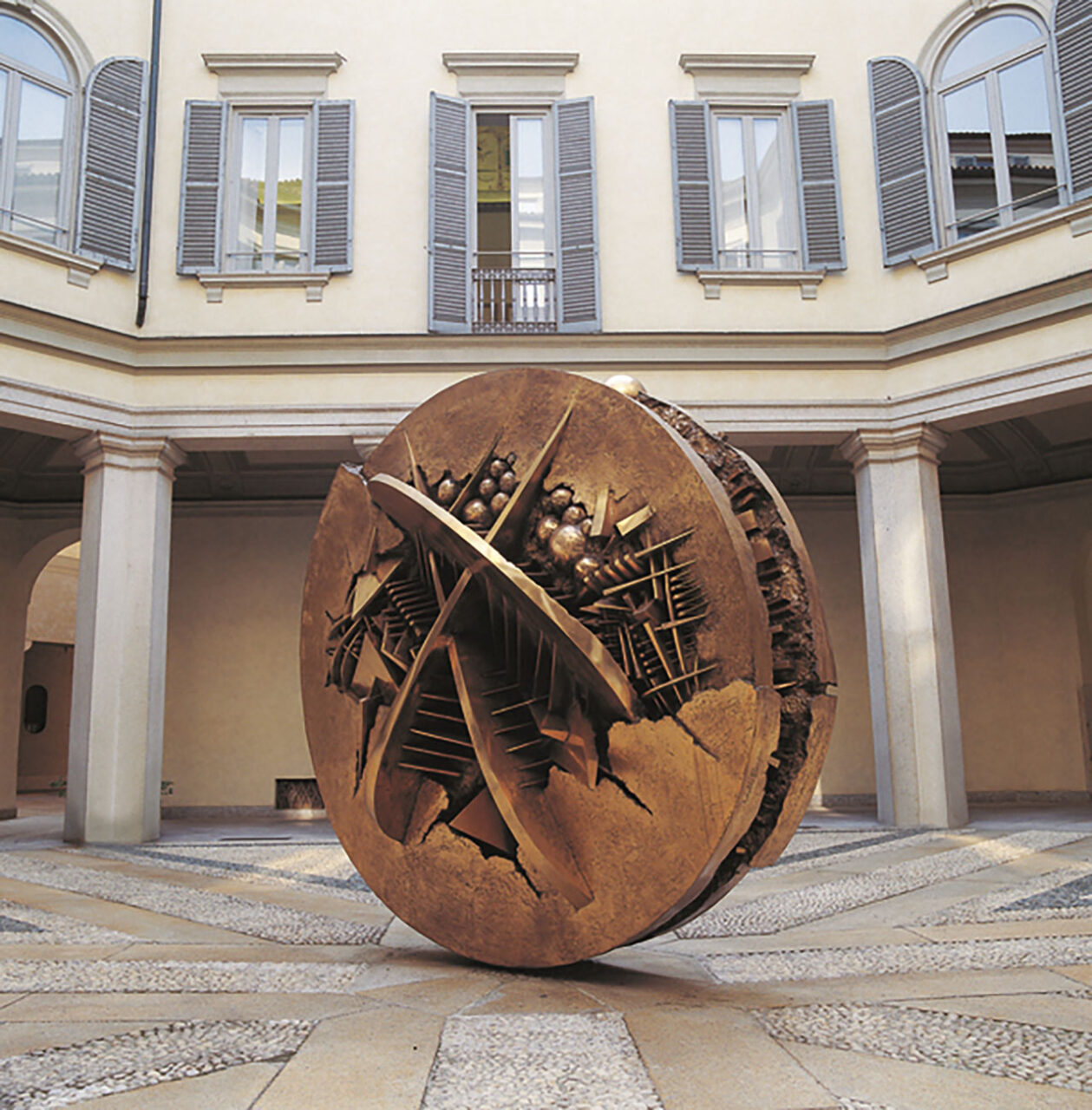
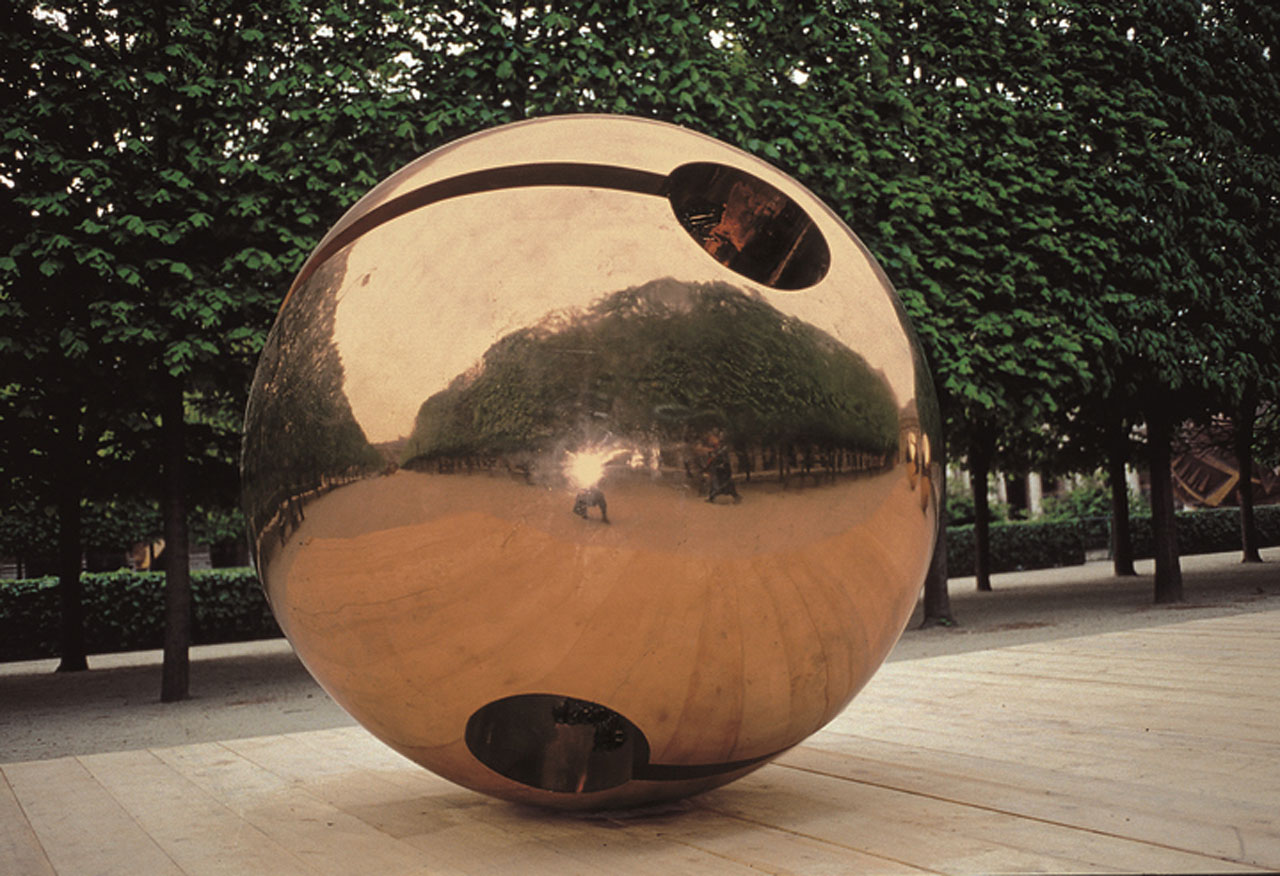
This trajectory culminates in “Sfera n. 1” (1963), the first of the celebrated spheres that would bring Pomodoro international recognition. These sculptures transformed simple geometric forms into complex metaphors. Their polished exteriors are ruptured to reveal intricate internal mechanisms, suggesting that beneath every appearance lies a hidden reality. The sphere became one of the most recognizable motifs in twentieth-century sculpture, embodying the relationship between order and chaos, surface and depth.
The exhibition also examines Pomodoro’s experiences in the United States during the late 1960s and early 1970s, when he taught at universities including Stanford, Berkeley, and Mills College. Exposure to American Minimalism and large-scale sculpture inspired new directions in his work.
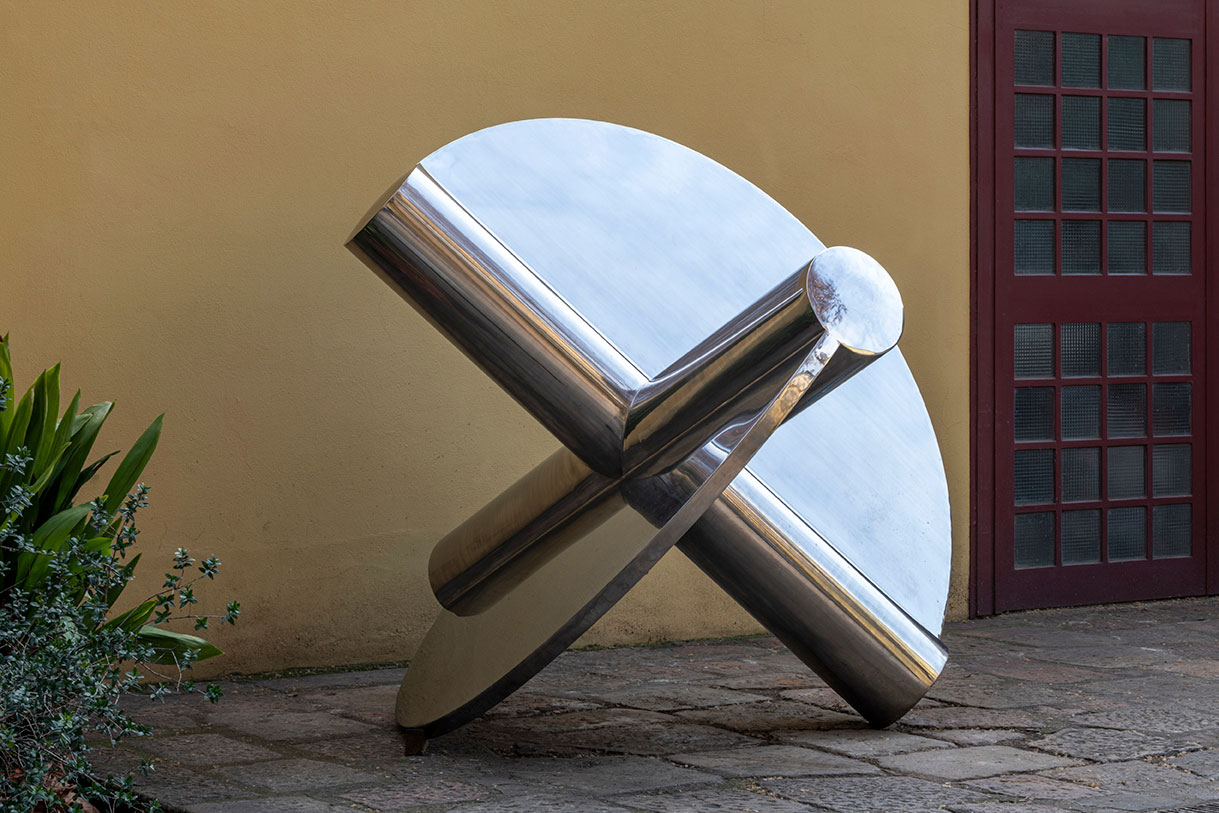
Sculpturess such as “Rotante massimo” (1969–1970) and “Forma X” (1968–1970) reflect a dialogue with minimalist aesthetics while preserving the artist’s distinctive interest in movement and internal complexity. These works demonstrate how Pomodoro absorbed international influences without abandoning the symbolic and narrative dimensions that distinguished his practice.
During the 1970s and 1980s, Pomodoro returned to themes that had preoccupied him from the beginning: language, communication, and inscription. Series such as “Immagini” and “Cronache” resemble visual letters addressed to fellow artists including Gastone Novelli and Ugo Mulas. Here writing is transformed into sculpture, becoming both a personal archive and a universal system of signs.
The “Aste celesti”, meanwhile, reinterpret the earlier “Colonne del viaggiatore” as futuristic antennae, suggesting communication across time and space. These works reveal Pomodoro’s enduring fascination with humanity’s desire to transmit knowledge, memory, and experience.
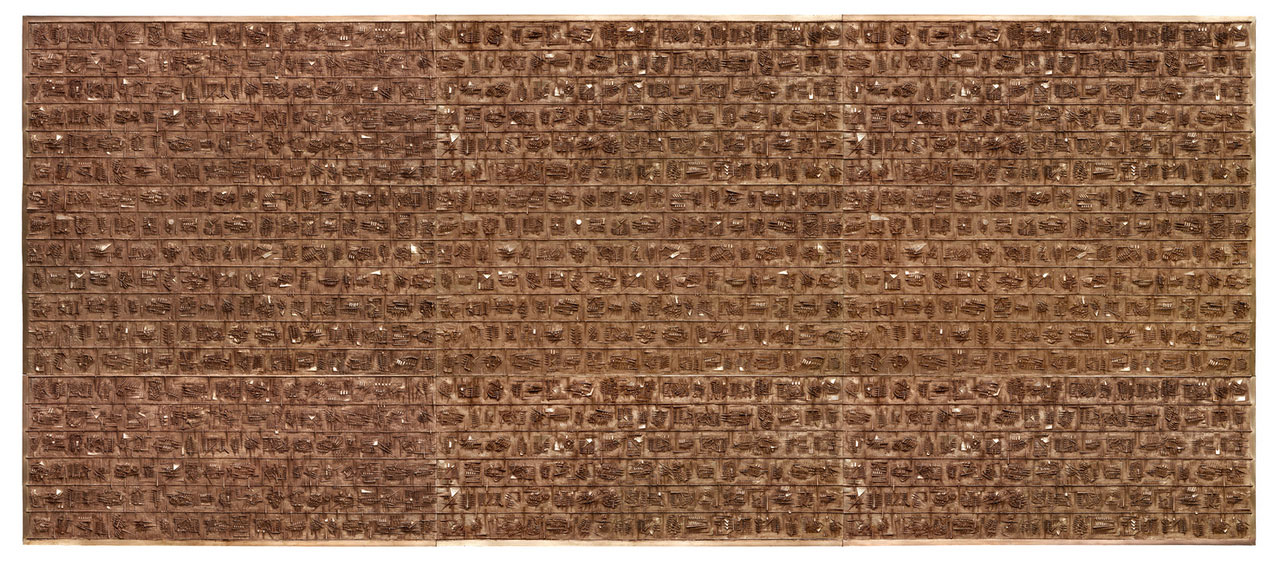
The 1980s and 1990s saw Pomodoro increasingly interested in environmental and architectural dimensions. Works such as “Papiro” (1985–1989) and “Papyrus for Darmstadt” (1988–1989) extend beyond the traditional sculptural object, occupying space as immersive environments. Surface becomes landscape, while inscriptions unfold across larger spatial fields.
These projects demonstrate the artist’s ambition to create not merely isolated objects but entire worlds in which viewers could physically experience the interplay of matter, sign, and space.
In his final decades, Pomodoro revisited many of the themes that had shaped his earliest works. The monumental “Colonne A, B e C” (2010) and the “Continuum” series transform his characteristic script into endless rhythmic patterns. These totemic forms evoke both ancient monuments and futuristic communications devices, suggesting an infinite flow of language and memory.
Rather than representing a conclusion, these late works reveal an artist continually re-examining his own beginnings. The signs first etched into metal surfaces in the 1950s return on a monumental scale, confirming the remarkable coherence of Pomodoro’s lifelong research.
One of the exhibition’s most compelling sections is devoted to the artist’s archive. Catalogues, magazines, posters, sketches, letters, photographs, and press clippings are displayed not merely as documentary evidence but as active components of Pomodoro’s creative process.
This immersive archival installation allows visitors to move freely between artwork and document, uncovering unexpected connections and gaining insight into the intellectual networks that shaped the artist’s career. The archive becomes an extension of the sculpture itself—a space where ideas remain in motion.
The exhibition continues in the Cantieri del Novecento, where works such as “La vera perla dei lucidi” (1960), “Radar n. 1” (1961–1962), and “Il grande ascolto” (1967–1968) enter into dialogue with the museum’s permanent collection. These works highlight Pomodoro’s engagement with technology, communication, and modernity while emphasizing his relationships with artists he admired and those who shared his generation.
The display situates Pomodoro within a broader constellation of twentieth-century Italian art, bringing his work into conversation with figures such as Lucio Fontana, Alberto Burri, Gastone Novelli, Achille Perilli, Piero Dorazio, and Pietro Consagra.
The exhibition culminates outdoors with two monumental works permanently installed at Gallerie d’Italia. In the Octagonal Cloister stands “Disco in forma di rosa del deserto n. 1” (1993–1994), a powerful bronze sculpture that evokes the generative energy of the mineral world. Nearby, in the Garden of Alessandro, visitors encounter “Sfera grande” (1966–1967), the iconic fibreglass version of one of Pomodoro’s most celebrated large-scale spheres. Together, these works embody the essential themes of his oeuvre: geometry, rupture, mystery, and transformation.
The exhibition concludes with the documentary “Arnaldo Pomodoro – La natura della forma” (2026), directed by Alessandro Pezza, and a display of documents from Intesa Sanpaolo’s Historical Archive, illustrating the artist’s relationships with collectors, institutions, and the banking world that helped preserve his legacy.
More than a retrospective, “Arnaldo Pomodoro. Una Vita” is an exploration of how an artist transformed sculpture into a language capable of expressing the complexities of the modern world. From engraved reliefs to monumental spheres, from intimate archives to immersive environments, the exhibition reveals a lifelong investigation into the hidden structures that shape reality.
Photo: Arnaldo Pomodoro, Forma X, I, 1968-1969, steel, ø 200 cm, Collezione Fondazione Arnaldo Pomodoro, Milano, Photo Carlos Tettamanzi. Courtesy Fondazione Arnaldo Pomodoro, Milano
Info: Curators: Luca Massimo Barbero and Federico Giani, Gallerie d’Italia, Piazza della Scala 6, Milan, Italy, Duration: 29/5-18/10/2026, Days & Hours: Tue-Sun 9:30-19:00, https://gallerieditalia.com/
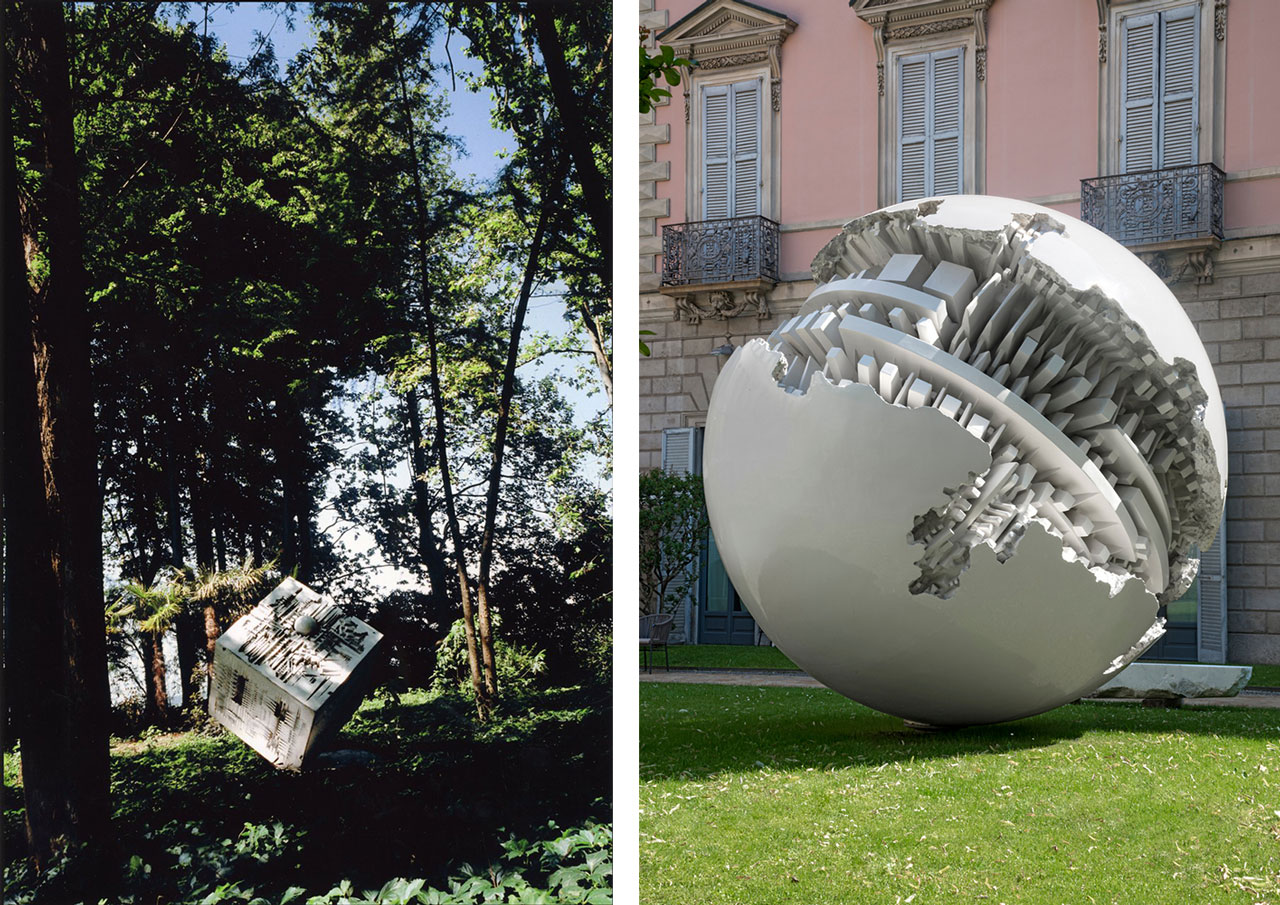
Right: Arnaldo Pomodoro, Rotante massimo, IV, 1969-1970, bronze, ø 160 cm, Collezione Intesa Sanpaolo, Photo Ermanno Casasco. Courtesy Fondazione Arnaldo Pomodoro, Milano
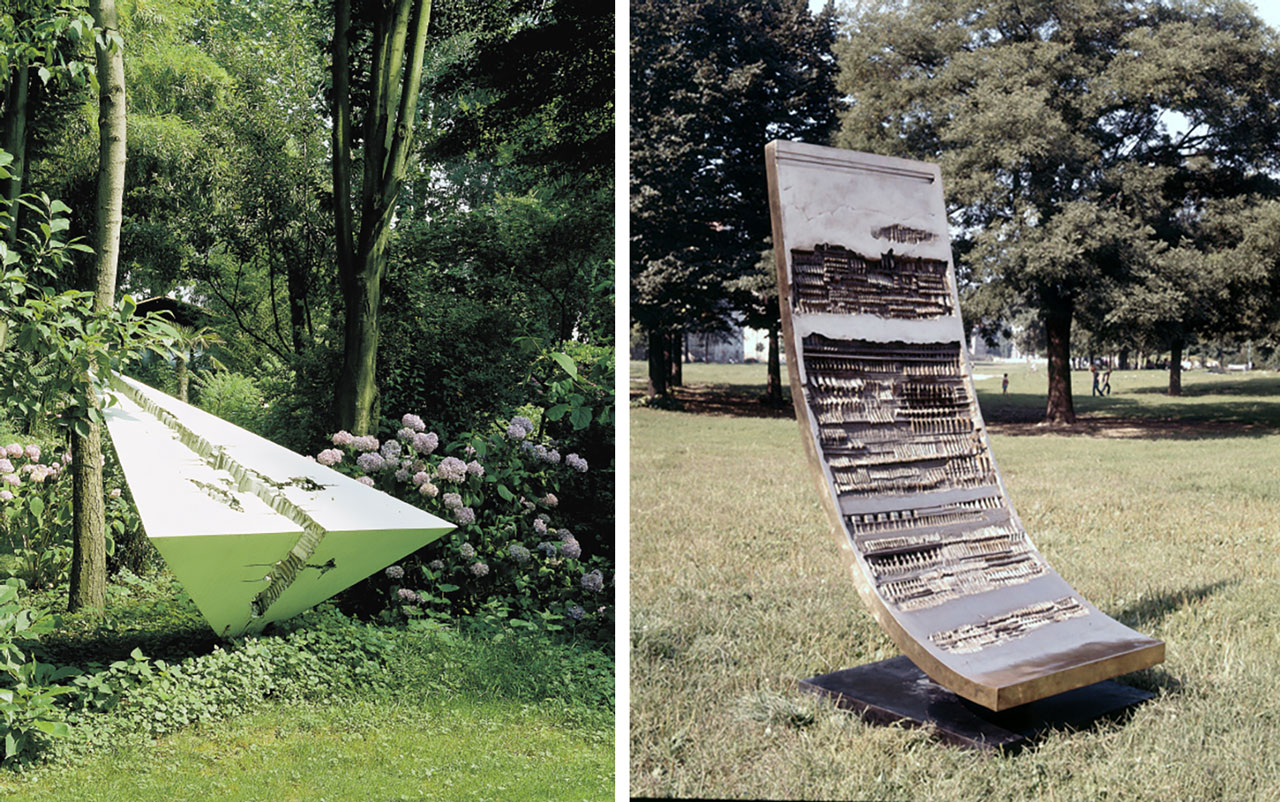
Right: Arnaldo Pomodoro, Radar n. 1, 1961-1962, bronze, 200 × 80 × 100 cm, Collezione Fondazione Arnaldo Pomodoro, Milano, Photo Giorgio Boschetti. Courtesy Fondazione Arnaldo Pomodoro, Milano
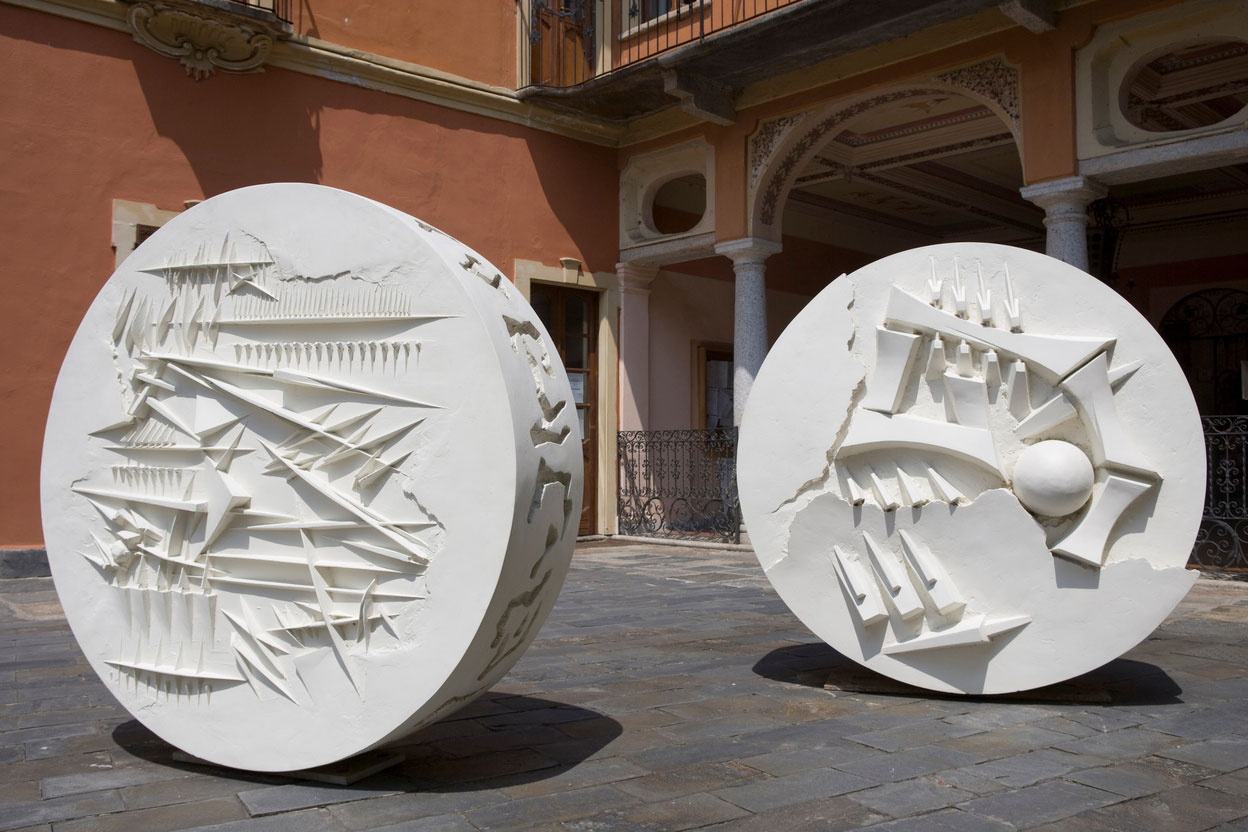
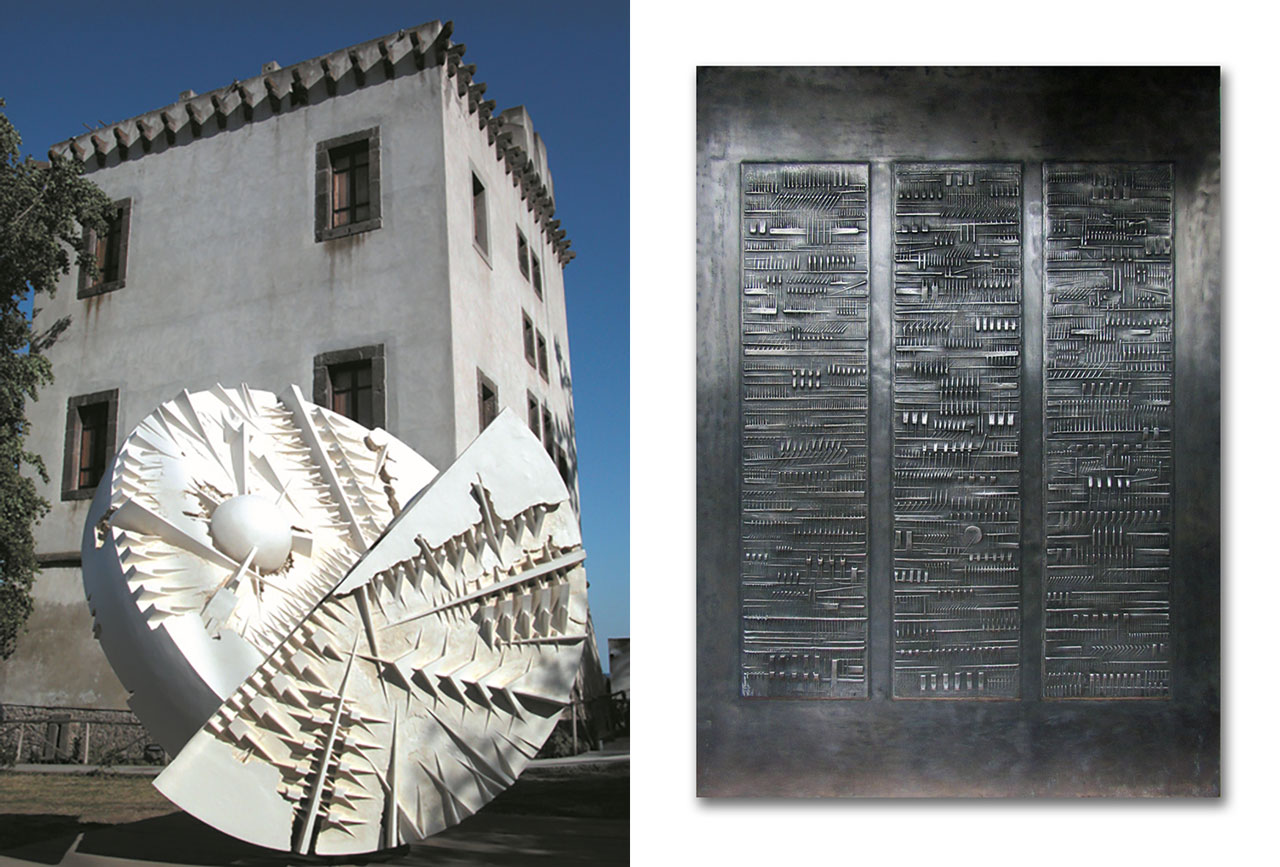
Right: Arnaldo Pomodoro, Terza immagine (codice), 1974, lead and wood, 100 × 70 × 5 cm, Edizioni Multicenter, Milano, Collezione Luigi e Peppino Agrati – Intesa Sanpaolo, Photo Aurelio Barbareschi. Courtesy Fondazione Arnaldo Pomodoro, Milano
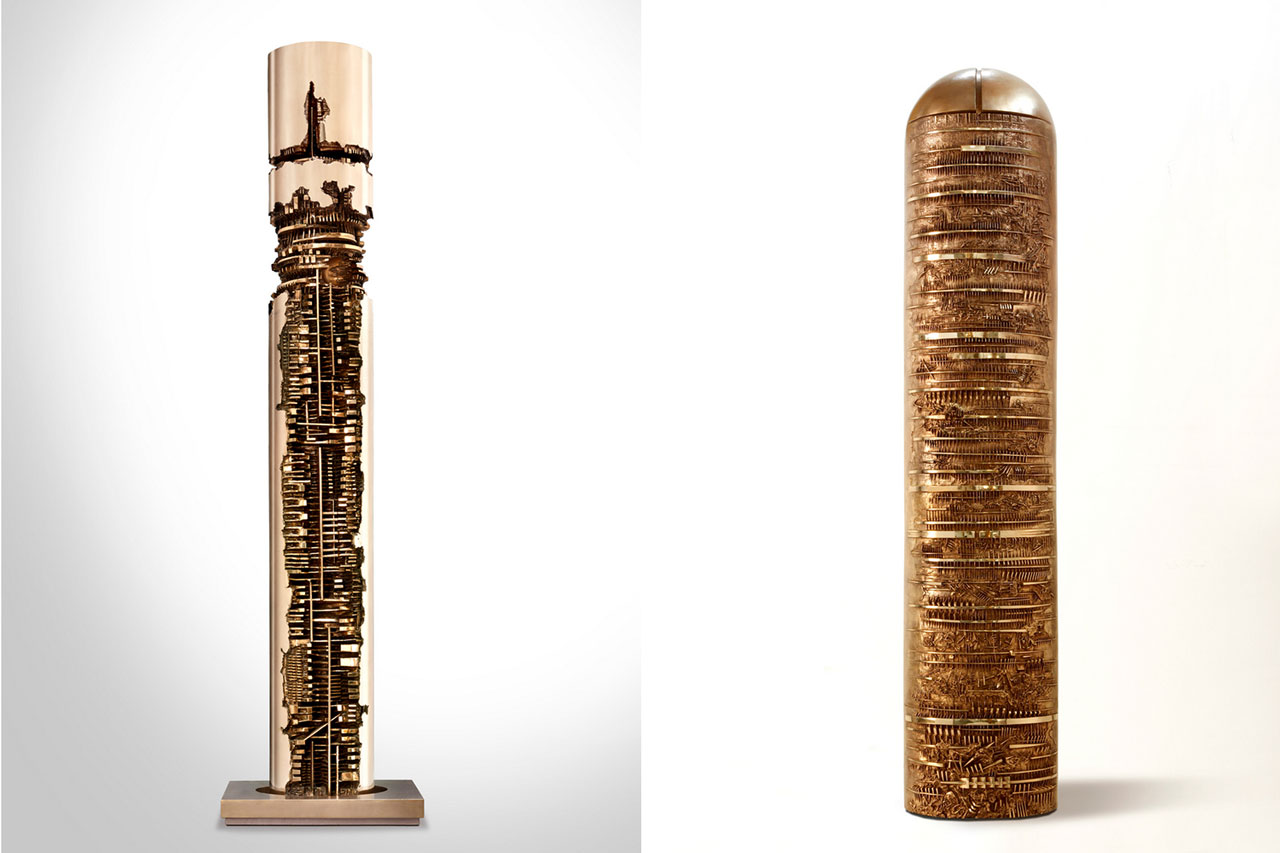
Right: Arnaldo Pomodoro, Colonna B, 2010, bronze, 306 × ø 50 cm, Collezione Fondazione Arnaldo Pomodoro, Milano, Photo Dario Tettamanzi. Courtesy Fondazione Arnaldo Pomodoro, Milano
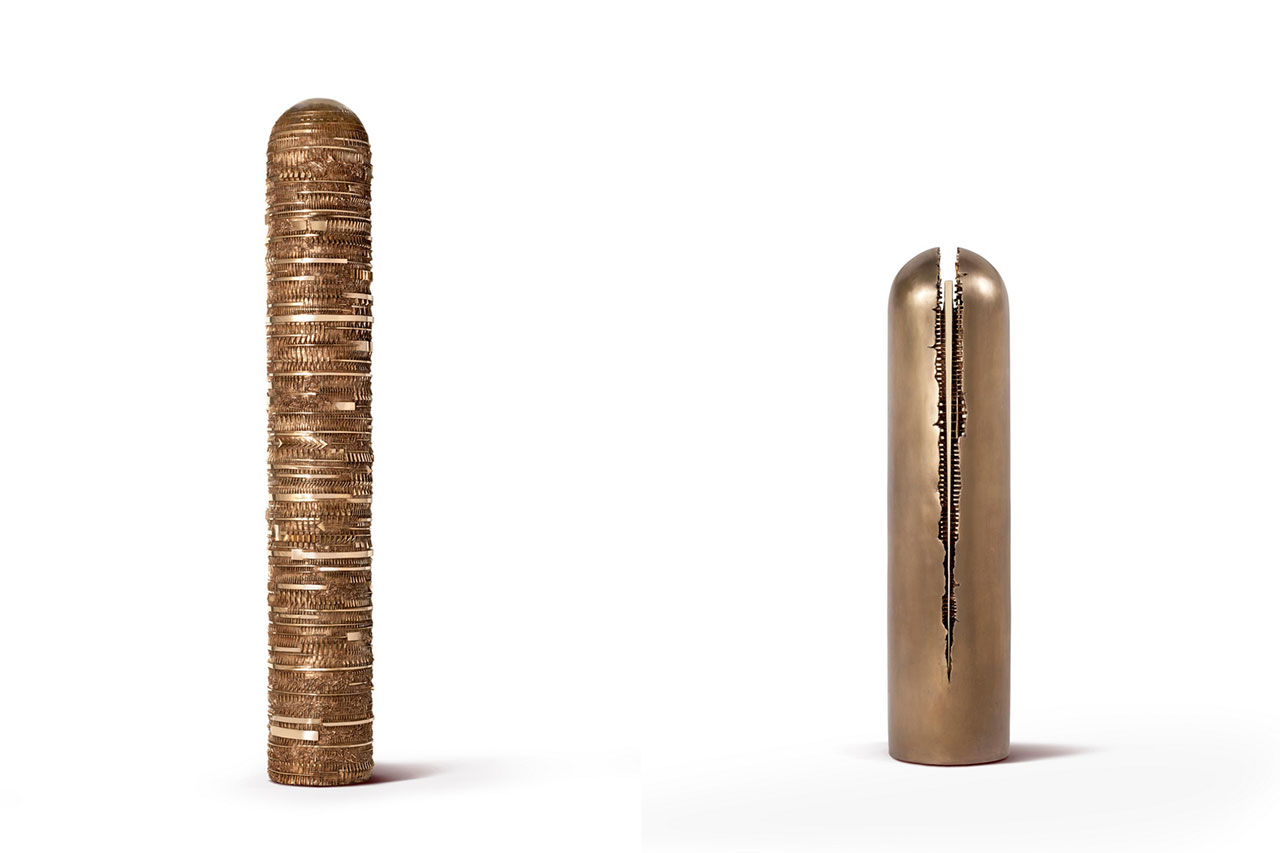
Right: Arnaldo Pomodoro, Colonna C, 2010, bronze, 208 × ø 50 cm, Collezione Fondazione Arnaldo Pomodoro, Milano, Photo Dario Tettamanzi. Courtesy Fondazione Arnaldo Pomodoro, Milano