ART CITIES: Stockholm-Artemis Potamianou
The exhibition “Which side are you on?” unfolds not merely as an exhibition but as an immersive spatial argument—one that interrogates the conditions under which female identity is constructed, monitored, and often constrained. In this installation, Artemis Potamianou stages a dense symbolic environment that operates simultaneously as narrative, critique, and experiential provocation. The result is a layered commentary on the paradoxes embedded in what society alternately frames as “protection” and “care,” but which often function as mechanisms of confinement.
By Dimitris Lempesis
Photo: ID:I Gallery Archive
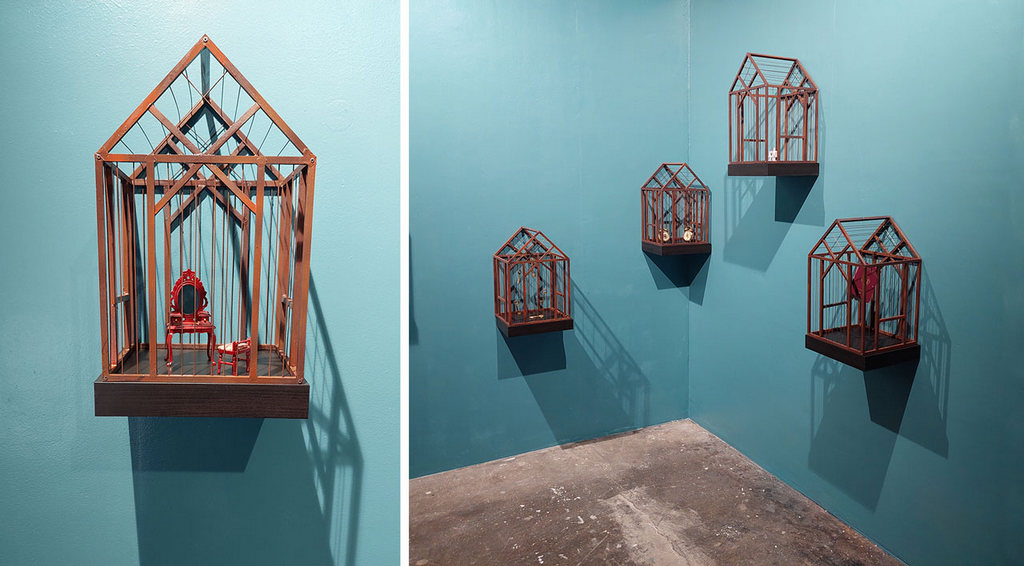
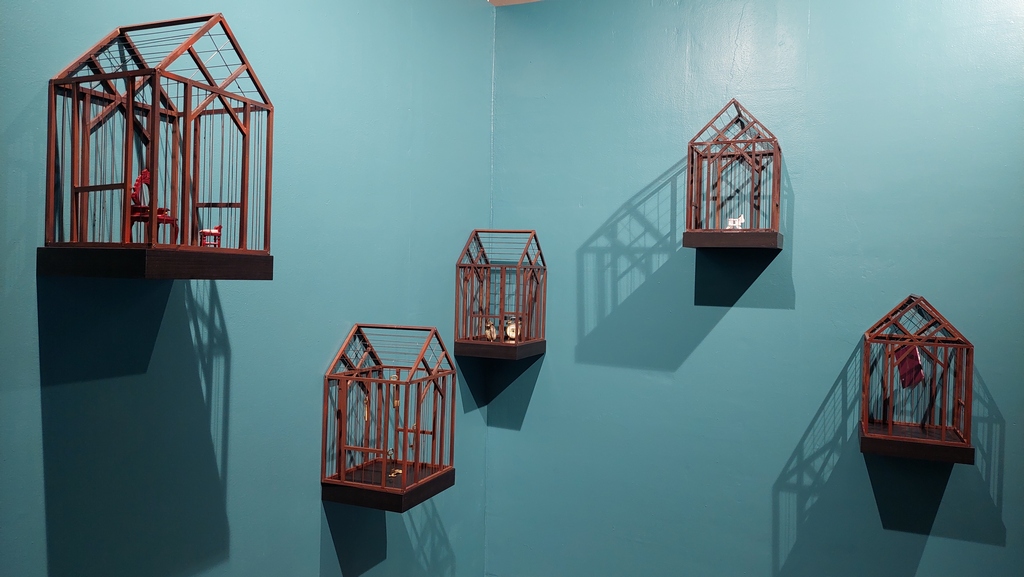
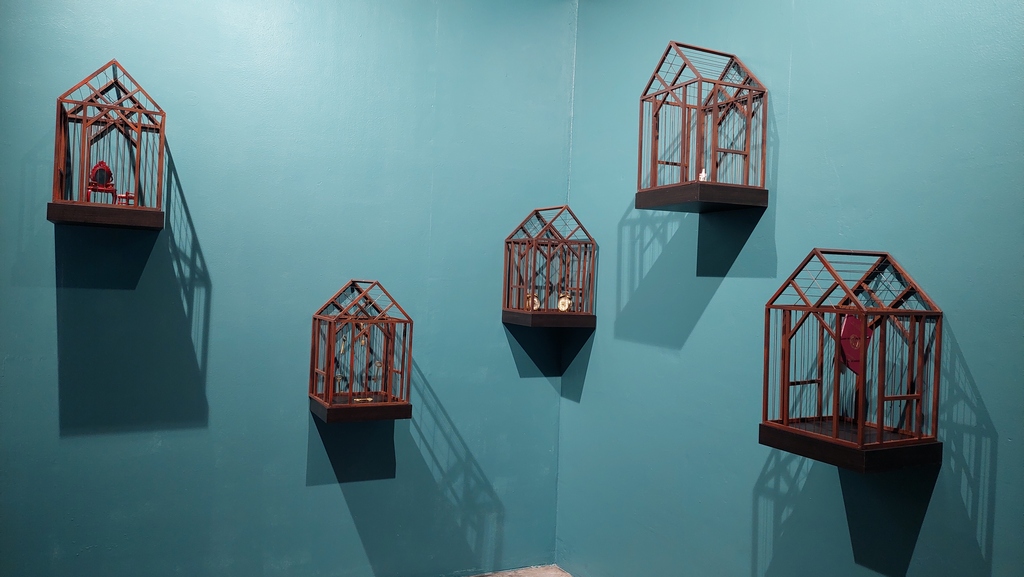
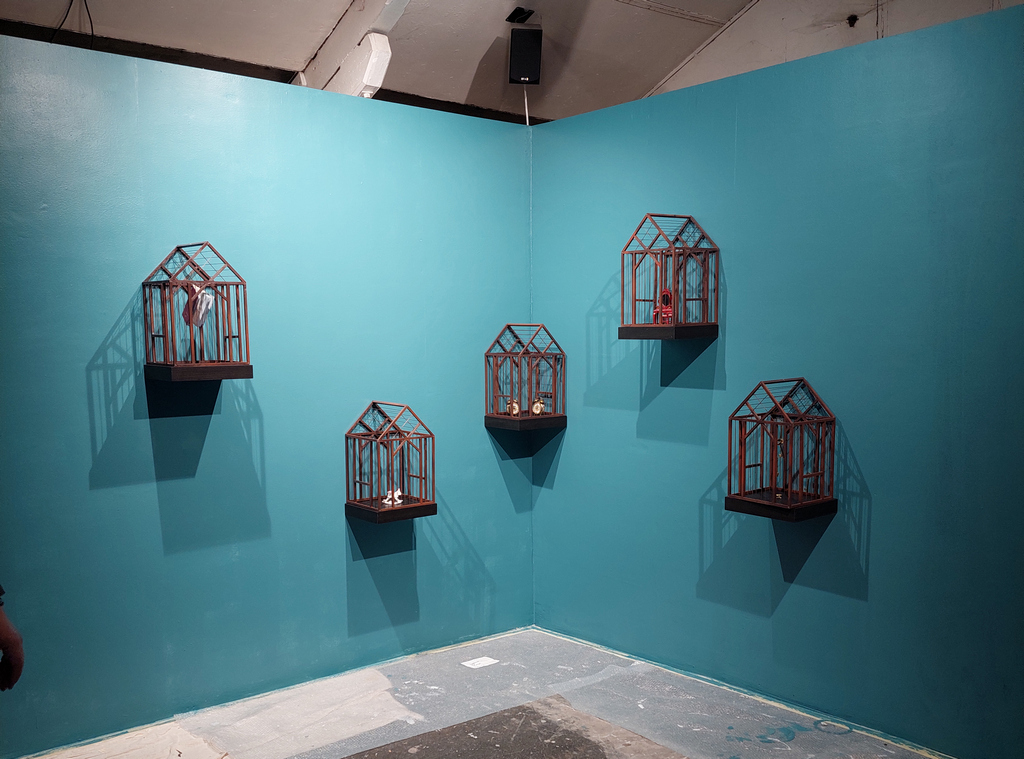
Upon entering “Which side are you on?”, the viewer is immediately implicated. The space itself is transformed into a site-specific installation that resembles an overarching cage—an architectural metaphor that situates the audience inside the very system under scrutiny. Within this enclosing structure are smaller, intricately constructed birdcages. These are not neutral objects; they act as microcosms of social conditioning.
Inside them, Artemis Potamianou places a deliberate selection of items: children’s toys traditionally coded as feminine, clocks, keys, and identity cards. Each object operates semiotically. The toys evoke early-stage gender conditioning—the subtle but persistent shaping of girls toward roles associated with caregiving, domesticity, and emotional labor. The clocks introduce temporality: the pressure of biological, social, and professional timelines imposed on women. Keys suggest both access and restriction—who holds agency, and who is granted permission. Identity cards signal bureaucratic classification, the reduction of subjectivity into administratively legible categories.
Together, these objects form a lexicon of containment. They reveal how gender roles are not merely imposed externally but are internalized through repetition, ritual, and normalization.
Encasing this central installation is a hand-crafted wallpaper that initially appears decorative, even nostalgic. Its floral motifs recall historical domestic interiors—spaces traditionally associated with femininity and containment. Yet upon closer inspection, the pattern reveals embedded eyes. These are subtle, almost hidden, but once perceived, they cannot be unseen.
This visual strategy invokes the logic of surveillance—not overt, authoritarian observation, but something more insidious: the internalized gaze. The eyes do not merely watch; they imply a condition in which women are perpetually aware of being seen, evaluated, and judged. This aligns with broader theoretical frameworks concerning self-surveillance and disciplinary power, where control is maintained not through force alone but through the subject’s own participation in their regulation.
The wallpaper thus becomes more than background—it is an active agent in the installation, reinforcing a psychological environment of scrutiny.
Potamianou’s work engages directly with art history, particularly with representations of women and birds. Historically, the motif of a woman releasing a bird from a cage has symbolized liberation, purity, and transcendence. These images often depict a moment of gentle emancipation, suggesting both agency and fragility.
However, in “Which side are you on?”, this gesture is destabilized. The cage itself—rather than being a simple container—is rendered as an elaborate, almost architectural structure. It references not only decorative cages of the past but also fragments of dismantled buildings. This hybrid form complicates interpretation: is the cage a prison, or is it a shelter? Is it imposed, or is it inhabited?
By refusing to resolve this ambiguity, Potamianou challenges the viewer to reconsider inherited visual narratives. Liberation, in this context, is no longer a singular, symbolic act but a contested and ongoing process.
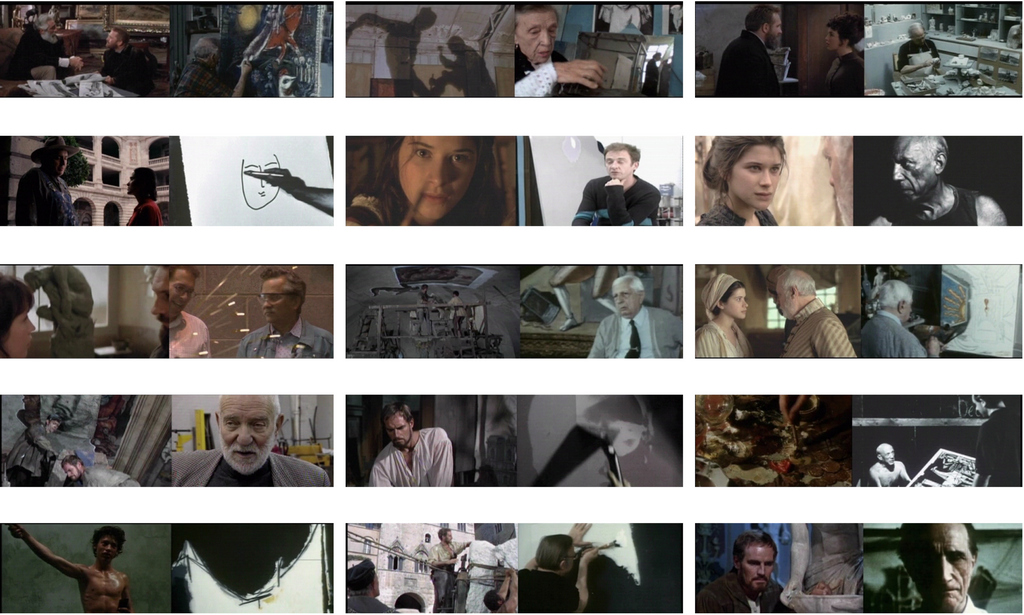
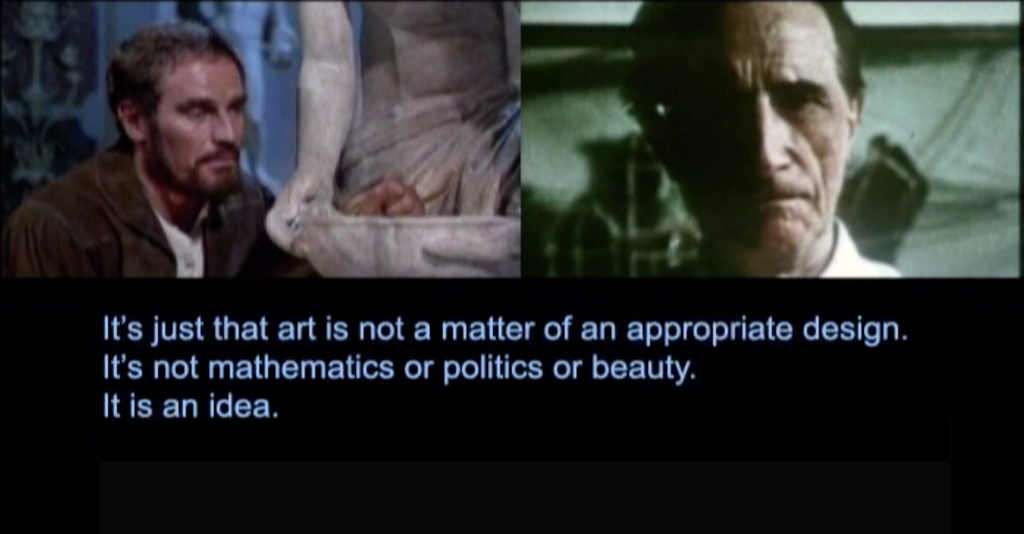
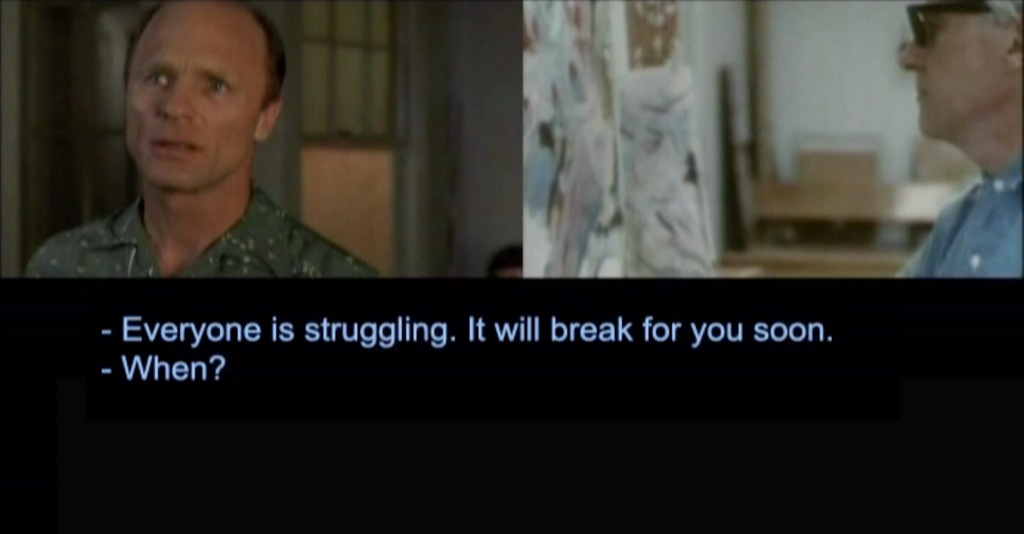
Complementing the installation is the two-channel video work “Art scene – Art seen”. This piece extends the exhibition’s inquiry into another domain: the construction of artistic identity itself.
The first channel assembles excerpts of established artists speaking about their practice. These fragments often carry the authority of experience and recognition, presenting art-making as a reflective, sometimes mythologized endeavor. The second channel juxtaposes this with cinematic portrayals of artists at work—scenes drawn from films that dramatize the creative process.
The interplay between these two streams creates a productive tension. On one side, lived experience; on the other, stylized representation. The gap between them exposes the mechanisms through which the figure of the “artist” is constructed, circulated, and consumed.
Themes of struggle, insecurity, ambition, and the fear of failure emerge across both channels. Yet the cinematic versions often aestheticize these elements, transforming them into narrative tropes. Potamianou’s juxtaposition reveals how these myths are perpetuated—not only by the film industry but also, at times, by artists themselves.
Across both the physical installation and the video work, a consistent set of concerns emerges: control, representation, and the negotiation of identity within predefined systems. The exhibition does not offer prescriptive answers. Instead, it constructs a framework within which viewers must position themselves.
The titular question “Which side are you on?” is not rhetorical. It functions as a conceptual pivot. Are you aligned with the structures that define and confine, often invisibly? Or do you recognize—and challenge—their presence?
Importantly, the question also implicates perception itself. The meaning of the cage, for instance, is not fixed. It oscillates depending on the viewer’s interpretive stance. This instability is central to the work: it resists binary conclusions, emphasizing instead the complexity of lived experience.
The exhibition operates in a space of ambiguity. It acknowledges that the same structures can function simultaneously as support and constraint. Social roles may provide identity and belonging, yet they can also delimit possibility. Visibility can empower, yet it can also subject individuals to scrutiny and control.
By embedding these contradictions within an immersive environment, Artemis Potamianou does not resolve them—she intensifies them. The viewer exits not with closure, but with heightened awareness: of the systems that shape perception, of the narratives that define identity, and of their own position within these dynamics.
Photo: Artemis Potamianou, Which side are you on, Installation View, Courtesy the artist and ID:I Galleri
Info: ID:I Galleri, Tjärhovsgatan 19, Stockholm, Sweeden, Duration: 24-28/4/2026, Days & Hours: Fri 17:00-20:00, Sat-Sun 12:00-17:00, https://idigalleri.org/