ART NEWS: April 01
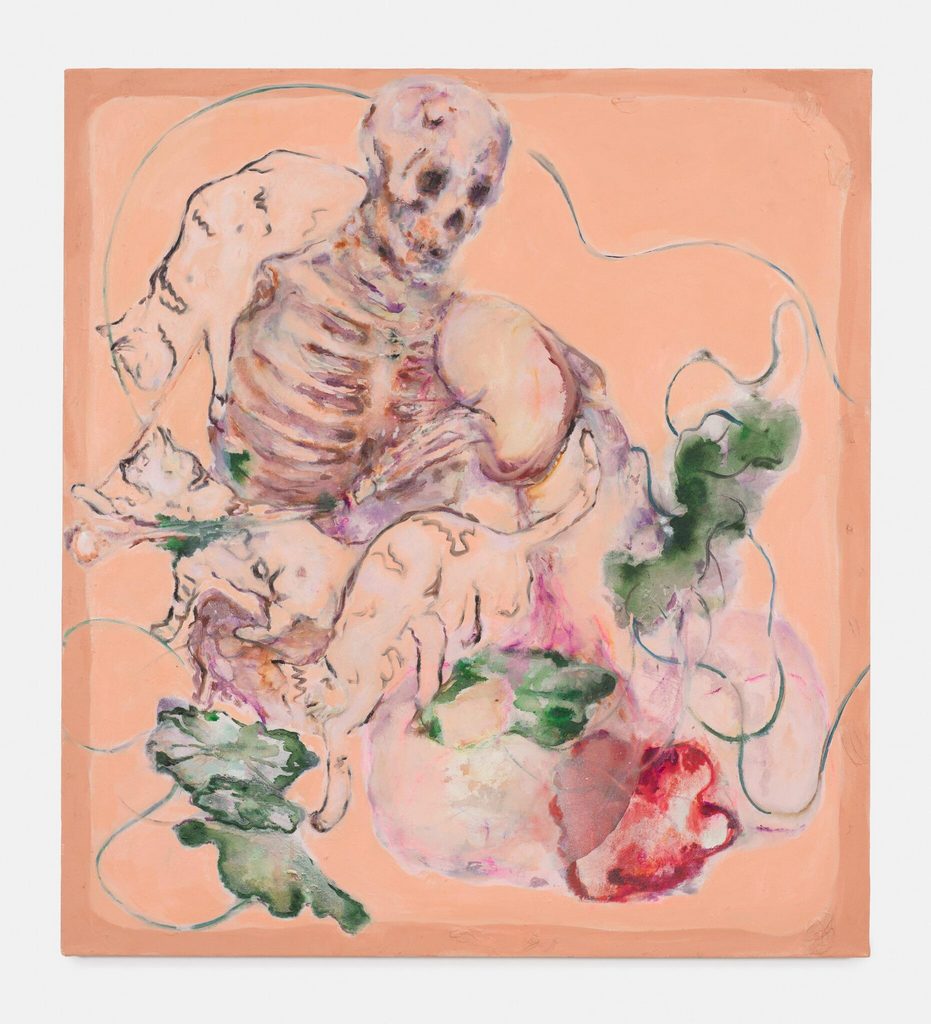 Anna Tuori’s solo exhibition “Crimson & Clover” title borrows from the 1968 song by Tommy James and the Shondells, carrying a note of sweetness touched by tension. That tone is close to Tuori’s practice, where warmth never comes without unease and beauty is often shadowed by disturbance. Tuori’s work begins from the unstable texture of the present. She follows the news and absorbs what surrounds her, letting that pressure settle before it finds form. “The world is so absurd that it feels like fiction.” This sense of distance, where reality slips toward illusion, is not translated literally. It is the condition from which the image takes shape. Painting offers a way to hold conflict without resolving it too quickly. Wit, violence, intimacy, and fragility coexist without settling into a single meaning. Her process begins with color and composition rather than with a statement. She approaches painting in a more abstract mode, allowing rhythm to guide the work before figures or objects come into view. Restlessness lingers, yet resists explanation. Colour sinks into the canvas, creating an immaterial depth, while thicker layers of oil push outward with tactile density. Each work emerges through a subtle negotiation: one movement withdraws, another insists. Info: Contemporary Fine Arts Gallery, Totengässlein 5, Basel, Switzerland, Duration: 17/4-6/6/2026, Days & Hours: Wed-Fri 11:00-18:00, Sat 11:00-18:00, https://cfa-gallery.com/
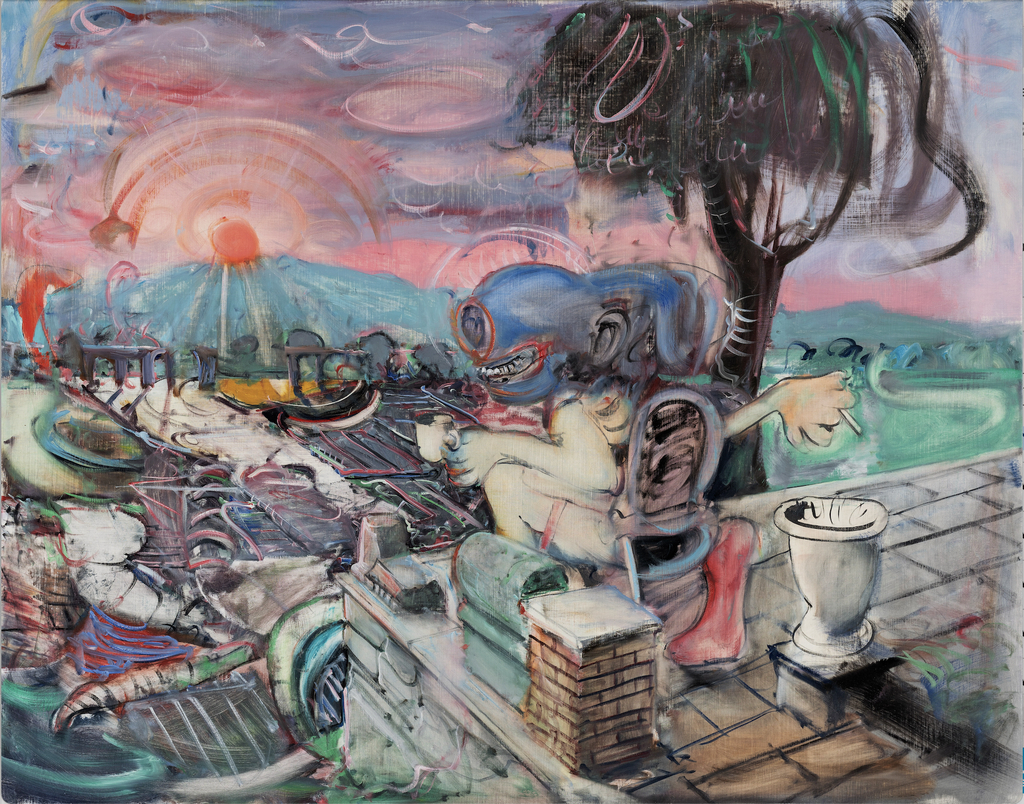 New paintings and charcoal drawings by Adrian Ghenie created in his studio in Rome following his recent relocation are shown in the exhibition “ROMAN CAMPAGNA”, these works mark a decisive shift in the artist’s practice, drawing on landscape painting as both subject and form. Ghenie reworks the genre from within, folding art-historical reference into his distinctive painterly language to create works poised between pastoral idealism and contemporary unease. In his new oil paintings, Ghenie portrays flurried figures atop the cobblestones of a well-preserved stretch of the Appian Way, where he now lives. One of the earliest and most significant Roman roads, the Appian Way cuts through a landscape central to the development of European painting. Ghenie cites Nicolas Poussin and Claude Lorrain, whose atmospheric renderings of this region helped establish landscape as an autonomous genre. Retracing this lineage, Ghenie explores the idea of the ‘invented landscape’ and the tradition of the capriccio, in which real and imagined elements are brought together to create scenes that feel at once composed and mnemonic. Info: Thaddaeus Ropac Gallery, 7 Rue Debelleyme, Paris France, Duration : 18/4-30/5/2026, Days & Hours: Tue-Sat 10:00-19:00, https://ropac.net/
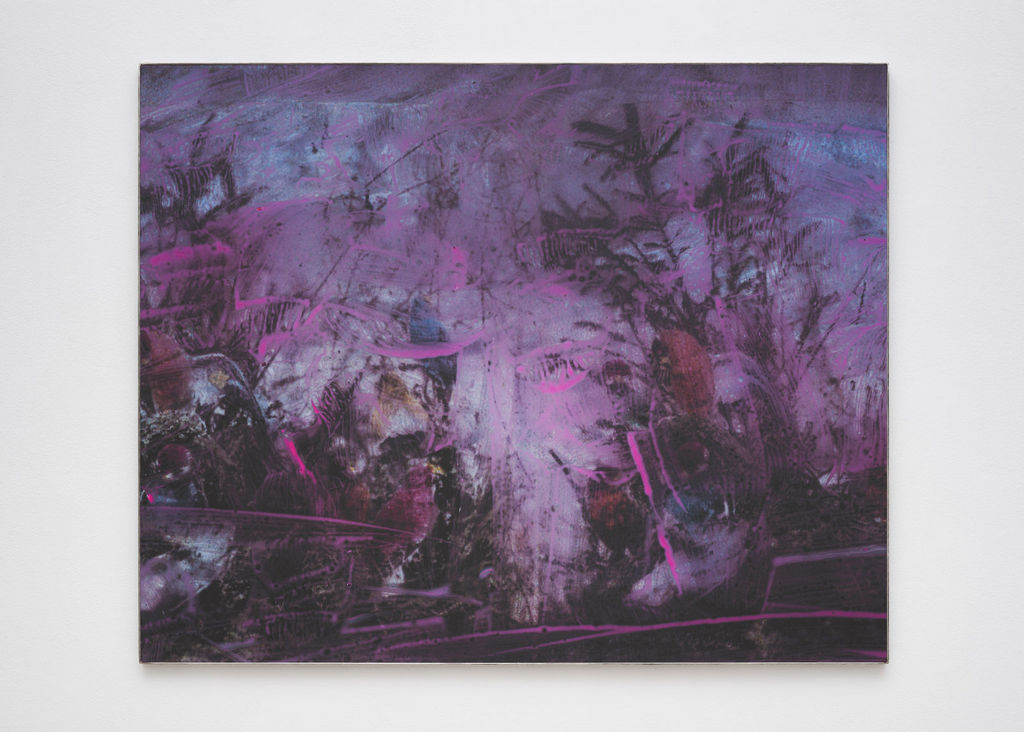 Bringing together a focused selection of recent works, the exhibition “Aalthough” situates these within the broader arc of Dirk Braeckman’s practice and marks the artist’s first solo presentation in the United Kingdom. The exhibition title, “Although”, emerges from ongoing conversations around Braeckman’s images and the continual questioning of what is visible and what remains obscured. Drawing from a fascination with the history and technical processes of photography, Braeckman’s works reflect on images today and how we consume them. The works featured in this exhibition foreground this relationship, drawing attention to the material qualities and imperfections of the photographic image. Working from a vast archive of negatives, Braeckman’s images often feature dissonant landscapes, architectural motifs and obscured subjects clipped from their original settings. For exhamble in “L.J.-L.S.-22”, a female sitter is shown looking away from the camera. Looking at the back of her soft veil of hair and the angle of her shoulder, they differ from the conventional portrait format, in which the sitter faces the lens and establishes a direct connection with the viewer. By having the sitter turn her face or body away, Braeckman moves away from a traditional portrait and instead opens the image to a more ambiguous, vernacular interpretation. Info: Grimm Gallery, 43a Duke Street, St. James’s, London, United Kingdom, Duration: 23/4-30/5/2026, Days & Hours: Wed-Sat 11:00-18:00, https://grimmgallery.com/
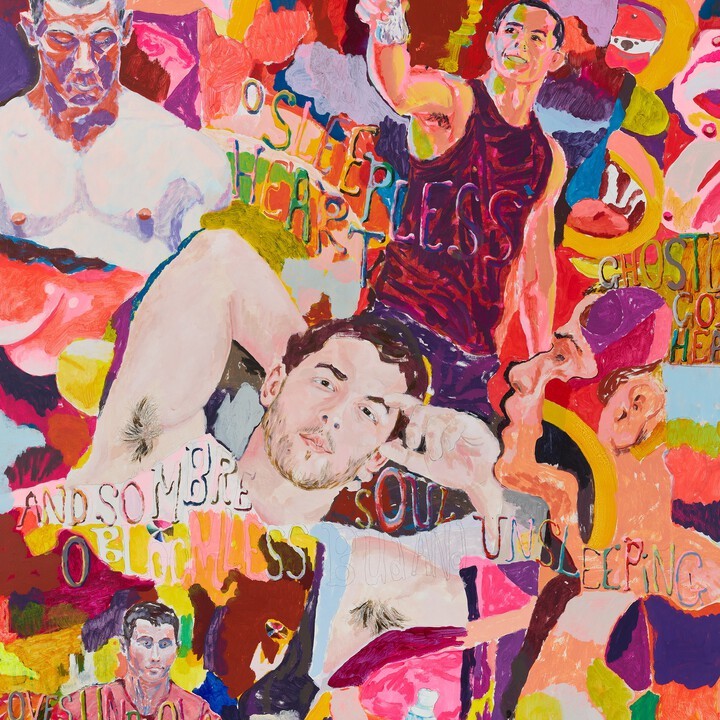 Richard Hawkins has developed a unique practice since the early 1990s, which he describes as “a combination of historical research and boyish obsessions.” Collage—the bringing together of disparate elements—serves as the starting point for his paintings, AI-generated and manipulated videos, glazed ceramic reliefs, and sculptures. “Potentialities”, Hawkins’s first institutional exhibition in Germany in over a decade, occupies all the galleries of the Kestner Gesellschaft. Bringing together approximately 100 paintings, collages, sculptures, and videos from nine bodies of work produced over the past twenty years, it offers a comprehensive overview of his practice. These works combine art-historical references with elements of popular culture, exploring questions of desire and artistic obsession through complex compositions. References range from Pierre Bonnard and Forrest Bess to Japanese Butoh dance and Antonin Artaud’s Theatre of Cruelty. Info: Kestner Gesellschaft Museum, Goseriede 11, Hanover, Germany, Duration: 24/4-2/8/2026, Days & Hours: Tue-Wed & Fri-Sun 11:00-18:00, Thu 11:00-20:00, https://kestnergesellschaft.de/en
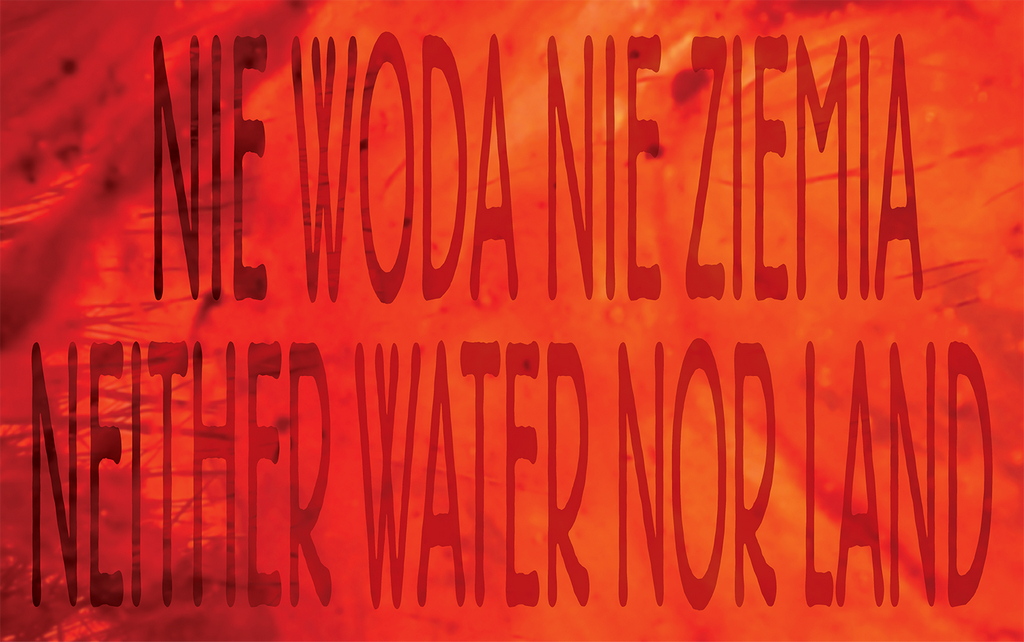 The group exhibition “Neither Water Nor Land” begins in a place where time does not advance in a straight line. It settles. It thickens. It lingers underfoot. In peatlands, low oxygen and acidic water slow decay to an almost improbable degree – bodies, fabrics, seeds and wooden tools can endure for millennia. What was meant to vanish, instead persists. The bog becomes an unintended archive, holding stories that societies would rather discard and suspending them in a damp, uneasy present. For centuries, wetlands have been drained in the name of hygiene, progress and security – dismissed as wasteland to be subdued. Today, they are returning within a new extractive logic: as sites earmarked for military investment, and even as places where water cools datacentres – the hidden underlayer of the digital economy. A landscape once deemed useless proves useful again. Moving between geology, myth and contemporary politics, the exhibition asks what happens when a landscape refuses to dry out or be neatly arranged. In a world fixated on firm borders, the bog suggests another tempo – slower, saturated and persistent. At times, it leaves behind only a faint mineral blue: vivianite, coating bone and waterlogged wood, touching whatever the bog has held. Info: Ujazdowski Castle Centre for Contemporary Art, 2 Jazdów Street, Warsaw, Poland, Duration: 24/4-27/9/2026, Tue-Wed & Fri-Sun 11:00=19:00, Thu 11:00-20:00, https://u-jazdowski.pl/en
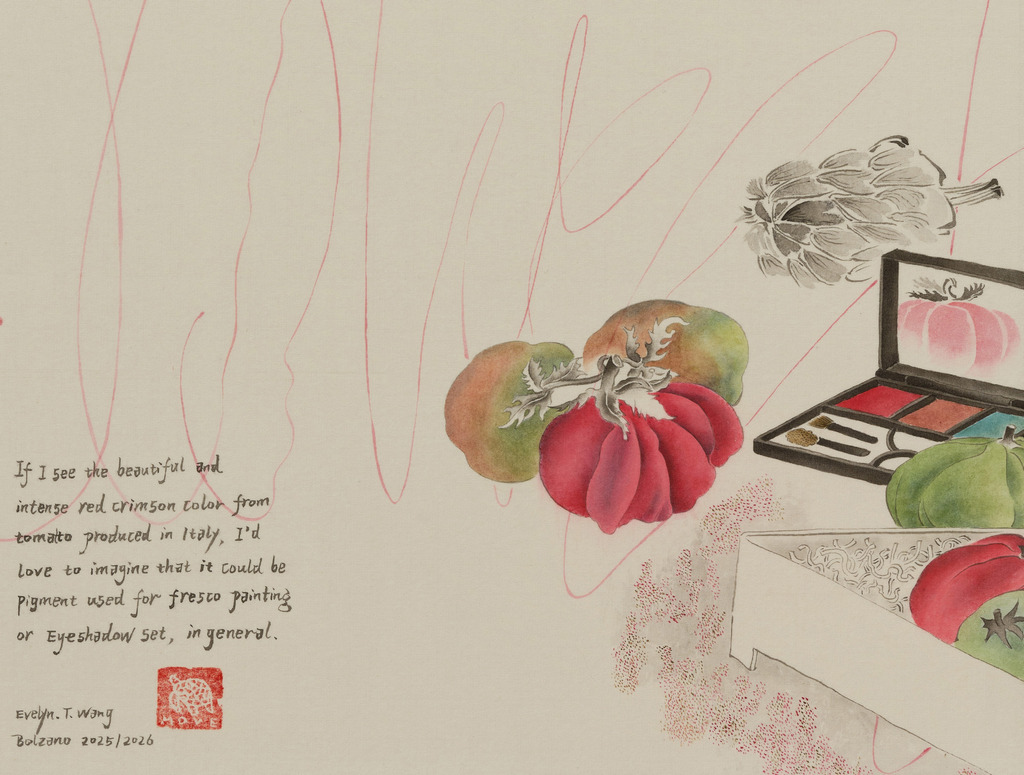 Evelyn Taocheng Wang presents “Sweet Landscape”, her first institutional solo exhibition in Italy. Wang’s pictorial repertoire draws on what she wittily describes as her “eyeshadow palette of art history,” blending references to her initial training in classical Chinese ink painting and calligraphy and the schools of Western art and literature she encountered after relocating to Europe. She tackles topics such as migration, cultural assimilation, gender expression, and class affiliation, filtering them through her own lived experience and often addressing the complexity of self-perception in the face of externally imposed narratives. The artist’s focus on the fluid nature of identity and cultural hybridity finds particular resonance in South Tyrol, where various languages and traditions converge. For the exhibition, Wang has created a scenography featuring new paintings on various media that build on her previous work and draw from her impressions of Bolzano gathered during site visits to the city. One of her sources of inspiration was the local food market, where fresh organic fruits and vegetables are piled high in colorful displays resembling miniature landscapes. These arrangements produce layered compositions of color, texture, and form—something the artist also encountered in the medieval frescoes at Roncolo Castle and the Dominican Church —which resonate with her own method of artistic storytelling. By infusing her work with memories of Bolzano’s visual vernacular and her own perception of Italian culture, she writes herself into the scenery with wit, sensitivity, and poetic nuance. Info: Curator: Leonie Radine, Museion, Piazza Piero Siena 1, Bolzano, Italy, Duration: 25/4-8/11/2026, Days & Hours: Tue-Wed & Fri-Sun 10:00-18:00, Thu 10:00-22:00, www.museion.it/