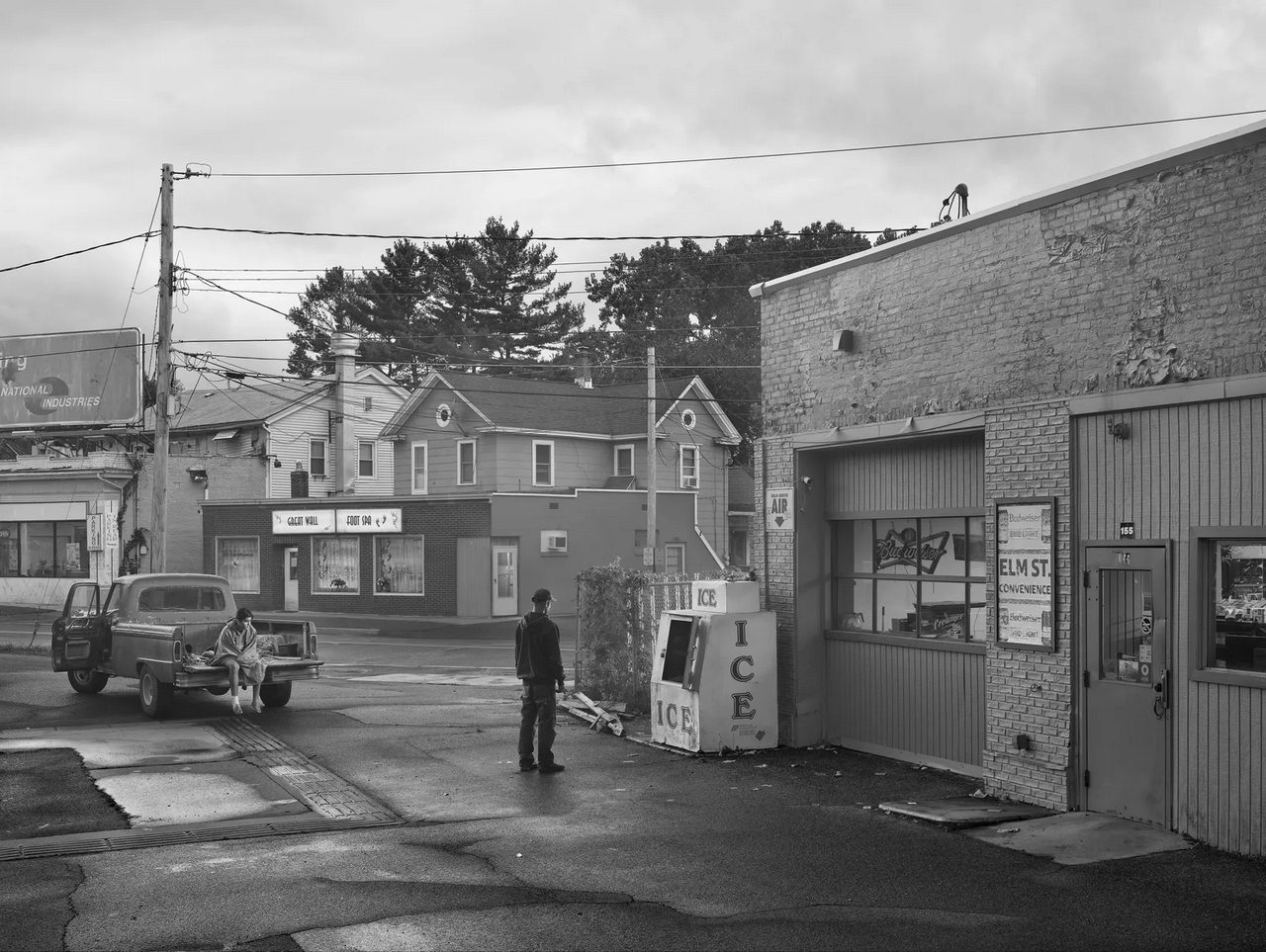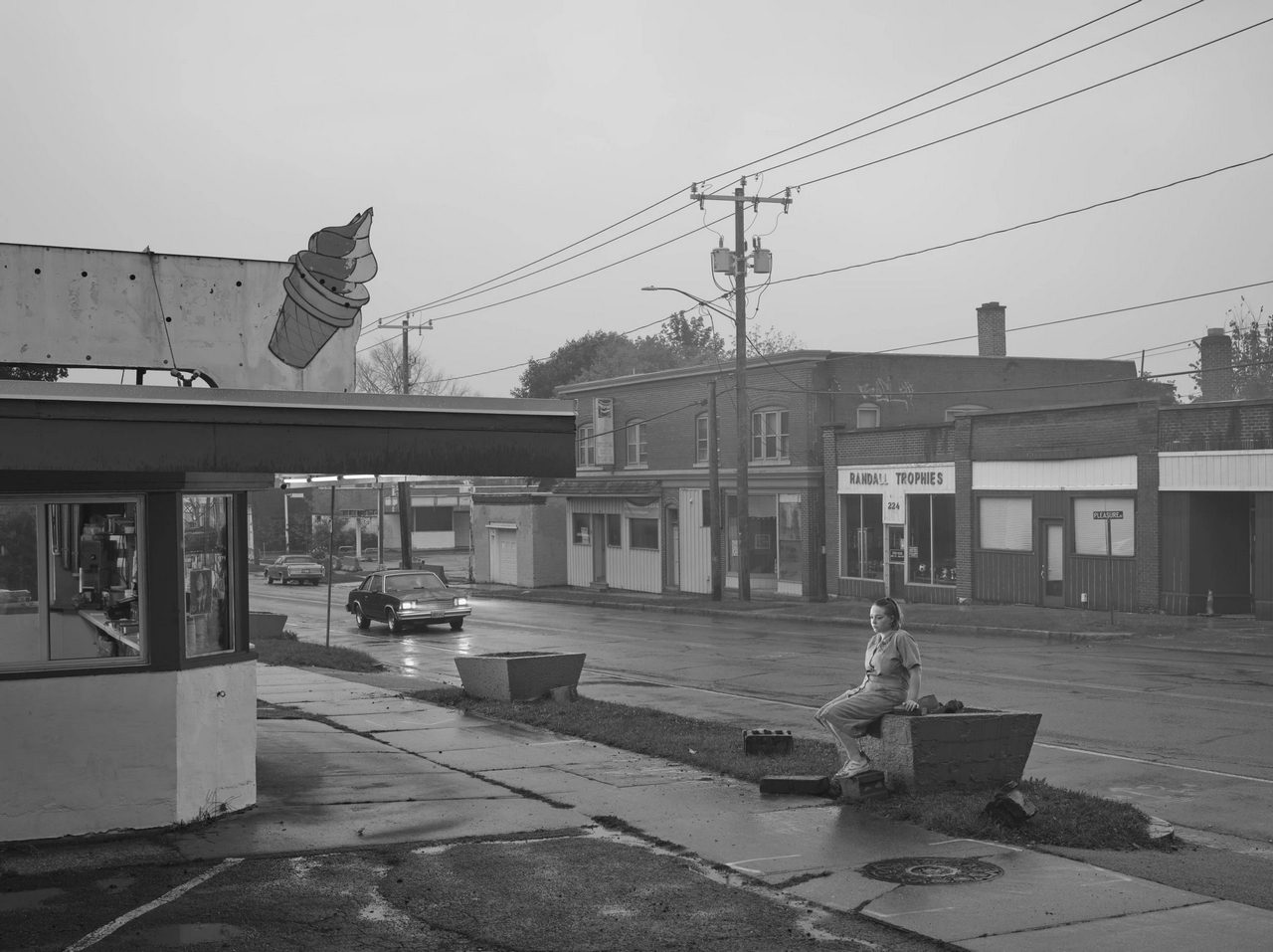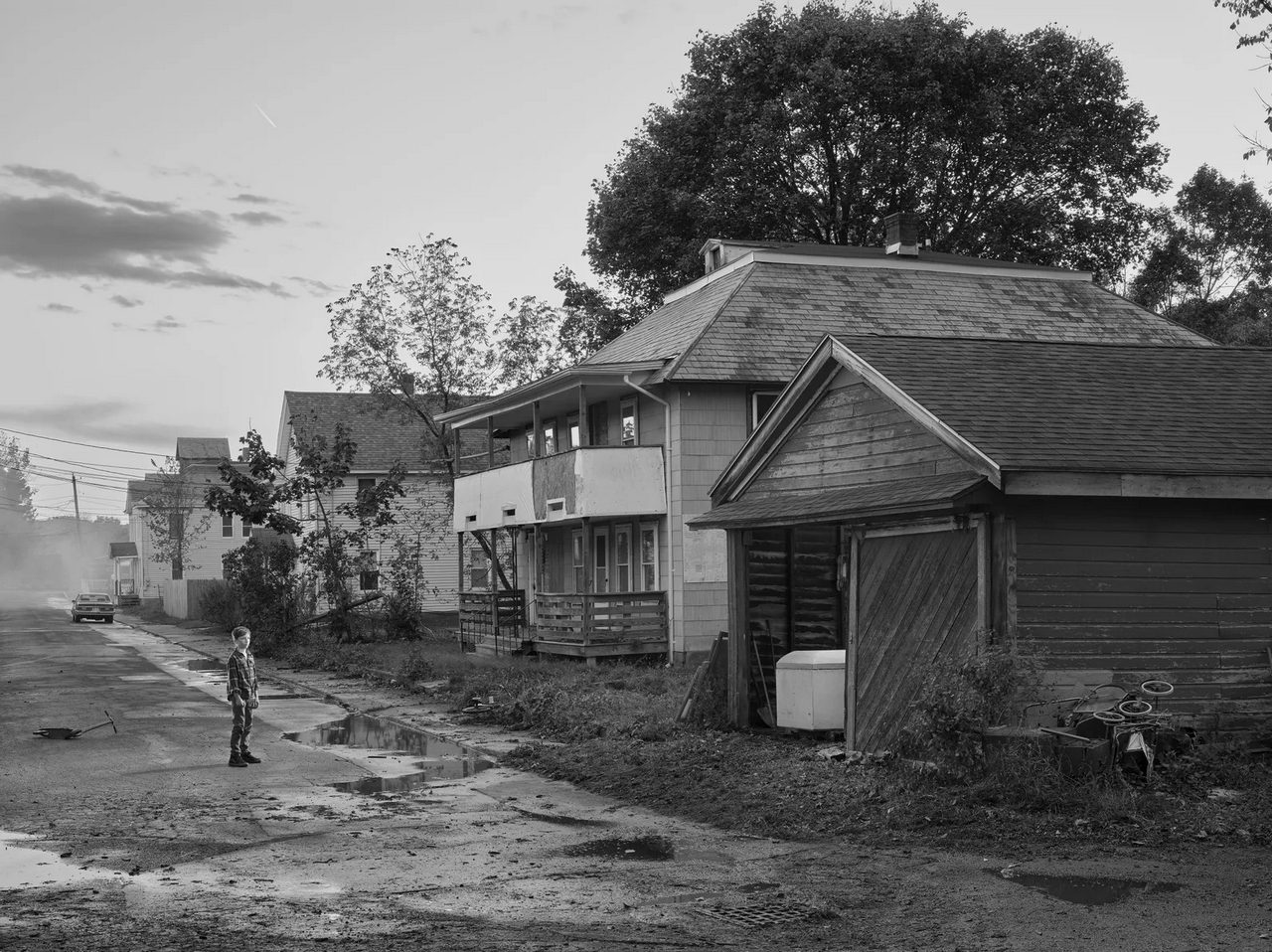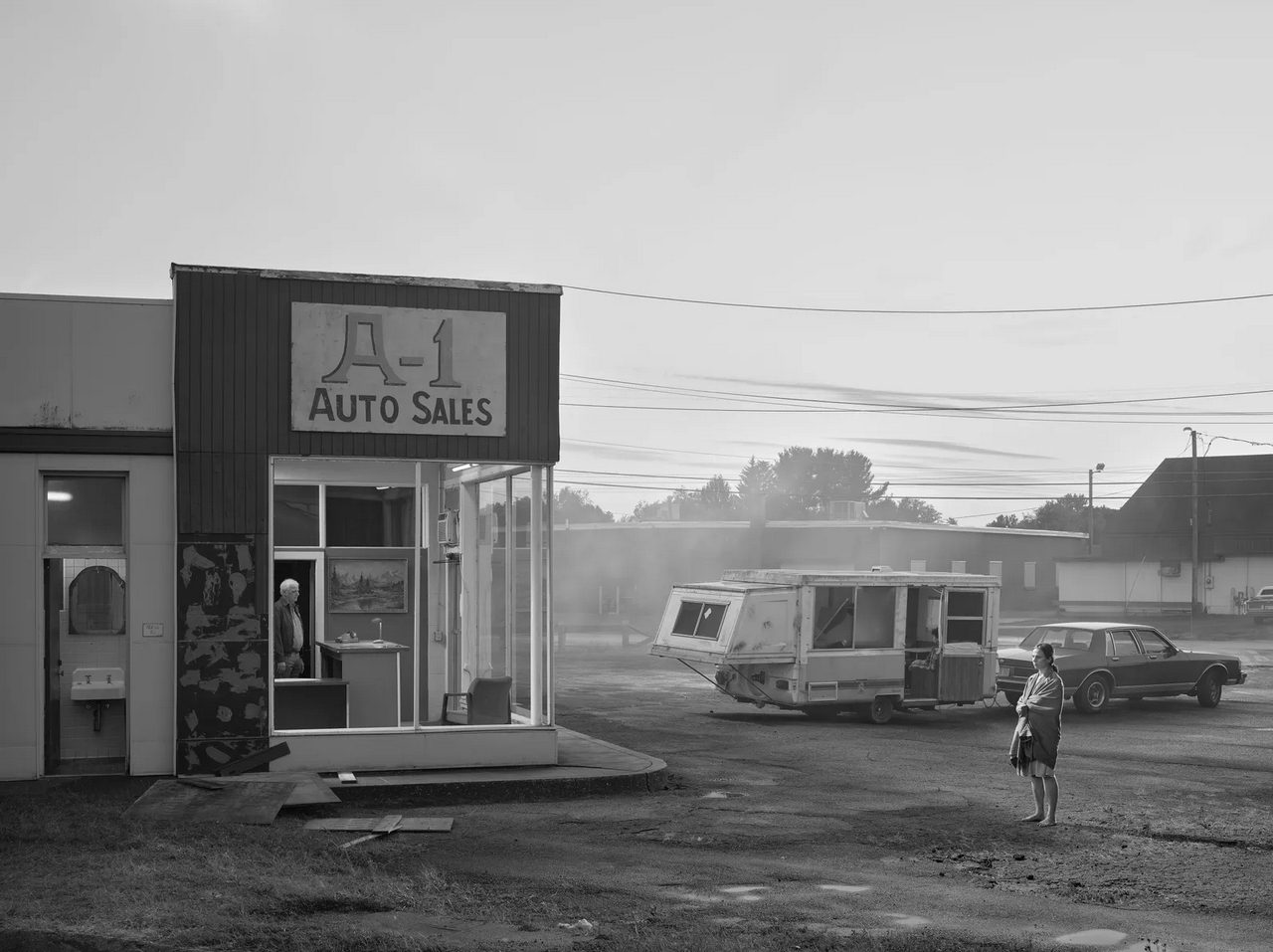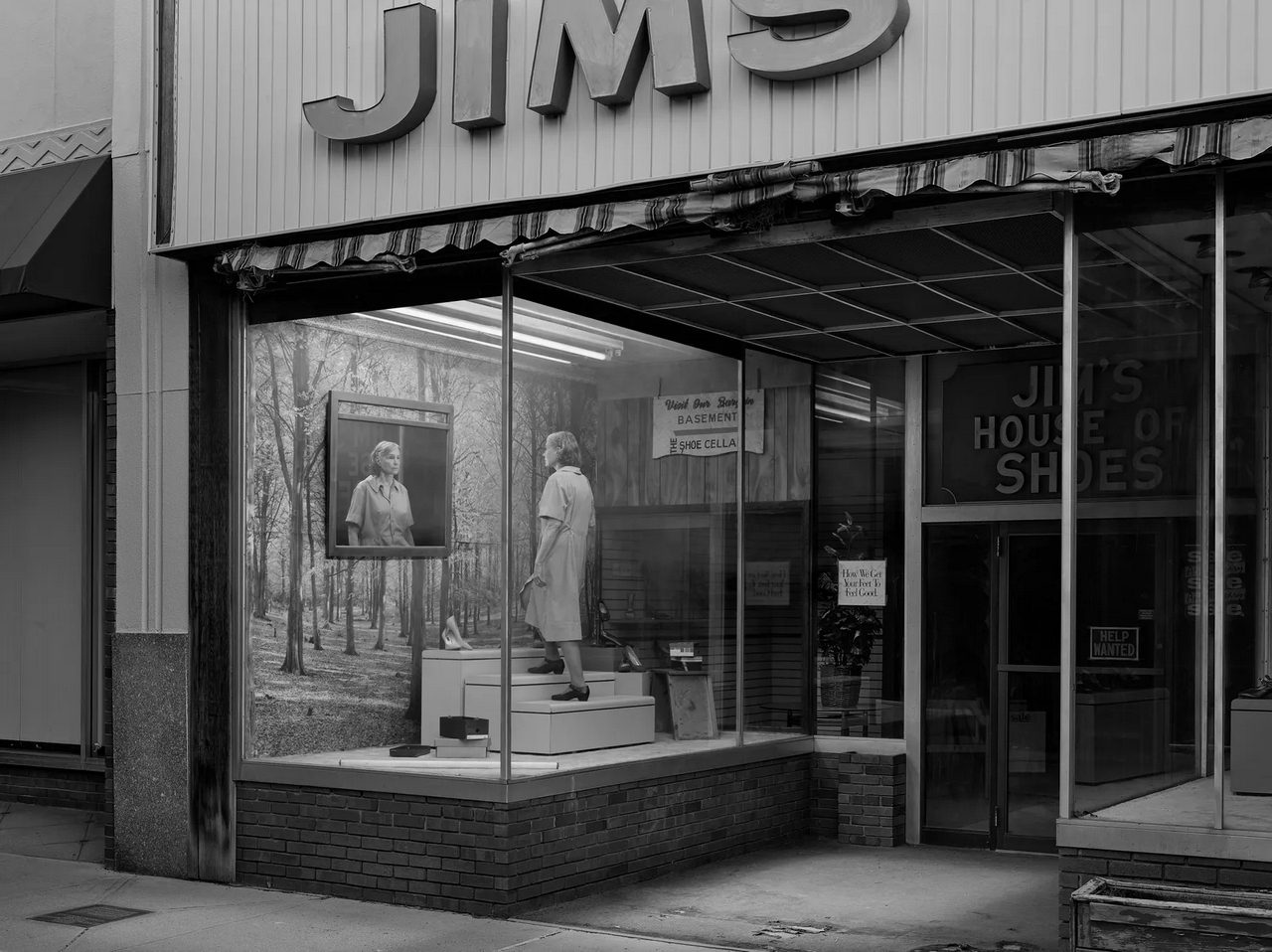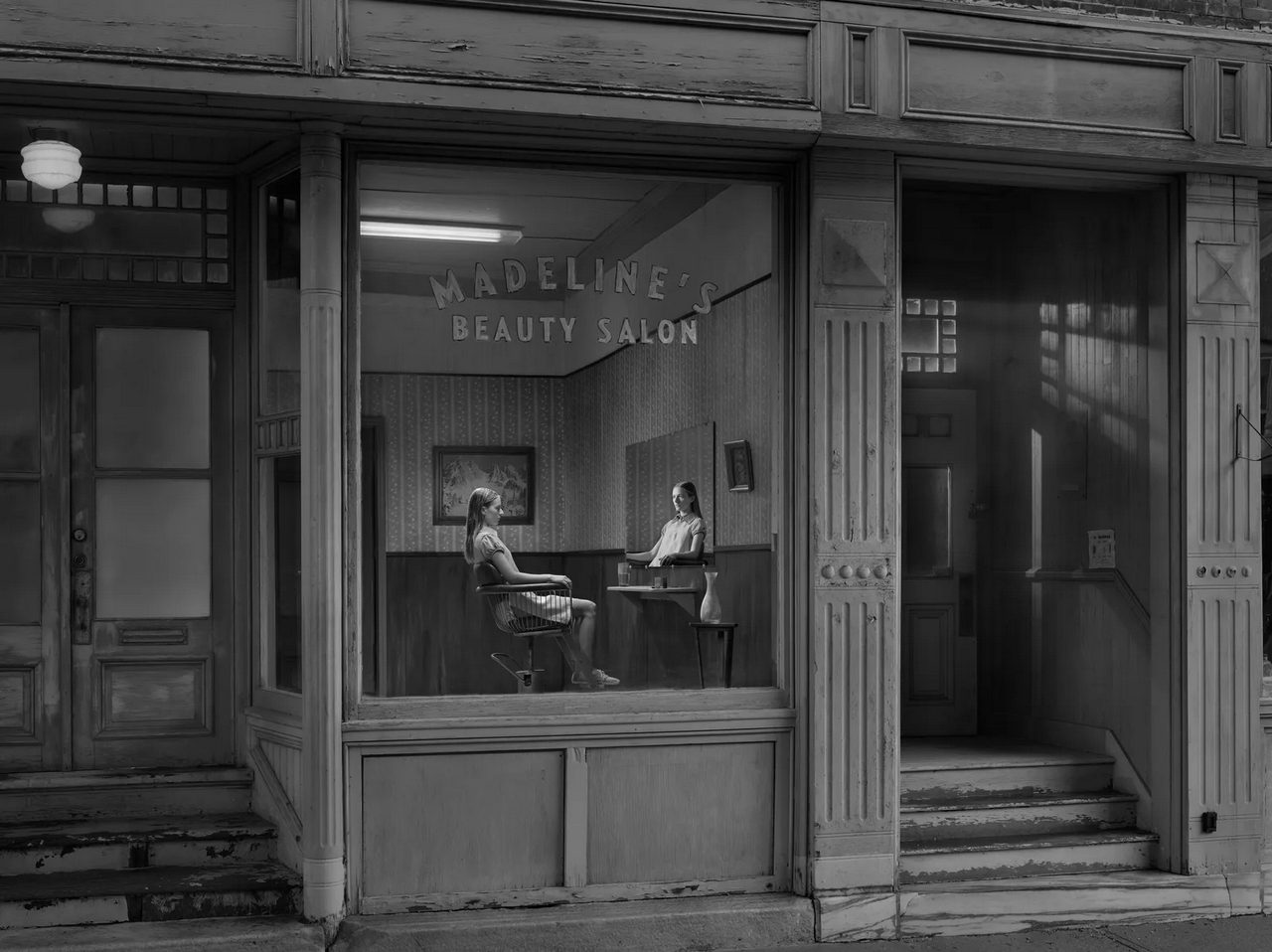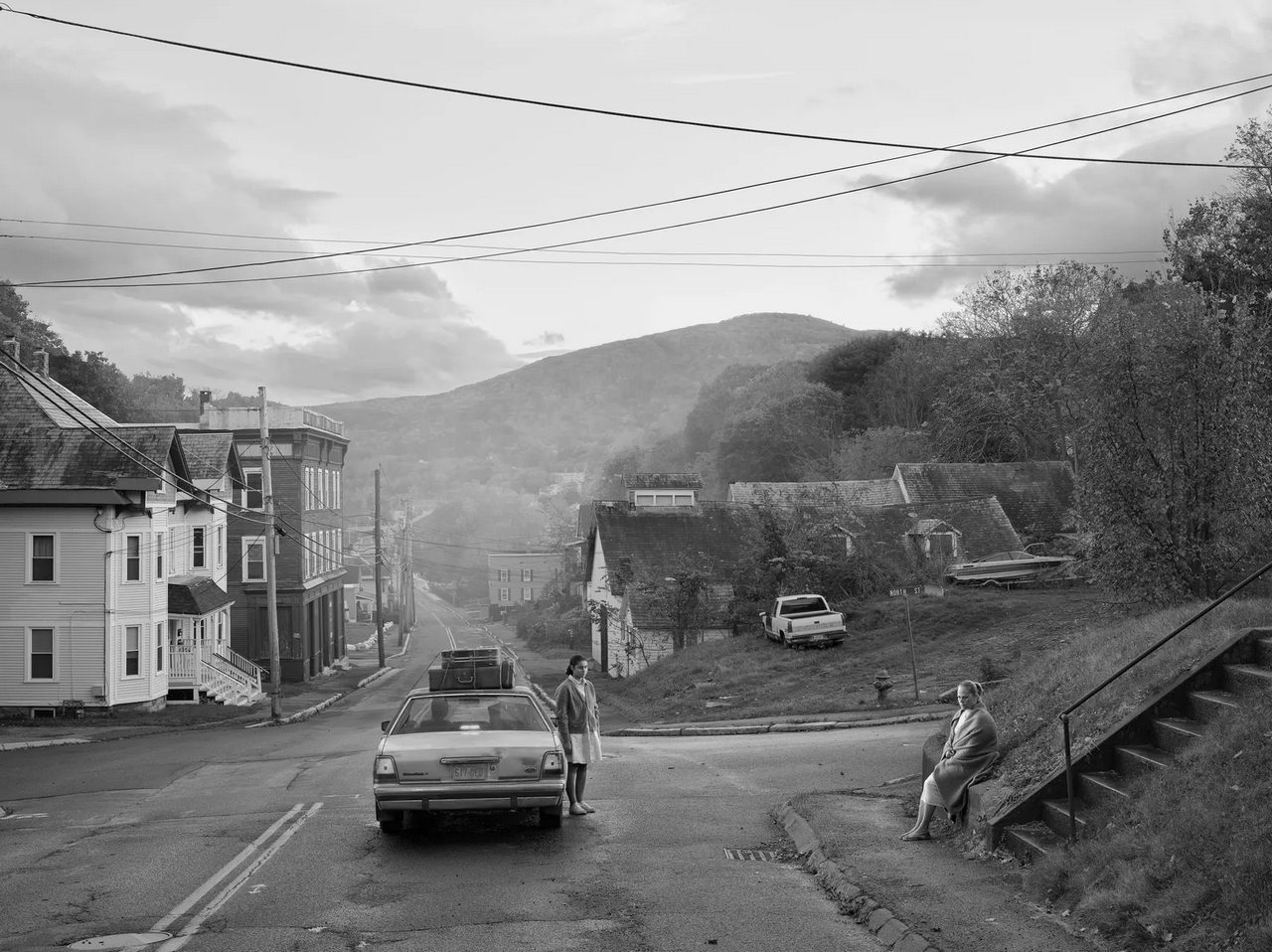
PHOTO: Gregory Crewdson-Eveningside
In the meticulously staged photographs of Gregory Crewdson, everyday life is transformed into a quiet, cinematic enigma. Over the past three decades, the American photographer has developed a distinctive visual language that blurs the boundary between film and photography. His images are carefully constructed like movie scenes—complete with actors, elaborate sets, lighting crews, and detailed storyboards—yet they ultimately result in a single, silent frame. For Crewdson, photography is defined by its stillness: there is no narrative before or after the captured moment, only the unresolved mystery held within the image.
By Dimitris Lempesis
Photo: Galerie Templon Archive
The series “Eveningside” (2021–2022) represents the final chapter of a decade-long trilogy that also includes “Cathedral of the Pines” (2012–2014) and “An Eclipse of Moths” (2018–2019). Conceived as interconnected bodies of work, these series provide insight into the evolution of Crewdson’s practice and establish him as one of the most influential figures in contemporary photography. The trilogy traces a progression from the intimate and psychological to a broader reflection on American life and its cultural contradictions.
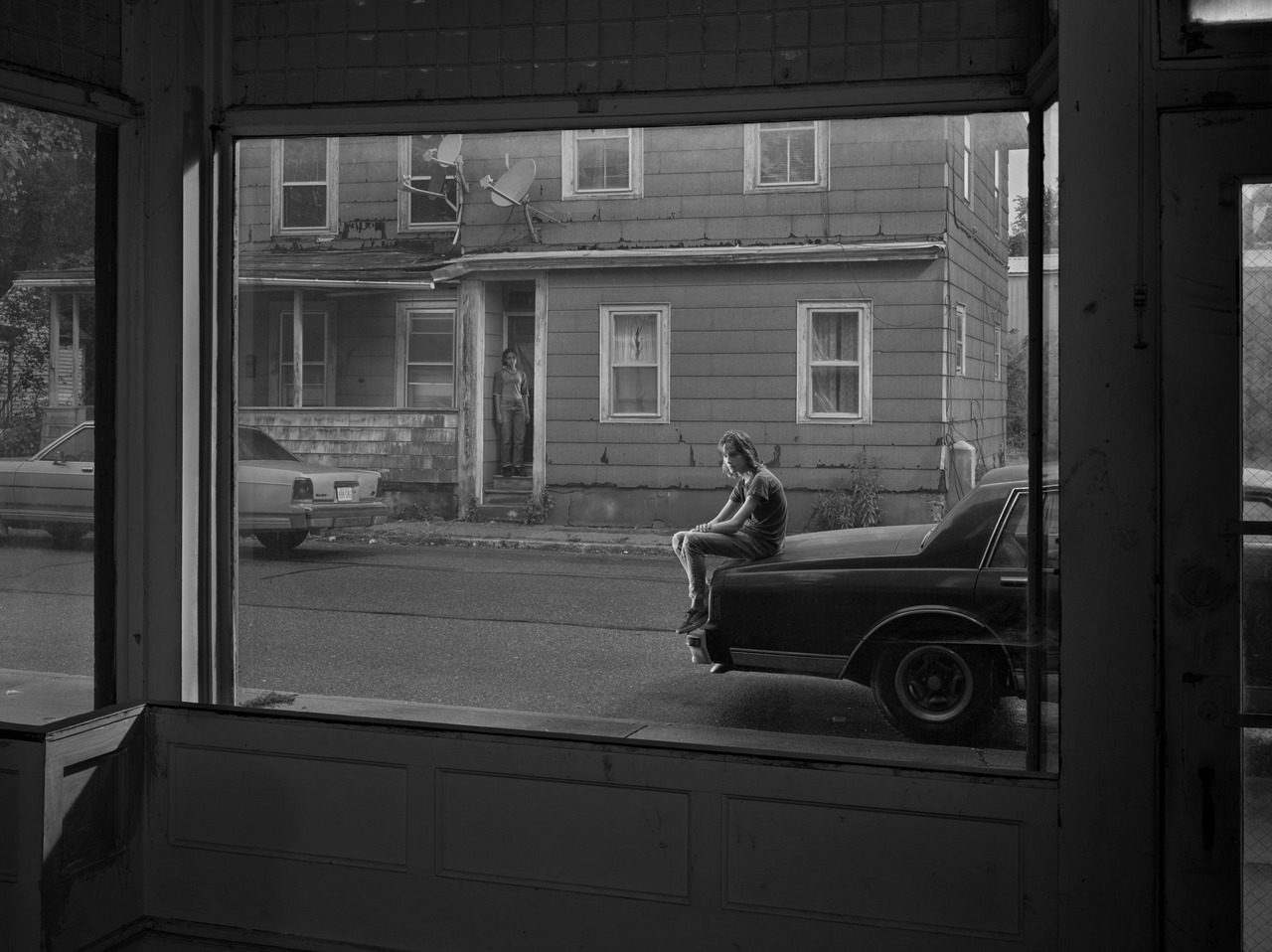
Comprising eighteen large-scale photographs, “Eveningside” unfolds in a fictional American town suspended in an indeterminate era. The images depict solitary figures absorbed in ordinary activities—standing beneath streetlights, lingering in storefronts, or waiting in quiet interiors. Yet these moments feel strangely charged. Time appears to pause, and the viewer is left to speculate about the unseen narratives that surround each scene. Crewdson’s characters inhabit transitional spaces—bridges, porches, hardware stores, and mini-markets—locations that suggest movement and passage while reinforcing a sense of emotional stillness.
The visual atmosphere of the series is unmistakable. Working exclusively in black and white, Crewdson creates a melancholic twilight world where subtle lighting effects—fog, smoke, and artificial rain—transform familiar suburban landscapes into something uncanny. The aesthetic evokes the dramatic chiaroscuro of film noir and the quiet psychological tension found in the paintings of Edward Hopper. In these images, the ordinary becomes strangely theatrical, and the boundary between fiction and reality begins to dissolve.
Behind each photograph lies an extensive production process. Months of preparation precede the final shot, involving casting, set construction, technical crews, and sophisticated lighting systems. Entire streets are sometimes transformed into temporary film sets. Yet despite this cinematic scale, the finished work remains a single still image—a fragment of a story that the viewer must complete through imagination.
While Crewdson’s work has always explored psychological states such as isolation and longing, “Eveningside” introduces a more explicit sociopolitical dimension. The landscapes inhabited by his characters bear the marks of economic decline and ecological uncertainty. The small-town environments appear worn and fragile, echoing a broader reflection on the vulnerabilities underlying the American Dream. Nevertheless, Crewdson avoids overt commentary. Instead, he constructs ambiguous scenes that invite viewers to project their own narratives and interpretations onto the images.
Ultimately, “Eveningside” can be understood as both a culmination and a transformation within Crewdson’s oeuvre. By shifting to monochrome and adopting a slightly more intimate format, the series draws viewers closer to its figures while maintaining the monumental ambition that has defined his work. In these carefully orchestrated moments, Crewdson continues to challenge photography’s traditional relationship to reality—creating images that feel simultaneously staged and profoundly truthful.
Suspended between cinema and stillness, fiction and documentary, the photographs of “Eveningside” linger like fragments of dreams. They remind us that photography, at its most powerful, does not explain the world—it invites us to imagine it.
Photo: Gregory Crewdson, The Storefront Window, 2021-22, Digital pigment print mounted to Dibond, Edition Ed. 5/6 +3AP, 87 x 117 cm, 34 3/8 x 46 1/8 inches, 102 x 132 cm (incl frame), 40 1/4 x 52 inches (incl frame)Gregory, © Crewdson. Courtesy the artist and Galerie Templon
Info: Galerie Templon, Veydtstraat 13, Brussels, Belgium, Duration: 5/3-18/4/2026, Days & Hours: Tue-Sat 11:00-18:00, www.templon.com/